3,4'-Oxydiphthalic Anhydride is a chemical compound widely used in various chemical reactions, particularly in the synthesis of polymers and complex organic compounds. As a key reagent in materials science, it plays a crucial role in laboratory settings where the formation of ester and amide bonds is required. Its unique anhydride structure makes it highly reactive, enabling it to participate in a wide range of chemical transformations. This compound is essential for researchers working on polymer development and organic synthesis, offering versatility and reliability in experimental processes.
The compound's chemical properties make it a preferred choice for laboratory applications. It exhibits high reactivity towards water and polar compounds, which is advantageous in controlled chemical environments. Its high melting point ensures stability under elevated temperatures, making it suitable for reactions requiring thermal energy. Additionally, its ability to form complex chemical bonds contributes to its effectiveness in producing high-quality synthetic materials. These characteristics make it a reliable and efficient reagent for advanced chemical research.
In Indonesian laboratories, 3,4'-Oxydiphthalic Anhydride is commonly used in polymer research, composite material development, and construction material testing. It is a key component in the synthesis of resins, protective coatings, and structural materials. Researchers in educational institutions and research centers frequently use this compound to explore new material properties and improve existing synthetic processes. Its role in advancing material science and chemical research is well established in the Indonesian scientific community.
- Polymer synthesis and modification for creating advanced composite materials due to its ability to form ester and amide bonds.
- Development of protective coatings and resins where high thermal stability and chemical reactivity are required.
- Research in organic chemistry for the synthesis of complex organic compounds through esterification and amidation reactions.
- Material science studies focused on improving the mechanical and thermal properties of synthetic polymers.
- Construction material testing where the compound is used to enhance the durability and performance of structural components.
| Brand | TCI |
|---|---|
| CAS number | 50662-95-8 |
| Molecular formula | — |
| Purity | — |
| Category | Materials Science > Polymer/Macromolecule Reagents > Monomers |
| Pack sizes | Available in various quantities as per standard laboratory supply options |
| Physical form | Solid |
| Storage | Store in a cool, dry place away from moisture and incompatible substances |
This compound should be stored in a cool, dry environment to maintain its chemical stability. It is recommended to keep it in a sealed container to prevent exposure to moisture and air, which can affect its reactivity. Due to its high reactivity towards water and polar solvents, it should be handled with care in laboratory settings. Suitable containers include glass or high-density polyethylene vessels that are resistant to chemical degradation. Always ensure proper ventilation when working with this material, and avoid direct contact with skin or inhalation of vapors. Laboratory personnel should wear appropriate personal protective equipment, such as gloves and safety goggles, to ensure safe handling and minimize potential risks.
—
Produk Terkait
-
TCI B5774 5,10-Bis(4,4,5,5-tetramethyl-1,3,2-dioxaborolan-2-yl)naphtho[1,2-c:5,6-c']bis([1,2,5]oxadiazole)
Regular price Rp 10.255.350,00Regular price -
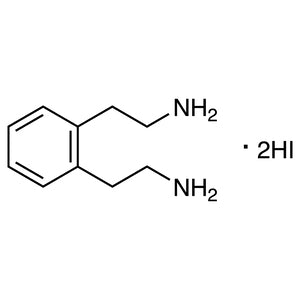
Dihydroiodide TCI B6569
Regular price From Rp 1.936.200,00Regular price -
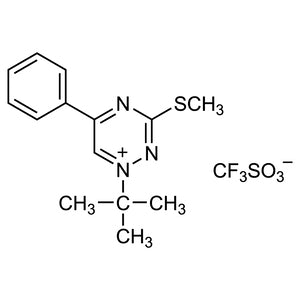
Trifluoromethanesulfonate TCI B7003
Regular price From Rp 1.936.200,00Regular price
![5,10-Bis(4,4,5,5-tetramethyl-1,3,2-dioxaborolan-2-yl)naphtho[1,2-c:5,6-c']bis([1,2,5]oxadiazole) - TCI B5774 - AMI Scientific](http://amiscientific.com/cdn/shop/files/TCI2510B5774.jpg?v=1769180228&width=533)