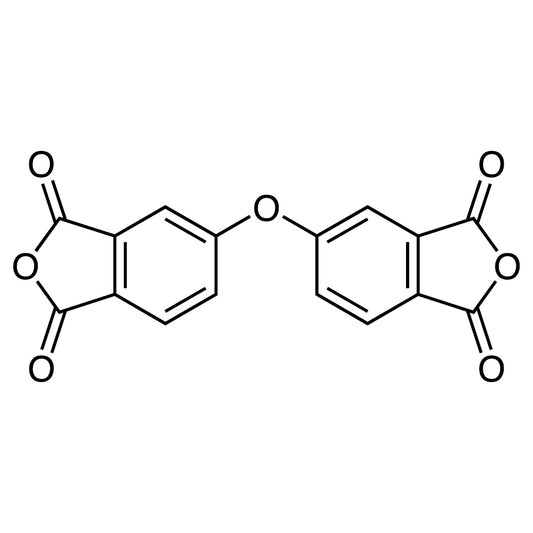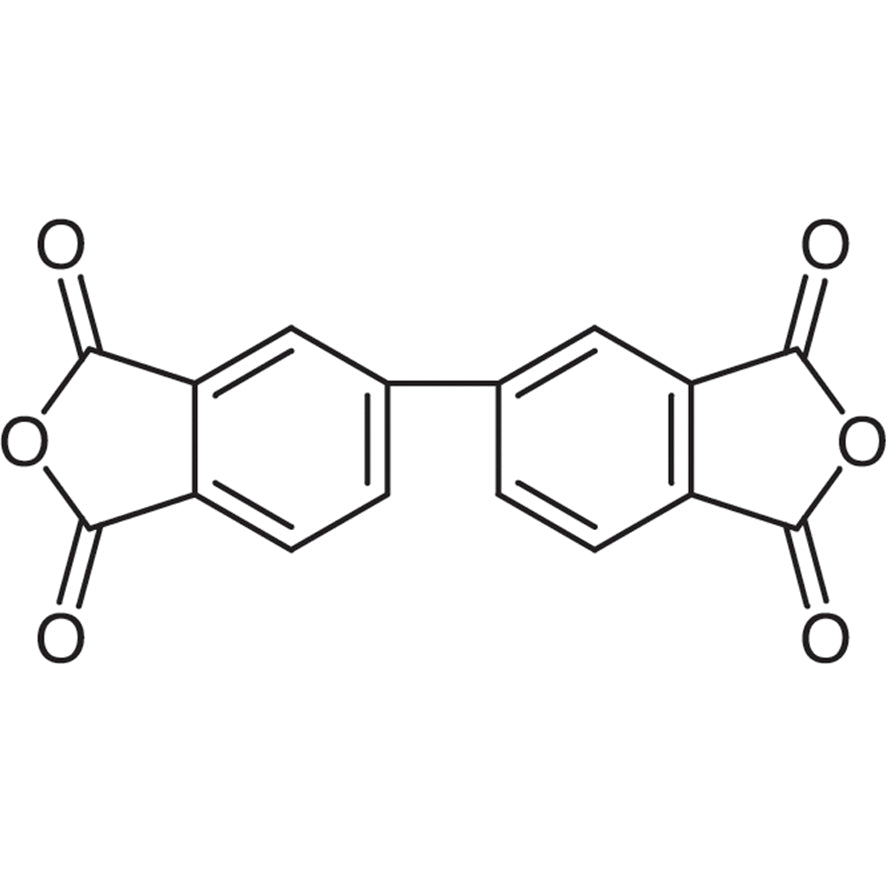
4,4'-Biphenyltetracarboxylic dianhydride (BPA) is a key chemical compound widely used in materials science and polymer chemistry. It serves as a monomer in the synthesis of polymers such as polyesters and polyethers, playing a critical role in the development of advanced materials. In the laboratory, BPA is essential for accelerating polymerization processes and creating polymers with superior mechanical and thermal properties. Its unique chemical structure allows for versatile reactions with hydroxyl or amino groups, making it a valuable reagent in the synthesis of complex organic compounds.
The chemical properties of BPA make it a preferred choice for researchers and industrial chemists. Its high chemical stability ensures it remains effective under a variety of reaction conditions without degrading easily. The anhydride functionality of BPA enables it to react with a wide range of functional groups, offering flexibility in synthetic pathways. These characteristics make BPA a reliable and efficient material for both academic and industrial applications.
In Indonesian laboratories, BPA is commonly used in research related to composite materials, polymers, and organic chemicals. It is an essential component in the development of industrial products such as building materials, electronic components, and packaging materials. Its availability in the local market supports ongoing research and innovation in the chemical and materials industries.
TCI brochures (PDF)
- Raw Materials for Polyimide Synthesis 2026-05-11 · p. 2
- Monomers 2025-05-28 · p. 38
Related TCI products
- TCI B4629 36978-41-3 3,4'-Biphthalic Anhydride
- TCI B4262 2420-87-3 4,4'-Biphthalic Anhydride (purified by sublimation)
- TCI I0856 38103-06-9 4,4'-(4,4'-Isopropylidenediphenoxy)diphthalic Anhydride
- TCI P2421 17828-53-4 4,4'-(1,4-Phenylenedioxy)bisphthalic Anhydride
- TCI O0423 1823-59-2 4,4'-Oxydiphthalic Anhydride (purified by sublimation)
- TCI O0384 50662-95-8 3,4'-Oxydiphthalic Anhydride
- Polymer synthesis applications benefit from BPA's ability to form stable and durable polymers, ideal for creating high-performance materials.
- Composite material development relies on BPA's reactivity and compatibility with various functional groups, enhancing structural integrity.
- Organic chemistry research utilizes BPA's versatile reactivity for synthesizing complex molecules and functionalized compounds.
- Epoxide resin production benefits from BPA's role as a key building block in the formation of cross-linked networks.
- Thermal and mechanical property testing uses BPA-derived polymers to evaluate material performance under different conditions.
| Brand | TCI |
|---|---|
| CAS number | 2420-87-3 |
| Molecular formula | — |
| Purity | — |
| Category | Materials Science > Polymer/Macromolecule Reagents > Monomers |
| Pack sizes | Available in various quantities as per standard laboratory requirements |
| Physical form | Solid powder |
| Storage | Store in a cool, dry place away from moisture and direct sunlight |
BPA should be stored in a cool, dry environment to maintain its chemical stability and prevent degradation. It is recommended to use airtight containers made of glass or high-density polyethylene to protect it from moisture and contaminants. Due to its reactivity, BPA should be handled in a well-ventilated area, and appropriate personal protective equipment such as gloves and safety goggles should be worn. It is important to avoid exposure to heat or direct sunlight, as these conditions can affect its performance. Proper labeling and storage practices ensure the safety of laboratory personnel and the integrity of the material.
—
Produk Terkait
-
3,4'-BiphthalicAnhydride TCI B4629
Regular price From Rp 2.411.850,00Regular priceRp 1.686.300,00Sale price From Rp 2.411.850,00 -
4,4'-BiphthalicAnhydride(purifiedbysublimation) TCI B4262
Regular price Rp 4.347.000,00Regular priceRp 3.039.750,00Sale price Rp 4.347.000,00 -
4,4'-(4,4'-Isopropylidenediphenoxy)diphthalicAnhydride TCI I0856
Regular price From Rp 1.431.150,00Regular priceRp 1.016.400,00Sale price From Rp 1.431.150,00 -
4,4'-(1,4-Phenylenedioxy)bisphthalicAnhydride TCI P2421
Regular price From Rp 2.994.600,00Regular priceRp 2.109.450,00Sale price From Rp 2.994.600,00 -
4,4'-OxydiphthalicAnhydride(purifiedbysublimation) TCI O0423
Regular price Rp 4.399.500,00Regular priceRp 3.092.250,00Sale price Rp 4.399.500,00 -
3,4'-OxydiphthalicAnhydride TCI O0384
Regular price From Rp 1.008.000,00Regular priceRp 720.300,00Sale price From Rp 1.008.000,00 -
4,4'-OxydiphthalicAnhydride TCI O0237
Regular price From Rp 1.881.600,00Regular priceRp 1.331.400,00Sale price From Rp 1.881.600,00 -
4,4'-(Hexafluoroisopropylidene)diphthalicAnhydride(purifiedbysublimation) TCI H1438
Regular price From Rp 1.405.950,00Regular priceRp 982.800,00Sale price From Rp 1.405.950,00