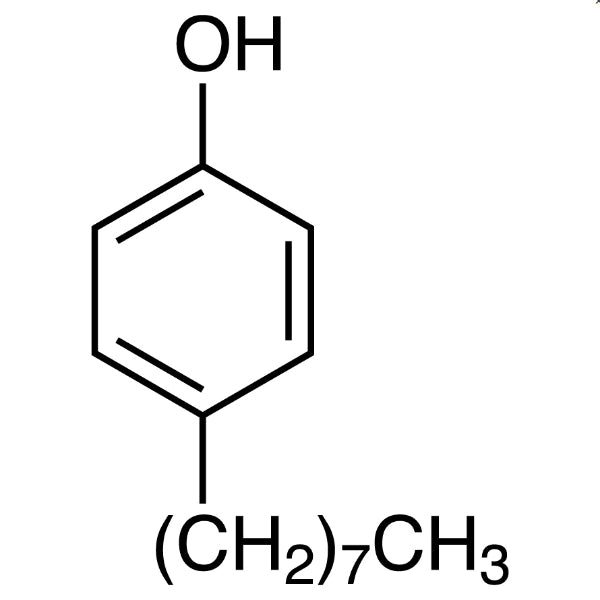
4-Octylphenol is a chemical compound widely used in various laboratory applications, particularly in the synthesis of organic compounds. As a key component of non-heterocyclic building blocks, it serves as a foundational material for the development of more complex chemical structures. Its role in chemical reactions, such as substitution and condensation, makes it an essential tool for organic chemists. This compound is frequently utilized in research settings to create functional molecules with specific reactivity and structural characteristics.
The unique chemical and physical properties of 4-Octylphenol make it a preferred choice in laboratory environments. It is non-polar in nature, which influences its solubility and reactivity in different reaction conditions. Its long hydrocarbon chain provides stability and contributes to its reactivity in synthetic processes. These characteristics allow it to be versatile in a range of chemical applications, especially where controlled reactivity is required. Its limited solubility in water also plays a role in determining its use in specific reaction systems.
In Indonesian laboratories, 4-Octylphenol is commonly used in organic chemistry research, chemical product development, and raw material testing. It is a standard component in laboratories that focus on synthetic chemistry and functional molecule creation. Its availability and reliability make it a go-to material for researchers and chemists working on complex chemical syntheses. Its role in both academic and industrial research settings underscores its importance in the chemical industry.
- Organic synthesis research where 4-Octylphenol serves as a versatile building block for creating complex molecular structures.
- Development of chemical products that require specific reactivity and structural properties in synthetic processes.
- Testing of raw materials in industrial and academic settings to evaluate their chemical behavior and reactivity.
- Preparation of functional molecules for pharmaceutical and material science applications requiring controlled chemical reactions.
- Use in condensation and substitution reactions to produce a wide range of organic compounds with desired properties.
| Brand | TCI |
|---|---|
| CAS number | 1806-26-4 |
| Molecular formula | — |
| Purity | — |
| Category | Chemistry > Building Blocks > Non-Heterocyclic Building Blocks |
| Pack sizes | Available in standard laboratory quantities as per supplier specifications |
| Physical form | Liquid |
| Storage | Store in a cool, dry place away from direct sunlight and incompatible materials |
4-Octylphenol should be stored in a cool, dry place away from direct sunlight and incompatible substances. It is recommended to use sealed containers made of materials that are chemically inert to prevent reactions. Due to its non-polar nature, it should be handled in a well-ventilated area to avoid inhalation of vapors. Always wear appropriate personal protective equipment, such as gloves and safety goggles, when handling the compound. It should not be stored near flammable materials or strong oxidizers. Proper labeling and storage conditions are essential to ensure safety and maintain the integrity of the compound in laboratory settings.
—
Produk Terkait
-
4-Butylphenol TCI B1026
Regular price From Rp 1.723.050,00Regular priceRp 1.220.100,00Sale price From Rp 1.723.050,00 -
4-Heptylphenol TCI H0615
Regular price From Rp 1.908.900,00Regular priceRp 1.350.300,00Sale price From Rp 1.908.900,00 -
4-(Benzyloxy)phenol TCI B1104
Regular price From Rp 1.801.800,00Regular priceRp 1.275.750,00Sale price From Rp 1.801.800,00 -
4-Butoxyphenol TCI B0923
Regular price Rp 1.246.350,00Regular priceRp 887.250,00Sale price Rp 1.246.350,00 -
4-Bromophenol TCI B0787
Regular price From Rp 664.650,00Regular priceRp 464.100,00Sale price From Rp 664.650,00 -
4-Amyloxyphenol TCI A0728
Regular price Rp 1.087.800,00Regular priceRp 775.950,00Sale price Rp 1.087.800,00 -
4-Amylphenol TCI P0843
Regular price Rp 1.618.050,00Regular priceRp 1.146.600,00Sale price Rp 1.618.050,00 -
4-Propylphenol TCI P0698
Regular price From Rp 955.500,00Regular priceRp 683.550,00Sale price From Rp 955.500,00