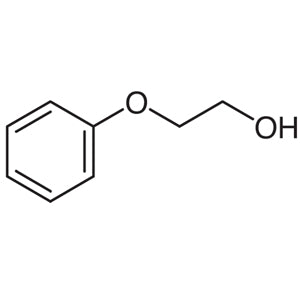
2-Phenoxyethanol from TCI (product code P0115, CAS 122-99-6) is an aromatic glycol ether. Its structure joins a phenoxy group to an ethanol unit, so a single molecule carries both an aromatic ring and a primary hydroxyl group. In the laboratory it is widely used as a solvent, as a preservative and as a non-heterocyclic building block for organic synthesis. It is also well known as an antimicrobial preservative in cosmetic and pharmaceutical formulations. In fisheries and aquatic biology research, it is used as an anaesthetic agent for fish in experimental studies.
Chemists choose 2-Phenoxyethanol mainly because it is amphiphilic. The aromatic portion gives it affinity for organic compounds, while the hydroxyl group gives it some solubility in water and in polar solvents. This balance makes it a good solvent for dyes, resins and inks, where both kinds of compatibility matter. Its well-established antimicrobial activity is why it is so often used as a preservative. For synthesis, the primary hydroxyl group is easy to work with. It can be converted into esters, ethers or halides, or oxidised to phenoxyacetic acid, which makes the compound a practical starting material for further derivatisation.
In Indonesia, 2-Phenoxyethanol is relevant to several kinds of laboratory. Cosmetic and personal care development labs use it when formulating and evaluating preserved products. Pharmaceutical labs use it when testing how well preservatives work in their formulations. Fisheries and aquatic research labs use it as an anaesthetic for fish in their studies. Academic and industrial synthesis labs can also use it as a dependable non-heterocyclic building block for preparing aromatic ether derivatives.
Related TCI products
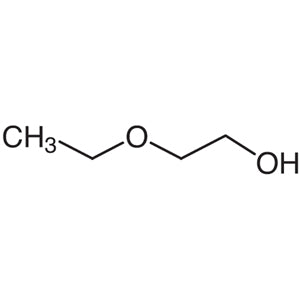
- TCI E0047 110-80-5 2-Ethoxyethanol
- TCI M0111 109-86-4 2-Methoxyethanol (stabilized with BHT)
- TCI P1953 122-99-6 2-Phenoxyethanol [for Biochemical Research]
- TCI A1400 48145-04-6 2-Phenoxyethyl Acrylate (stabilized with MEHQ)
- TCI A0935 6192-44-5 2-Phenoxyethyl Acetate
- TCI P2468 10595-06-9 2-Phenoxyethyl Methacrylate (stabilized with HQ + MEHQ)
- Solvent for dyes, resins and inks: it dissolves organic materials through its aromatic portion and stays compatible with polar systems through its hydroxyl group, which suits mixed formulations.
- Preservative in cosmetic and personal care formulations: its well-known antimicrobial activity makes it a common choice when developing and evaluating preserved cosmetic and personal care products in the lab.
- Preservative efficacy testing in pharmaceutical laboratories: as an established antimicrobial preservative, it is a relevant reference material when pharmaceutical labs assess how well preservatives perform in formulations.
- Fish anaesthesia in fisheries and aquatic biology research: it is widely recognised as an anaesthetic agent for fish, which makes it useful for handling fish during research in aquatic laboratories.
- Non-heterocyclic building block in organic synthesis: its primary hydroxyl group converts readily into esters, ethers or halides, or can be oxidised to phenoxyacetic acid, so it is a versatile synthetic intermediate.
| Brand | TCI (product code P0115) |
|---|---|
| CAS number | 122-99-6 |
| Molecular formula | — |
| Purity | — |
| Category | Chemistry > Building Blocks > Non-Heterocyclic Building Blocks |
| Pack sizes | TCI standard pack sizes; please check availability with AMI Scientific when you order |
| Physical form | Liquid; refer to the TCI product specification for lot-specific details |
| Storage | Keep tightly closed in a cool, dry, well-ventilated place, following the TCI label and Safety Data Sheet |
Store 2-Phenoxyethanol in its original, tightly sealed container in a cool, dry and well-ventilated area, away from direct sunlight, heat sources and strong oxidising agents. Use only clean, compatible glass or chemically resistant containers when you transfer or aliquot the material, and label every secondary container clearly. Handle the compound in a well-ventilated area or a fume hood, and wear suitable protective gloves, safety glasses and a laboratory coat. Do not let it contact the skin or eyes, and do not inhale vapours. Wash your hands thoroughly after handling. Always read the TCI Safety Data Sheet before use, and dispose of residues and contaminated materials according to local regulations and your institution's waste procedures.
—
Produk Terkait
-
2-Ethoxyethanol TCI E0047
Regular price From Rp 477.750,00Regular price -
2-Methoxyethanol(stabilizedwithBHT) TCI M0111
Regular price From Rp 477.750,00Regular price -
2-Phenoxyethanol[forBiochemicalResearch] TCI P1953
Regular price From Rp 505.050,00Regular price -
2-PhenoxyethylAcrylate(stabilizedwithMEHQ) TCI A1400
Regular price From Rp 530.250,00Regular price -
2-PhenoxyethylAcetate TCI A0935
Regular price From Rp 1.140.300,00Regular price -
2-PhenoxyethylMethacrylate(stabilizedwithHQ+MEHQ) TCI P2468
Regular price From Rp 2.254.350,00Regular price -
1,1,2-Trimethoxyethane TCI T0831
Regular price From Rp 3.738.000,00Regular price -
2-PhenoxyethylIsobutyrate TCI P1822
Regular price From Rp 477.750,00Regular price

![122-99-6 2-Phenoxyethanol [for Biochemical Research] - AMI Scientific](http://amiscientific.com/cdn/shop/files/TCI2510P1953.jpg?v=1767135488&width=533)