2-Phenylazo-4-methylphenol from TCI is an aromatic azo compound. It has a phenolic hydroxyl group ortho to the azo bridge and a methyl group para to the hydroxyl. Chemists class it as an ortho-hydroxyazobenzene. Compounds in this class are widely studied as dyes, as metal-complexing ligands, and as models for azo-hydrazone tautomerism. In the laboratory it is also used as a building block for making more complex phenolic azo derivatives, which is why it sits among the non-heterocyclic building blocks.
Researchers choose this compound mainly because of where its functional groups sit. The hydroxyl group is next to the azo group, so the molecule can form an intramolecular hydrogen bond. That bond affects its stability, its colour and its photochemical behaviour. The azo nitrogen atoms and the phenolic oxygen together form a chelating site that binds metal ions. This makes the compound useful in coordination chemistry and colorimetric analysis. The methyl group adds a mild electron-donating effect and blocks the para position, so further reactions follow a more predictable path.
In Indonesia, this material is useful to research groups in inorganic and coordination chemistry that study metal-ligand binding. It also serves analytical chemistry laboratories developing colorimetric reagents, and organic chemistry groups studying azo dyes and tautomerism. University research laboratories, postgraduate thesis projects and institutional research programmes can all use it as a well-defined model compound or as a starting point for synthesis. The 25g pack is enough for a series of synthesis and characterisation experiments.
- Coordination chemistry studies: the azo nitrogen and phenolic oxygen form a chelating site that binds metal ions, so the compound works well as a ligand for preparing and studying metal complexes.
- Colorimetric reagent development: the compound's colour responds to metal binding, which makes it a useful starting point for analytical chemists designing colorimetric methods to detect metal ions.
- Azo-hydrazone tautomerism research: as an ortho-hydroxyazobenzene with an intramolecular hydrogen bond, it is a clear model for studying how the azo and hydrazone forms balance against each other.
- Azo dye studies: its aromatic azo structure lets organic chemists study how structure relates to colour, stability and photochemical behaviour in the azo dye family.
- Synthesis of phenolic azo derivatives: because the methyl group blocks the para position, further reactions are more selective, which helps when building more complex phenolic azo compounds.
| Brand | TCI (product code P0145) |
|---|---|
| CAS number | 952-47-6 |
| Molecular formula | — |
| Purity | — |
| Category | Chemistry > Building Blocks > Non-Heterocyclic Building Blocks |
| Pack sizes | 25g |
| Physical form | — |
| Storage | Follow the conditions on the TCI label and Safety Data Sheet |
- Compound class: Aromatic azo compound (ortho-hydroxyazobenzene)
Keep 2-Phenylazo-4-methylphenol in its original, tightly closed container in a cool, dry, well-ventilated place. Protect it from direct light and moisture, since azo compounds can be sensitive to light. Store it away from strong oxidising agents and incompatible materials, and make sure the label stays legible. Handle it in a fume hood or a well-ventilated area, and wear suitable protective gloves, safety glasses and a lab coat. Avoid breathing in dust and avoid contact with skin and eyes. Read the TCI Safety Data Sheet before use, and dispose of waste according to your institution's chemical waste procedures and local regulations.
—
Produk Terkait
-
4-(Phenylazo)phenol TCI P0149
Regular price Rp 1.538.250,00Regular price -
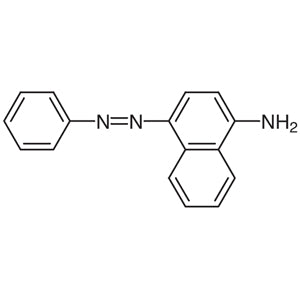
4-Phenylazo-1-naphthylamine TCI P0584
Regular price From Rp 2.359.350,00Regular price -
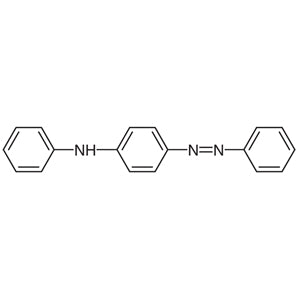
4-(Phenylazo)diphenylamine TCI P0146
Regular price From Rp 1.140.300,00Regular price -
4-(Phenylazo)benzoicAcid TCI P0143
Regular price From Rp 1.115.100,00Regular price -
4-Triphenylmethylphenol TCI T1654
Regular price Rp 3.180.450,00Regular price -
2-Bromo-4,5-dimethylphenol TCI B5394
Regular price From Rp 3.127.950,00Regular price -
4-Bromo-3-methylphenol TCI B3658
Regular price From Rp 1.644.300,00Regular price -
4-Bromo-3,5-dimethylphenol TCI B2146
Regular price From Rp 1.087.800,00Regular price