


4-(Phenylazo)benzoic Acid from TCI is an azobenzene derivative with a carboxylic acid group in the para position. It combines an azobenzene photoswitch with a functional group that is easy to couple. This makes it a popular building block for adding light-responsive behaviour to polymers, peptides, surfaces and metal-organic frameworks. It is also a well-known guest molecule in supramolecular chemistry, especially in host-guest systems built on cyclodextrins. Many research groups keep it on hand as a dependable starting point for photoresponsive molecular design.
Researchers choose this compound mainly because its carboxylate group is so versatile. It can be converted into esters, amides or acyl chlorides, and it can coordinate to metal ions. Through all of these changes, the azobenzene unit keeps its ability to switch between trans and cis forms under light. During isomerisation the molecule changes shape and polarity, and this changes how strongly it binds to host molecules. Researchers can use that effect to build systems that are controlled by light. The acid group also makes the compound's solubility depend on pH. This gives chemists another simple way to tune its behaviour in solution and in self-assembled materials.
In Indonesia, this material is useful for research groups in supramolecular chemistry, materials science, polymer science and biomaterials. These groups work on light-controlled drug delivery, responsive hydrogels and functional MOFs. University laboratories and research institutes use it in synthesis projects, thesis research and studies of host-guest interactions. Its well-documented chemistry and its availability under the TCI brand make it a practical choice for teams that need consistent starting material for long-running photoresponsive materials programs.
Related TCI products
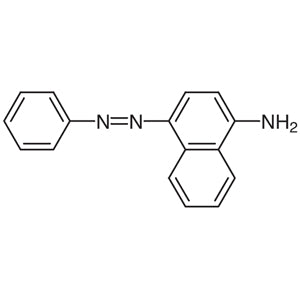
- TCI P0584 131-22-6 4-Phenylazo-1-naphthylamine
- TCI P0149 1689-82-3 4-(Phenylazo)phenol
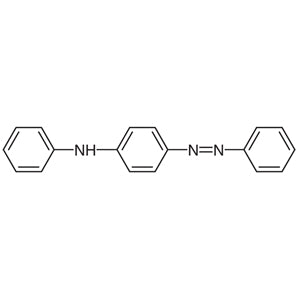
- TCI P0146 101-75-7 4-(Phenylazo)diphenylamine
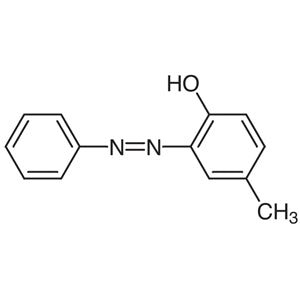
- TCI P0145 952-47-6 2-Phenylazo-4-methylphenol
- TCI B6959 111331-82-9 3-[(tert-Butoxycarbonyl)amino]benzoic Acid
- TCI S0857 146998-31-4 N-Succinimidyl 4-[4-(Dimethylamino)phenylazo]benzoate
- Synthesis of photoresponsive polymers: the carboxylic acid can be coupled as an ester or amide onto polymer backbones or side chains, adding the azobenzene photoswitch that changes shape when exposed to light.
- Peptide and biomolecule modification: amide coupling to amino groups lets researchers attach the azobenzene unit to peptides, so they can study how light-driven changes in shape and polarity affect biological structure.
- Cyclodextrin host-guest chemistry: the compound is a known guest molecule, and its binding to the host changes between the trans and cis forms, which makes it suitable for light-controlled supramolecular assemblies.
- Metal-organic framework construction: the carboxylate group can coordinate to metal ions, so the compound can serve as a ligand or modulator for building functional MOFs with photoswitchable properties.
- Responsive hydrogels and drug delivery research: light-controlled binding combined with pH-dependent solubility makes it suitable for designing hydrogels and carrier systems that release or rearrange their contents on demand.
| Brand | TCI (product code P0143) |
|---|---|
| CAS number | 1562-93-2 |
| Molecular formula | — |
| Purity | — |
| Category | Chemistry > Building Blocks > Non-Heterocyclic Building Blocks |
| Pack sizes | see the pack size options listed on this product page |
| Physical form | solid; refer to the TCI Certificate of Analysis for detailed specifications |
| Storage | keep tightly closed in a cool, dry place away from light |
Store 4-(Phenylazo)benzoic Acid in its original, tightly sealed container in a cool, dry and well-ventilated area. Because the azobenzene unit responds to light, keep the material away from direct sunlight and strong light sources. Amber glass or opaque secondary containers are recommended. Keep it away from strong oxidising agents and strong bases. Handle the compound in a fume hood or another well-ventilated area, and wear standard personal protective equipment, including safety glasses, nitrile gloves and a lab coat. Avoid creating dust or inhaling it. Before use, check the TCI Safety Data Sheet for hazard classification, first-aid measures and disposal requirements. Dispose of waste according to local regulations.
—
Produk Terkait
-
4-Phenylazo-1-naphthylamine TCI P0584
Regular price From Rp 2.359.350,00Regular price -
4-(Phenylazo)phenol TCI P0149
Regular price Rp 1.538.250,00Regular price -
4-(Phenylazo)diphenylamine TCI P0146
Regular price From Rp 1.140.300,00Regular price -
2-Phenylazo-4-methylphenol TCI P0145
Regular price Rp 13.249.950,00Regular price -
3-[(tert-Butoxycarbonyl)amino]benzoicAcid TCI B6959
Regular price From Rp 980.700,00Regular price -
N-Succinimidyl4-[4-(Dimethylamino)phenylazo]benzoate TCI S0857
Regular price From Rp 3.922.800,00Regular price -
3,4,5-Tris(dodecyloxy)benzoicAcid TCI T3606
Regular price Rp 3.738.000,00Regular price -
4-(4-Methylphenoxy)benzoicAcid TCI T3391
Regular price From Rp 2.889.600,00Regular price

![3-[(tert-Butoxycarbonyl)amino]benzoic Acid (CAS 111331-82-9) - TCI B6959 - AMI Scientific](http://amiscientific.com/cdn/shop/files/TCI2510B6959.jpg?v=1767094429&width=533)
![146998-31-4 N-Succinimidyl 4-[4-(Dimethylamino)phenylazo]benzoate - AMI Scientific](http://amiscientific.com/cdn/shop/files/TCI2510S0857.jpg?v=1767139066&width=533)

