N-Succinimidyl 4-[4-(Dimethylamino)phenylazo]benzoate is a chemical compound widely used in biochemical and immunological applications within laboratory settings. This reagent plays a critical role in activating proteins or antigens, enabling the formation of covalent bonds between target molecules and antibodies. Its utility spans across various research areas, including antibody development, characterization, and immunological testing. The compound is particularly valuable for its ability to facilitate specific and stable interactions in complex biological systems.
The compound’s high reactivity is attributed to the succinimidyl group attached to its molecular structure. This group readily reacts with amino groups on proteins or antigens, enhancing the specificity and stability of the resulting bonds. These properties make it a preferred choice for applications requiring precise molecular conjugation. Its reliability and consistency in performance are essential for achieving accurate and reproducible results in laboratory experiments.
In Indonesian laboratories, this compound is highly relevant for biomedical, pharmacological, and diagnostic research. It supports the development of medical products and clinical testing by enabling the creation of targeted reagents. Its availability ensures that researchers can meet the demands of experimental work efficiently, contributing to the advancement of scientific studies in the region.
Advantages (TCI brochure)
- Binds chemically to amino groups by amide bond formation
- Works as a dark quencher for S0891, used in synthesis of FRET probes
TCI brochures (PDF)
- Fluorescent Labeling Dyes 2025-11-18 · p. 4
Related TCI products
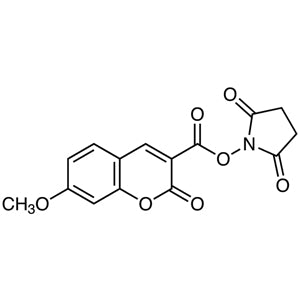
- TCI S0867 150321-92-9 N-Succinimidyl 7-Methoxycoumarin-3-carboxylate
- TCI S0866 134471-24-2 N-Succinimidyl 7-Hydroxycoumarin-3-carboxylate
- TCI C2479 92557-80-7 5-Carboxyfluorescein N-Succinimidyl Ester
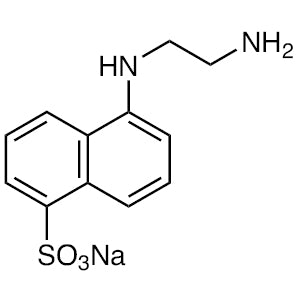
- TCI S0891 100900-07-0 Sodium 5-(2-Aminoethylamino)-1-naphthalenesulfonate
- TCI S0503 1858255-08-9 Succinimidyl 6-[[7-(N,N-Dimethylaminosulfonyl)-2,1,3-benzoxadiazol-4-yl]amino]hexanoate
- TCI D5799 139346-57-9 N-Succinimidyl 7-(Diethylamino)coumarin-3-carboxylate
- Antibody Conjugation: This compound is ideal for conjugating antibodies to proteins or other molecules, enhancing their specificity and stability in diagnostic and therapeutic applications.
- Immunological Testing: It supports the development of reagents used in immunoassays, enabling accurate detection and quantification of target antigens in complex samples.
- Protein Modification: Its reactivity with amino groups allows for the modification of proteins, facilitating studies on their structure, function, and interactions.
- Diagnostic System Development: It is used in creating diagnostic tools that require precise molecular recognition, improving the accuracy of disease detection and monitoring.
- Research and Development: It is a key component in R&D processes for new medical products, aiding in the optimization of antibody-based technologies and assays.
From the TCI brochure
- Synthesis of FRET probes
| Brand | TCI |
|---|---|
| CAS number | 146998-31-4 |
| Molecular formula | — |
| Purity | — |
| Category | Life Science > Antibodies > Antibody Supplementary Products |
| Pack sizes | Available in various quantities as per standard laboratory requirements |
| Physical form | Solid powder |
| Storage | Store at controlled room temperature, away from moisture and light |
This compound should be stored in a cool, dry place, away from direct sunlight and sources of heat. It is recommended to use airtight containers to prevent exposure to moisture, which could affect its stability. Due to its reactive nature, it should be handled with care, using appropriate personal protective equipment such as gloves and safety goggles. It is important to ensure that the compound is kept in a secure location, away from incompatible materials. Proper ventilation should be maintained in the workspace to minimize any potential risks associated with its handling. These precautions help maintain the integrity and effectiveness of the compound in laboratory applications.
—
Produk Terkait
-
N-Succinimidyl7-Methoxycoumarin-3-carboxylate TCI S0867
Regular price From Rp 2.730.000,00Regular priceRp 1.924.650,00Sale price From Rp 2.730.000,00 -
N-Succinimidyl7-Hydroxycoumarin-3-carboxylate TCI S0866
Regular price From Rp 5.777.100,00Regular priceRp 4.055.100,00Sale price From Rp 5.777.100,00 -
5-CarboxyfluoresceinN-SuccinimidylEster TCI C2479
Regular price From Rp 5.962.950,00Regular priceRp 4.185.300,00Sale price From Rp 5.962.950,00 -
Sodium5-(2-Aminoethylamino)-1-naphthalenesulfonate TCI S0891
Regular price Rp 2.041.200,00Regular priceRp 1.442.700,00Sale price Rp 2.041.200,00 -
Succinimidyl6-[[7-(N,N-Dimethylaminosulfonyl)-2,1,3-benzoxadiazol-4-yl]amino]hexanoate TCI S0503
Regular price Rp 9.804.900,00Regular priceRp 6.872.250,00Sale price Rp 9.804.900,00 -
N-Succinimidyl7-(Diethylamino)coumarin-3-carboxylate TCI D5799
Regular price From Rp 2.464.350,00Regular priceRp 1.738.800,00Sale price From Rp 2.464.350,00 -
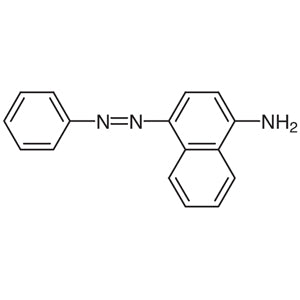
4-Phenylazo-1-naphthylamine TCI P0584
Regular price From Rp 2.359.350,00Regular priceRp 1.649.550,00Sale price From Rp 2.359.350,00 -
4-(Phenylazo)phenol TCI P0149
Regular price Rp 1.538.250,00Regular priceRp 1.075.200,00Sale price Rp 1.538.250,00