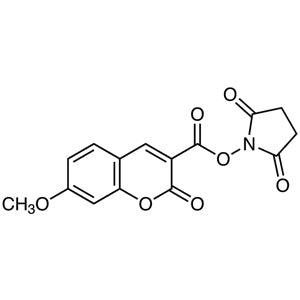
Sodium 5-(2-Aminoethylamino)-1-naphthalenesulfonate is a chemical compound widely used in laboratory settings, particularly in life sciences research. It serves as a valuable reagent in various experimental procedures, playing a key role in protein precipitation and biochemical analysis. This compound is especially useful in techniques that require specific interactions with proteins, making it a versatile tool for researchers. Its stability and reactivity make it a reliable choice for a range of applications in both academic and industrial laboratories.
The compound is favored for its chemical properties that allow for selective and efficient reactions in controlled environments. It is water-soluble, which facilitates its use in aqueous-based experiments. Additionally, it exhibits good stability under certain conditions, ensuring consistent results over time. Its ability to bind selectively to proteins enhances its utility in analytical methods, making it a preferred material for researchers working in biotechnology and biomedical fields.
In Indonesian laboratories, this compound is commonly used in biochemical and molecular biology applications. It is particularly sought after for its role in techniques such as Western blotting and ELISA. Its compatibility with various experimental conditions and its reliability in producing accurate results make it an essential component in many research protocols.
Advantages (TCI brochure)
- Blue fluorescence
- Can be labeled to carboxy groups by amide bond formation using a coupling agent
TCI brochures (PDF)
- Fluorescent Labeling Dyes 2025-11-18 · p. 4
Related TCI products
- TCI S0867 150321-92-9 N-Succinimidyl 7-Methoxycoumarin-3-carboxylate
- TCI S0866 134471-24-2 N-Succinimidyl 7-Hydroxycoumarin-3-carboxylate
- TCI A0306 3326-34-9 5-Aminofluorescein (isomer I)
- TCI A2083 601494-52-4 ATBTA-Eu3+
- TCI A0864 51649-83-3 6-Aminofluorescein (isomer II)
- TCI F0810 75350-46-8 Fluorescein-5-maleimide (contains 2% N,N-Dimethylformamide at maximum)
- Western blotting: This compound is used as a protein-binding agent to detect specific proteins in complex mixtures, enhancing the accuracy of results.
- ELISA assays: It serves as a reagent for capturing target proteins on solid surfaces, improving the sensitivity and specificity of the assay.
- Protein precipitation: Its ability to selectively bind to proteins allows for efficient precipitation, aiding in the purification of target proteins.
- Biochemical analysis: It is employed in various biochemical assays where specific protein interactions are required for accurate data collection.
- Molecular biology research: It supports a range of molecular techniques by providing a stable and reactive platform for protein interactions.
From the TCI brochure
- Labeling of carboxy groups
| Brand | TCI |
|---|---|
| CAS number | 100900-07-0 |
| Molecular formula | — |
| Purity | — |
| Category | Life Science > Antibodies > Antibody Supplementary Products |
| Pack sizes | Available in standard laboratory quantities |
| Physical form | Solid powder |
| Storage | Store in a cool, dry place away from light |
Data from the TCI brochure
| λex,max | 336 nm |
|---|---|
| λem,max | 490 nm |
Source: TCI brochure LL039 (2025-11-18)
This compound should be stored in a cool, dry place, away from direct light, to maintain its stability and effectiveness. It is recommended to use airtight containers to prevent moisture absorption, which could affect its performance. When handling, it is important to follow standard laboratory safety protocols, including the use of personal protective equipment such as gloves and safety goggles. Due to its chemical nature, it should be kept away from incompatible substances. Proper labeling of containers is essential to ensure safe handling and prevent accidental exposure. Regular monitoring of storage conditions will help maintain the integrity of the compound for extended use in research applications.
—
Product Categories
Produk Terkait
-
N-Succinimidyl7-Methoxycoumarin-3-carboxylate TCI S0867
Regular price From Rp 2.677.500,00Regular price -
N-Succinimidyl7-Hydroxycoumarin-3-carboxylate TCI S0866
Regular price From Rp 5.724.600,00Regular price -
5-Aminofluorescein(isomerI) TCI A0306
Regular price Rp 4.056.150,00Regular price -
ATBTA-Eu3+ TCI A2083
Regular price Rp 2.650.200,00Regular price -
6-Aminofluorescein(isomerII) TCI A0864
Regular price From Rp 5.009.550,00Regular price -
Fluorescein-5-maleimide(contains2%N,N-Dimethylformamideatmaximum) TCI F0810
Regular price Rp 5.512.500,00Regular price -
Fluorescein6-Isothiocyanate(isomerII) TCI F0783
Regular price Rp 8.613.150,00Regular price -
5-CarboxyfluoresceinN-SuccinimidylEster TCI C2479
Regular price From Rp 5.910.450,00Regular price