ATBTA-Eu3+ is a chemical compound used as a ligand in various molecular analysis and detection applications. It is specifically designed to bind europium ions (Eu³⁺) with high stability, making it a key component in advanced laboratory techniques. This compound plays a vital role in fluorescence-based assays, enabling precise and sensitive detection of biomolecules. Its ability to form stable complexes with metal ions enhances its utility in analytical chemistry and life sciences research. ATBTA-Eu3+ is widely utilized in fluorescence resonance energy transfer (FRET) experiments, where it serves as a critical element in signal transduction and molecular interaction studies.
The chemical properties of ATBTA-Eu3+ make it a preferred choice for laboratory use. It exhibits strong binding affinity for metal ions, ensuring consistent performance in repeated experimental cycles. Its chemical stability allows for long-term storage and use without significant degradation. Additionally, the compound is non-toxic and environmentally safe, reducing the risk of contamination and ensuring compliance with laboratory safety standards. These attributes make it ideal for applications requiring high sensitivity and reliability.
In Indonesian laboratories, ATBTA-Eu3+ is commonly used in research related to medical diagnostics, vaccine development, and biomarker analysis. Its high sensitivity and specificity make it an essential tool for molecular biologists and analytical chemists. The compound supports a wide range of experimental protocols, contributing to the advancement of scientific research in both academic and industrial settings.
Advantages (TCI brochure)
- Red fluorescence derived from Eu3+
- Long fluorescent lifetime, suitable for time-resolved fluorometry
- Stable fluorescence in various aqueous buffers
- No cross talk of excitation light
TCI brochures (PDF)
- Europium Fluorophore DTBTA-Eu3+ -labeled Secondary antibodies and Streptavidin 2025-02-27 · p. 2
- Fluorescent Labeling Dyes 2025-11-18 · p. 1
- Europium Fluorescent Labeling Reagent and Labeled Probes 2025-01-30 · p. 1
- Cell Imaging Reagents 2026-06-25 · p. 4
- Antibodies and Related Reagents 2026-07-29 · p. 13
- Reagents for Biological Research 2025-03-11 · p. 6
Related TCI products
- TCI A0306 3326-34-9 5-Aminofluorescein (isomer I)
- TCI A0864 51649-83-3 6-Aminofluorescein (isomer II)
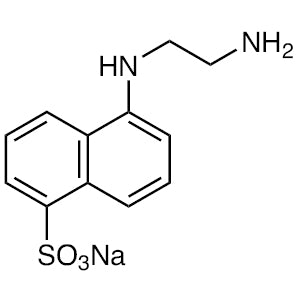
- TCI S0891 100900-07-0 Sodium 5-(2-Aminoethylamino)-1-naphthalenesulfonate
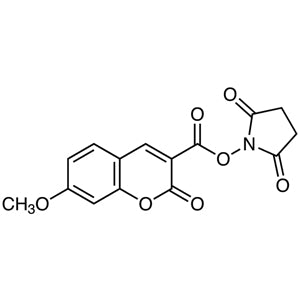
- TCI S0867 150321-92-9 N-Succinimidyl 7-Methoxycoumarin-3-carboxylate
- TCI S0866 134471-24-2 N-Succinimidyl 7-Hydroxycoumarin-3-carboxylate
- TCI F0810 75350-46-8 Fluorescein-5-maleimide (contains 2% N,N-Dimethylformamide at maximum)
- Fluorescence Resonance Energy Transfer (FRET) experiments benefit from ATBTA-Eu3+ due to its high affinity for europium ions, enabling efficient energy transfer and accurate signal detection.
- Immunological detection techniques rely on ATBTA-Eu3+ to enhance the specificity and sensitivity of antibody-based assays, improving diagnostic accuracy in medical research.
- Molecular imaging studies utilize ATBTA-Eu3+ as a fluorescent label, allowing for precise tracking of biomolecules within complex biological systems.
- Biomarker analysis in clinical research employs ATBTA-Eu3+ to detect low-concentration targets with high sensitivity, supporting early disease diagnosis and treatment monitoring.
- Environmental monitoring applications use ATBTA-Eu3+ to analyze trace metal ions in water and soil samples, ensuring reliable data for ecological and toxicological studies.
From the TCI brochure
- Labeling of amino groups of protein etc. after conversion to DTBTA-Eu3+ by cyanuric chloride
| Brand | TCI |
|---|---|
| CAS number | 601494-52-4 |
| Molecular formula | — |
| Purity | — |
| Category | Life Science > Antibodies > Antibody Supplementary Products |
| Pack sizes | Available in various quantities as per supplier specifications |
| Physical form | Solid or powder, depending on formulation |
| Storage | Store in a cool, dry place away from direct light |
Data from the TCI brochure
| λex,max | 335 nm |
|---|---|
| λem,max | 616 nm |
Source: TCI brochure LL039 (2025-11-18)
ATBTA-Eu3+ should be stored in a cool, dry environment to maintain its chemical stability and prevent degradation. It is recommended to keep the compound in a sealed container to minimize exposure to moisture and air. Laboratory personnel should handle the material with care, using appropriate personal protective equipment such as gloves and safety goggles. Due to its non-toxic nature, it poses minimal risk, but standard laboratory safety protocols should still be followed. The compound is suitable for storage in glass or plastic containers that are resistant to chemical interactions. Regular monitoring of storage conditions ensures the integrity of the material for repeated use in analytical experiments.
—
Product Categories
Produk Terkait
-
5-Aminofluorescein(isomerI) TCI A0306
Regular price Rp 4.056.150,00Regular priceRp 2.836.050,00Sale price Rp 4.056.150,00 -
6-Aminofluorescein(isomerII) TCI A0864
Regular price From Rp 5.062.050,00Regular priceRp 3.555.300,00Sale price From Rp 5.062.050,00 -
Sodium5-(2-Aminoethylamino)-1-naphthalenesulfonate TCI S0891
Regular price Rp 2.041.200,00Regular priceRp 1.442.700,00Sale price Rp 2.041.200,00 -
N-Succinimidyl7-Methoxycoumarin-3-carboxylate TCI S0867
Regular price From Rp 2.730.000,00Regular priceRp 1.924.650,00Sale price From Rp 2.730.000,00 -
N-Succinimidyl7-Hydroxycoumarin-3-carboxylate TCI S0866
Regular price From Rp 5.777.100,00Regular priceRp 4.055.100,00Sale price From Rp 5.777.100,00 -
Fluorescein-5-maleimide(contains2%N,N-Dimethylformamideatmaximum) TCI F0810
Regular price Rp 5.565.000,00Regular priceRp 3.907.050,00Sale price Rp 5.565.000,00 -
Fluorescein6-Isothiocyanate(isomerII) TCI F0783
Regular price Rp 8.613.150,00Regular priceRp 6.022.800,00Sale price Rp 8.613.150,00 -
5-CarboxyfluoresceinN-SuccinimidylEster TCI C2479
Regular price From Rp 5.962.950,00Regular priceRp 4.185.300,00Sale price From Rp 5.962.950,00