

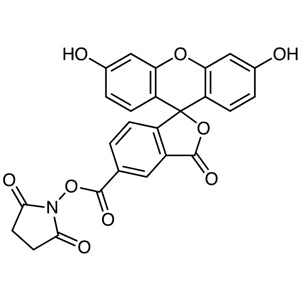
5-Carboxyfluorescein N-Succinimidyl Ester (CFSE) is a fluorescent compound widely used in biomedical research and molecular biology. It serves as a vital tool for tracking cell proliferation, particularly in immunology and cancer biology studies. This reagent enables researchers to label and monitor the division of cells over time, offering valuable insights into cellular behavior and response mechanisms. Its application is critical in experiments that require precise and reproducible data, making it an essential component in modern laboratory workflows.
CFSE is preferred due to its chemical stability, high reactivity toward cell surface amines, and distinct emission wavelength. These properties ensure reliable fluorescence detection using instruments like flow cytometers, enhancing the accuracy of cell tracking and analysis. Its strong fluorescence and resistance to photobleaching allow for long-term studies without significant loss of signal intensity. Additionally, its rapid reaction kinetics and ability to maintain fluorescence after activation make it highly practical for repeated use in various experimental setups.
In Indonesian laboratories, CFSE is commonly used in molecular biology and immunology research. It supports studies on immune cell dynamics, tumor progression, and cellular responses to stimuli. Researchers in Indonesia rely on CFSE to generate high-quality data for both academic and applied research, contributing to advancements in biotechnology and life sciences. Its utility spans across different research institutions, ensuring its relevance in the scientific community.
Advantages (TCI brochure)
- Green fluorescence
- Labels amino groups without a coupling agent due to active NHS ester
TCI brochures (PDF)
- Iodinated Fluorescein for Various Applications 2024-11-22 · p. 2
- Fluorescent Labeling Dyes 2025-11-18 · p. 3
- Reagents for Biological Research 2025-03-11 · p. 5
Related TCI products
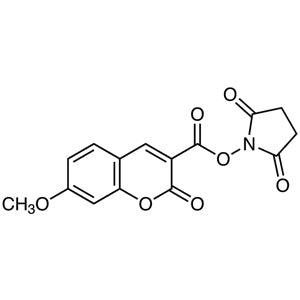
- TCI S0867 150321-92-9 N-Succinimidyl 7-Methoxycoumarin-3-carboxylate
- TCI S0866 134471-24-2 N-Succinimidyl 7-Hydroxycoumarin-3-carboxylate
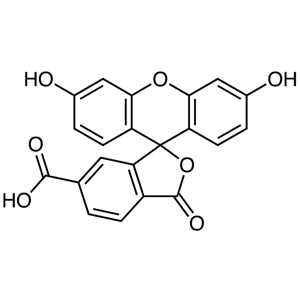
- TCI C2478 3301-79-9 6-Carboxyfluorescein
- TCI C2477 76823-03-5 5-Carboxyfluorescein
- TCI F0783 18861-78-4 Fluorescein 6-Isothiocyanate (isomer II)
- TCI F0810 75350-46-8 Fluorescein-5-maleimide (contains 2% N,N-Dimethylformamide at maximum)
- Cell proliferation studies benefit from CFSE due to its ability to label and track cell division over time, providing accurate data on cell cycle dynamics.
- Immunology research utilizes CFSE to monitor immune cell activation and differentiation, helping to understand immune responses in various disease models.
- Flow cytometry applications rely on CFSE for its distinct fluorescence properties, enabling precise quantification of labeled cells in complex mixtures.
- Cancer biology experiments use CFSE to study tumor cell growth and response to therapeutic agents, offering insights into treatment efficacy.
- Molecular biology labs apply CFSE in tracking cell lineage and migration, supporting research on cellular behavior under different experimental conditions.
From the TCI brochure
- Labeling of amino groups
| Brand | TCI |
|---|---|
| CAS number | 92557-80-7 |
| Molecular formula | — |
| Purity | — |
| Category | Life Science > Antibodies > Antibody Supplementary Products |
| Pack sizes | Available in various quantities as per supplier specifications |
| Physical form | Solid or powder, depending on packaging |
| Storage | Store at 2–8°C in a cool, dry place away from light |
Data from the TCI brochure
| λex,max | 494 nm |
|---|---|
| λem,max | 521 nm |
Source: TCI brochure LL039 (2025-11-18)
CFSE should be stored at 2–8°C in a cool, dry place, away from direct light to maintain its chemical stability and fluorescence properties. It is recommended to use airtight containers to prevent moisture exposure, which could affect its reactivity. When handling, ensure proper laboratory safety practices are followed, including the use of gloves and protective eyewear. Avoid prolonged exposure to heat or UV light to prevent degradation. CFSE is generally stable under standard laboratory conditions but should be used promptly after opening to ensure optimal performance. Always follow standard operating procedures for handling fluorescent reagents to maintain data integrity and safety.
—
Product Categories
Produk Terkait
-
N-Succinimidyl7-Methoxycoumarin-3-carboxylate TCI S0867
Regular price From Rp 2.677.500,00Regular price -
N-Succinimidyl7-Hydroxycoumarin-3-carboxylate TCI S0866
Regular price From Rp 5.724.600,00Regular price -
6-Carboxyfluorescein TCI C2478
Regular price Rp 4.611.600,00Regular price -
5-Carboxyfluorescein TCI C2477
Regular price Rp 3.207.750,00Regular price -
Fluorescein6-Isothiocyanate(isomerII) TCI F0783
Regular price Rp 8.613.150,00Regular price -
Fluorescein-5-maleimide(contains2%N,N-Dimethylformamideatmaximum) TCI F0810
Regular price Rp 5.512.500,00Regular price -
Succinimidyl6-[[7-(N,N-Dimethylaminosulfonyl)-2,1,3-benzoxadiazol-4-yl]amino]hexanoate TCI S0503
Regular price Rp 9.752.400,00Regular price -
5-Aminofluorescein(isomerI) TCI A0306
Regular price Rp 4.056.150,00Regular price



![1858255-08-9 Succinimidyl 6-[[7-(N,N-Dimethylaminosulfonyl)-2,1,3-benzoxadiazol-4-yl]amino]hexanoate - AMI Scientific](http://amiscientific.com/cdn/shop/files/TCI2510S0503.jpg?v=1768206279&width=533)
