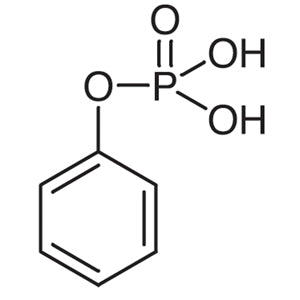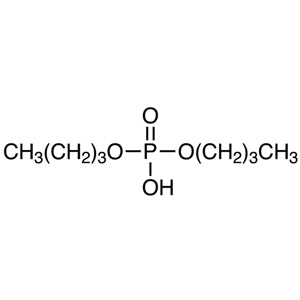
Dibutyl phosphate is a chemical compound widely used in various laboratory applications and organic synthesis processes. As a key building block in chemical reactions, it serves as both a reagent and a solvent, offering versatility in experimental setups. Its stable molecular structure allows it to participate in multiple chemical transformations, making it a valuable resource for researchers. In the laboratory, it is commonly employed in esterification reactions and as an auxiliary material in the synthesis of complex compounds. Its reliability and consistent performance contribute to the accuracy and reproducibility of chemical experiments.
The chemical properties of dibutyl phosphate make it a preferred choice for laboratory use. It exhibits good solubility in organic solvents such as ethylamine and ethyl acetate, which enhances its applicability in diverse reaction conditions. Its moderate reactivity ensures that it can be used in a wide range of chemical processes without producing unwanted byproducts. Additionally, dibutyl phosphate is relatively stable under normal conditions, reducing the risk of degradation and ensuring consistent results. These characteristics make it an ideal material for both academic and industrial research settings.
In Indonesian laboratories, dibutyl phosphate is commonly used in chemical research, particularly in the field of organic synthesis. It is an essential component in the development of new compounds and the optimization of chemical processes. Its non-toxic and environmentally friendly nature also makes it a preferred choice for laboratories that prioritize safety and sustainability. The compound's reliability and effectiveness have made it a staple in both educational and research institutions across Indonesia.
Related TCI products
- TCI P0267 107-66-4 Dibutyl Phosphate (Mono- and Di- Ester mixture)
- TCI D0300 1809-19-4 Dibutyl Phosphite
- TCI T4247 513-08-6 Tripropyl Phosphate
- TCI B1098 645-15-8 Bis(4-nitrophenyl) Phosphate [for Phosphodiesterase Substrate]
- TCI B0026 701-64-4 Phenyl Phosphate
- TCI T1002 3871-20-3 Tris(4-nitrophenyl) Phosphate
- Organic synthesis reactions benefit from dibutyl phosphate as it acts as a versatile reagent and solvent, enabling the formation of ester compounds with high efficiency.
- Esterification processes utilize dibutyl phosphate due to its ability to facilitate the formation of ester bonds under controlled laboratory conditions.
- Laboratory-scale chemical production relies on dibutyl phosphate for its stability and compatibility with various organic solvents, making it ideal for industrial applications.
- Research in chemical engineering often incorporates dibutyl phosphate to develop new compounds and improve existing chemical processes.
- Environmental studies may use dibutyl phosphate to analyze its impact on chemical systems and assess its biodegradability in different environments.
| Brand | TCI |
|---|---|
| CAS number | 107-66-4 |
| Molecular formula | — |
| Purity | — |
| Category | Chemistry > Building Blocks > Non-Heterocyclic Building Blocks |
| Pack sizes | Available in various quantities as per standard laboratory supply |
| Physical form | Liquid |
| Storage | Store in a cool, dry place away from direct sunlight |
Dibutyl phosphate should be stored in a cool, dry environment, away from direct sunlight and sources of heat. It is recommended to keep the container tightly sealed to prevent evaporation and contamination. Suitable containers for storage include glass or plastic vessels that are resistant to chemical reactions. In laboratory settings, it is important to handle the compound with care, using appropriate personal protective equipment such as gloves and safety goggles. While dibutyl phosphate is non-toxic and environmentally friendly, it is still advisable to follow standard laboratory safety protocols to ensure safe handling and storage. Its moderate reactivity and stable nature make it easier to manage in routine laboratory operations.
—
Produk Terkait
-
DibutylPhosphate(Mono-andDi-Estermixture) TCI P0267
Regular price From Rp 557.550,00Regular priceRp 405.300,00Sale price From Rp 557.550,00 -
DibutylPhosphite TCI D0300
Regular price Rp 584.850,00Regular priceRp 408.450,00Sale price Rp 584.850,00 -
TripropylPhosphate TCI T4247
Regular price From Rp 1.696.800,00Regular priceRp 1.202.250,00Sale price From Rp 1.696.800,00 -
Bis(4-nitrophenyl)Phosphate[forPhosphodiesteraseSubstrate] TCI B1098
Regular price From Rp 5.380.200,00Regular priceRp 3.777.900,00Sale price From Rp 5.380.200,00 -
PhenylPhosphate TCI B0026
Regular price From Rp 4.293.450,00Regular priceRp 3.017.700,00Sale price From Rp 4.293.450,00 -
Tris(4-nitrophenyl)Phosphate TCI T1002
Regular price Rp 3.815.700,00Regular priceRp 2.683.800,00Sale price Rp 3.815.700,00 -
PotassiumDi-tert-butylPhosphate TCI P2797
Regular price Rp 1.776.600,00Regular priceRp 1.257.900,00Sale price Rp 1.776.600,00 -
DibenzylPhosphate TCI P1120
Regular price From Rp 1.801.800,00Regular priceRp 1.275.750,00Sale price From Rp 1.801.800,00


![TCI B1098 645-15-8 Bis(4-nitrophenyl) Phosphate [for Phosphodiesterase Substrate]](http://amiscientific.com/cdn/shop/files/TCI2510B1098_0bec1c79-73c4-4af5-b9e8-946d2c87ebd5.jpg?v=1792659504&width=533)
![645-15-8 Bis(4-nitrophenyl) Phosphate [for Phosphodiesterase Substrate] - AMI Scientific](http://amiscientific.com/cdn/shop/files/TCI2510B1098.jpg?v=1768193282&width=533)