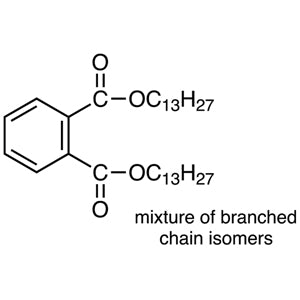
Diphenyl Phthalate (DPP), with the CAS number 84-62-8, is a chemical compound widely used in laboratory settings, particularly in the fields of materials science and polymer chemistry. It serves as a plasticizer or softening agent in the production of polymers, such as polyvinyl chloride (PVC). This material plays a crucial role in enhancing the flexibility and strength of polymer materials, making them more resistant to cracking and breaking. Its versatility allows it to be employed in various experimental processes where the manipulation of polymer properties is essential.
DPP is valued for its chemical stability and good thermal resistance, which make it suitable for use in high-temperature laboratory environments. These properties ensure that it maintains its integrity under different experimental conditions, minimizing the risk of degradation or contamination. Additionally, its resistance to decomposition under normal conditions contributes to its long shelf life, making it a reliable choice for long-term research projects. This stability and durability are key factors in its popularity among researchers working with polymers and macromolecules.
In Indonesian laboratories, Diphenyl Phthalate is commonly used in polymer and material research. It is relevant for both academic and industrial applications, particularly in institutions focused on the development of new materials or polymer modifications. Its use supports a wide range of studies aimed at improving the performance and characteristics of polymer-based products.
Related TCI products
- TCI B2715 126198-74-1 Benzyl Isononyl Phthalate (mixture of branched chain isomers)
- TCI P1344 84-75-3 Dihexyl Phthalate
- TCI P0307 75359-31-8 Ditridecyl Phthalate (mixture of branched chain isomers)
- TCI P0306 131-16-8 Dipropyl Phthalate
- TCI P0302 131-11-3 Dimethyl Phthalate
- TCI P0301 605-45-8 Diisopropyl Phthalate
- Polymer Processing Research - Diphenyl Phthalate is ideal for studying the effects of plasticizers on polymer flexibility and mechanical properties.
- Material Science Investigations - It is used to analyze the chemical and physical behavior of various polymer materials under different conditions.
- PVC Formulation Development - DPP is a key component in the formulation of polyvinyl chloride, helping to enhance its workability and final product quality.
- Thermal Stability Testing - Its good heat resistance makes it suitable for experiments that require high-temperature exposure without material degradation.
- Long-Term Stability Studies - The compound's resistance to decomposition ensures its reliability in extended research projects requiring consistent performance.
| Brand | TCI |
|---|---|
| CAS number | 84-62-8 |
| Molecular formula | — |
| Purity | — |
| Category | Materials Science > Polymer/Macromolecule Reagents > Polymer Additives |
| Pack sizes | Available in various quantities as per supplier specifications |
| Physical form | Liquid |
| Storage | Store in a cool, dry place away from direct sunlight |
Diphenyl Phthalate should be stored in a cool, dry environment, away from direct sunlight and sources of heat. It is recommended to keep the material in a sealed container to prevent exposure to air and moisture, which could affect its stability. Due to its chemical nature, it should be handled with appropriate personal protective equipment, such as gloves and safety goggles, to ensure laboratory safety. It is important to store it separately from incompatible substances to avoid any potential chemical reactions. Proper storage conditions help maintain the integrity and effectiveness of the compound, ensuring its suitability for use in various laboratory applications.
—
Produk Terkait
-
BenzylIsononylPhthalate(mixtureofbranchedchainisomers) TCI B2715
Regular price Rp 955.500,00Regular price -
DihexylPhthalate TCI P1344
Regular price From Rp 1.565.550,00Regular price -
DitridecylPhthalate(mixtureofbranchedchainisomers) TCI P0307
Regular price Rp 477.750,00Regular price -
DipropylPhthalate TCI P0306
Regular price From Rp 1.590.750,00Regular price -
DimethylPhthalate TCI P0302
Regular price From Rp 505.050,00Regular price -
DiisopropylPhthalate TCI P0301
Regular price From Rp 2.227.050,00Regular price -
DiisononylPhthalate(mixtureofbranchedchainisomers) TCI P0300
Regular price Rp 769.650,00Regular price -
DiisodecylPhthalate(mixtureofbranchedchainisomers) TCI P0299
Regular price From Rp 477.750,00Regular price