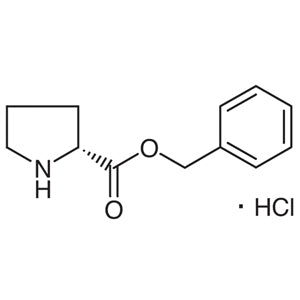
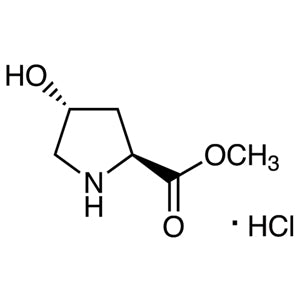
L-Proline Methyl Ester Hydrochloride is a chemical compound widely used in laboratory settings for its versatility in chemical and biochemical experiments. It plays a crucial role in peptide synthesis and amino acid modification, making it a fundamental reagent in organic chemistry and biochemistry. This compound is particularly valuable in research areas such as pharmaceutical development and structural biology, where precise chemical reactions are essential. Its ability to participate in peptide bond formation makes it indispensable for studies involving protein structures and molecular interactions.
The compound's chemical stability and reactivity make it a preferred choice for various synthetic processes. As an ester derivative of proline, it offers a unique set of properties that allow it to be easily incorporated into complex molecular structures. Its high reactivity and specific molecular structure enable it to be used in a wide range of chemical reactions, including those that require controlled and selective modifications. These characteristics ensure its reliability in both academic and industrial research environments.
In Indonesian laboratories, L-Proline Methyl Ester Hydrochloride is commonly used in scientific research related to biochemistry and pharmacology. It is frequently employed in experiments requiring the synthesis of complex compounds or molecular modifications. Its availability in a solid form and high purity make it a trusted material for researchers working on advanced chemical and biological projects. Its consistent performance supports the accuracy and reproducibility of experimental results in both educational and research institutions.
TCI brochures (PDF)
- Amino Acids and Peptide Synthesis Reagents 2025-08-14 · p. 26
- Reagents for Biological Research 2025-03-11 · p. 58
Related TCI products
- TCI B4787 73323-65-6 N-(tert-Butoxycarbonyl)-D-proline Methyl Ester
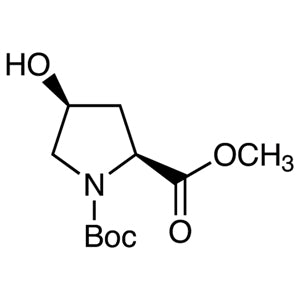
- TCI B3987 102195-79-9 N-(tert-Butoxycarbonyl)-cis-4-hydroxy-L-proline Methyl Ester
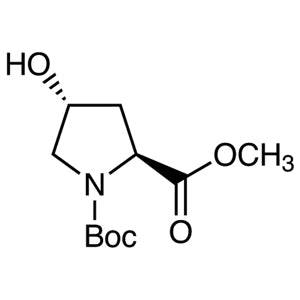
- TCI B3843 74844-91-0 N-(tert-Butoxycarbonyl)-trans-4-hydroxy-L-proline Methyl Ester
- TCI B3414 102185-34-2 N-(tert-Butoxycarbonyl)-D-proline Succinimidyl Ester
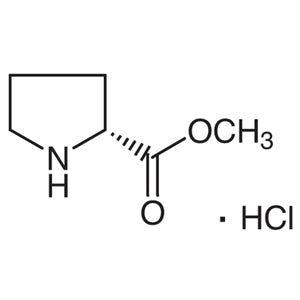
- TCI P1730 65365-28-8 D-Proline Methyl Ester Hydrochloride
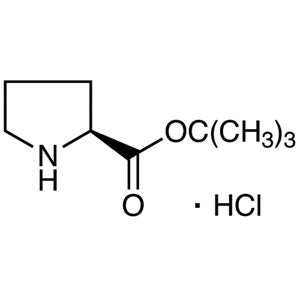
- TCI P1729 5497-76-7 L-Proline tert-Butyl Ester Hydrochloride
- Peptide Synthesis: This compound is ideal for synthesizing peptides due to its ability to participate in peptide bond formation, making it essential for protein structure studies.
- Amino Acid Modification: It is used to modify amino acids, enabling the creation of complex molecular structures for biochemical research.
- Organic Chemistry Research: Its reactivity and stability make it a valuable reagent in organic synthesis, supporting the development of new chemical compounds.
- Pharmaceutical Development: It is commonly used in drug development to create modified amino acid derivatives with potential therapeutic applications.
- Structural Biology Studies: Its role in forming peptide bonds supports research into the structure and function of biological molecules.
| Brand | TCI |
|---|---|
| CAS number | 2133-40-6 |
| Molecular formula | — |
| Purity | — |
| Category | Chemistry > Chemical Biology > Peptide Chemistry |
| Pack sizes | Available in various quantities as per supplier specifications |
| Physical form | Solid |
| Storage | Store in a cool, dry place away from moisture and direct sunlight |
L-Proline Methyl Ester Hydrochloride should be stored in a cool, dry environment to maintain its chemical stability. It is recommended to keep the compound in a sealed container to prevent exposure to moisture and air, which could affect its reactivity. Suitable storage containers include glass or high-density polyethylene (HDPE) bottles to ensure chemical compatibility. In laboratory settings, it should be handled with care to avoid direct contact with skin or inhalation of vapors. Always ensure proper ventilation when working with this compound. Regular monitoring of storage conditions is advised to maintain the integrity of the material for consistent experimental results.
—
Product Categories
Produk Terkait
-
N-(tert-Butoxycarbonyl)-D-prolineMethylEster TCI B4787
Regular price From Rp 769.650,00Regular price -
N-(tert-Butoxycarbonyl)-cis-4-hydroxy-L-prolineMethylEster TCI B3987
Regular price From Rp 689.850,00Regular price -
N-(tert-Butoxycarbonyl)-trans-4-hydroxy-L-prolineMethylEster TCI B3843
Regular price From Rp 769.650,00Regular price -
N-(tert-Butoxycarbonyl)-D-prolineSuccinimidylEster TCI B3414
Regular price From Rp 743.400,00Regular price -
D-ProlineMethylEsterHydrochloride TCI P1730
Regular price From Rp 1.087.800,00Regular price -
L-Prolinetert-ButylEsterHydrochloride TCI P1729
Regular price From Rp 2.306.850,00Regular price -
D-ProlineBenzylEsterHydrochloride TCI P1726
Regular price From Rp 823.200,00Regular price -
trans-4-Hydroxy-L-prolineMethylEsterHydrochloride TCI H1533
Regular price From Rp 1.008.000,00Regular price