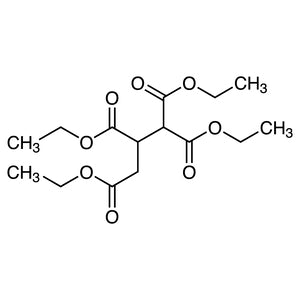
Tetraethyl Propane-1,1,2,3-tetracarboxylate is a chemical compound widely used in laboratory settings for the synthesis of complex organic molecules. This compound serves as a building block in various chemical reactions, particularly in the formation of esters, polymers, and other organic compounds. Its unique molecular structure, featuring four ethoxy groups attached to a tetracarboxylic acid backbone, makes it a versatile reagent in organic chemistry. Due to its stability and controlled reactivity, it is a valuable tool for chemists working on diverse synthetic pathways.
The compound's chemical properties make it a preferred choice for laboratory applications. Its stability under a range of chemical conditions ensures consistent performance in experiments, while its controlled reactivity allows for precise control over reaction outcomes. The solid form of the compound facilitates easy handling and storage, making it a practical option for routine laboratory use. Additionally, its compatibility with various solvents and reagents enhances its utility in a wide array of synthetic processes.
In Indonesian laboratories, Tetraethyl Propane-1,1,2,3-tetracarboxylate is commonly used in organic chemistry research. It is particularly favored for the synthesis of complex organic structures, including polymers and esters. Many research institutions and universities in Indonesia rely on this compound for experimental work that requires reliable and consistent chemical building blocks. Its availability and ease of use make it an essential component in the chemical supply chain of Indonesian laboratories.
Related TCI products
- TCI T4315 6337-43-5 Tetraethyl 2,2'-[1,4-Phenylenebis(methaneylylidene)]dimalonate
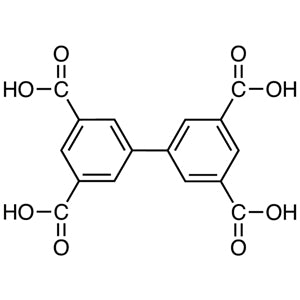
- TCI B3792 4371-28-2 Biphenyl-3,3',5,5'-tetracarboxylic Acid
- TCI B0684 4534-68-3 meso-Butane-1,2,3,4-tetracarboxylic Acid
- TCI B6179 22803-05-0 [1,1'-Biphenyl]-3,3',4,4'-tetracarboxylic Acid
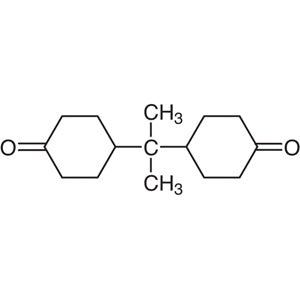
- TCI B1672 7418-16-8 2,2-Bis(4-oxocyclohexyl)propane
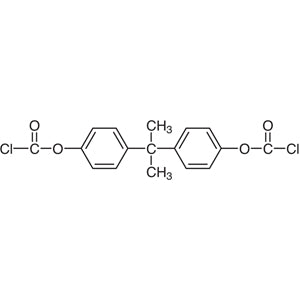
- TCI B1335 2024-88-6 2,2-Bis(4-chloroformyloxyphenyl)propane
- Organic synthesis applications benefit from this compound's ability to form ester linkages, enabling the creation of complex organic molecules with high structural diversity.
- Polymer research utilizes this reagent to develop new materials with tailored properties, such as enhanced thermal stability and mechanical strength.
- Esterification reactions are effectively supported by its controlled reactivity, allowing for precise control over reaction conditions and product formation.
- Structural chemistry studies use this compound as a key building block for the synthesis of compounds with unique molecular architectures.
- Industrial chemical processes incorporate this reagent for the production of specialty chemicals with specific functional groups and molecular characteristics.
| Brand | TCI |
|---|---|
| CAS number | 635-03-0 |
| Molecular formula | — |
| Purity | — |
| Category | Chemistry > Building Blocks > Non-Heterocyclic Building Blocks |
| Pack sizes | Available in various quantities as per standard laboratory supply requirements |
| Physical form | Solid |
| Storage | Store in a cool, dry place away from direct sunlight and moisture |
This compound should be stored in a cool, dry environment, away from direct sunlight and moisture to maintain its chemical integrity. It is recommended to use airtight containers to prevent exposure to humidity and contaminants. Due to its solid form, it is easy to handle and measure, but care should be taken to avoid mechanical damage during storage and transport. In laboratory settings, it is important to ensure proper ventilation when working with this compound to minimize any potential exposure. Always follow standard safety protocols when handling chemical reagents to ensure a safe and efficient working environment.
—
Produk Terkait
-
Tetraethyl2,2'-[1,4-Phenylenebis(methaneylylidene)]dimalonate TCI T4315
Regular price From Rp 928.200,00Regular price -
Biphenyl-3,3',5,5'-tetracarboxylicAcid TCI B3792
Regular price Rp 3.949.050,00Regular price -
meso-Butane-1,2,3,4-tetracarboxylicAcid TCI B0684
Regular price From Rp 717.150,00Regular price -
[1,1'-Biphenyl]-3,3',4,4'-tetracarboxylicAcid TCI B6179
Regular price Rp 4.479.300,00Regular price -
2,2-Bis(4-oxocyclohexyl)propane TCI B1672
Regular price From Rp 4.691.400,00Regular price -
2,2-Bis(4-chloroformyloxyphenyl)propane TCI B1335
Regular price From Rp 477.750,00Regular price -
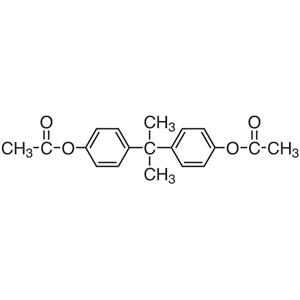
2,2-Bis(4-acetoxyphenyl)propane TCI B1286
Regular price Rp 1.035.300,00Regular price -
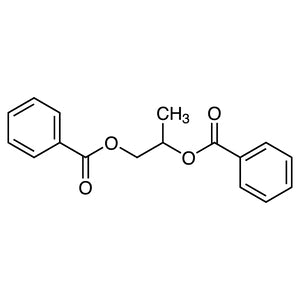
Propane-1,2-diylDibenzoate TCI P3051
Regular price From Rp 2.650.200,00Regular price
![6337-43-5 Tetraethyl 2,2'-[1,4-Phenylenebis(methaneylylidene)]dimalonate - AMI Scientific](http://amiscientific.com/cdn/shop/files/TCI2510T4315.jpg?v=1767145058&width=533)

![[1,1'-Biphenyl]-3,3',4,4'-tetracarboxylic Acid (CAS 22803-05-0) - TCI B6179 - AMI Scientific](http://amiscientific.com/cdn/shop/files/TCI2510B6179.jpg?v=1767093266&width=533)