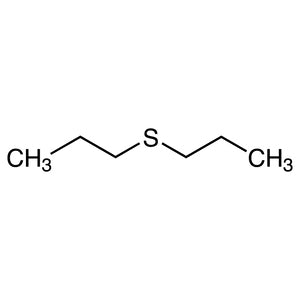
Propyl Sulfide (TCI P0532), with CAS number 111-47-7, is a chemical compound widely used in laboratory settings for its versatility in organic synthesis. It serves as a fundamental building block in the creation of various organic compounds, playing a crucial role in chemical reactions such as substitution and oxidation. Its simple molecular structure contributes to its effectiveness in forming compounds with specific chemical properties. This compound is essential for researchers seeking to manipulate molecular structures and develop new chemical entities.
The chemical properties of Propyl Sulfide make it a preferred choice in laboratory environments. It is chemically stable under normal conditions but remains reactive in specific environments, allowing for controlled chemical transformations. Its characteristic odor can influence reaction dynamics, making it a valuable tool in synthetic chemistry. The liquid form of Propyl Sulfide facilitates easy handling and precise dosing in laboratory reactors, enhancing its usability in both research and industrial applications.
In Indonesian laboratories, Propyl Sulfide is commonly used in organic synthesis and chemical analysis. Its availability, combined with its ease of use, makes it a popular choice among researchers. The compound is integral to the development of new materials and pharmaceuticals, supporting both academic and industrial research efforts. Its role in chemical experimentation underscores its importance in the scientific community.
Related TCI products
- Organic synthesis is a primary application for Propyl Sulfide, as it serves as a key reagent in creating complex organic molecules through substitution and oxidation reactions.
- Chemical analysis benefits from Propyl Sulfide due to its reactivity and ability to participate in various analytical procedures, aiding in the identification of molecular structures.
- Pharmaceutical research utilizes Propyl Sulfide to develop new compounds, leveraging its chemical properties for the synthesis of drug-related molecules.
- Industrial chemical production incorporates Propyl Sulfide as a building block for manufacturing a wide range of chemical products.
- Environmental studies may use Propyl Sulfide to analyze the presence and behavior of sulfur-containing compounds in different ecosystems.
| Brand | TCI |
|---|---|
| CAS number | 111-47-7 |
| Molecular formula | — |
| Purity | — |
| Category | Chemistry > Building Blocks > Non-Heterocyclic Building Blocks |
| Pack sizes | Available in various sizes as per supplier specifications |
| Physical form | Liquid |
| Storage | Should be stored in a cool, dark place away from direct sunlight and incompatible substances |
Propyl Sulfide should be stored in a cool, dark environment to maintain its chemical stability. It is recommended to use sealed containers made of materials compatible with its chemical properties, such as glass or stainless steel. Due to its reactivity under certain conditions, it should be kept away from strong oxidizing agents and heat sources. Proper ventilation is essential when handling the compound to minimize exposure to its characteristic odor. Laboratory personnel should wear appropriate personal protective equipment, including gloves and safety goggles, to ensure safe handling. Regular monitoring of storage conditions is necessary to prevent degradation and ensure the compound remains suitable for use in chemical experiments.
—
Produk Terkait
-
TrimethyleneSulfide TCI T0474
Regular price Rp 3.180.450,00Regular priceRp 2.239.650,00Sale price Rp 3.180.450,00 -
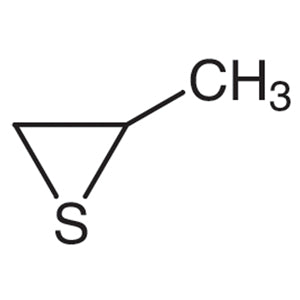
PropyleneSulfide(stabilizedwithButylMercaptan) TCI P0321
Regular price Rp 1.272.600,00Regular priceRp 905.100,00Sale price Rp 1.272.600,00 -
PentamethyleneSulfide TCI P0044
Regular price Rp 1.776.600,00Regular priceRp 1.257.900,00Sale price Rp 1.776.600,00 -
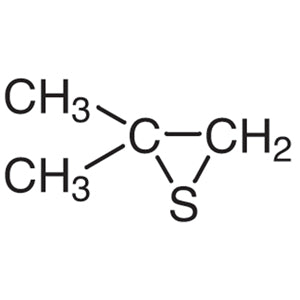
IsobutyleneSulfide TCI I0461
Regular price Rp 2.677.500,00Regular priceRp 1.887.900,00Sale price Rp 2.677.500,00 -
EthylSulfide TCI E0176
Regular price Rp 1.644.300,00Regular priceRp 1.149.750,00Sale price Rp 1.644.300,00 -
EthyleneSulfide(stabilizedwithButylMercaptan) TCI E0133
Regular price Rp 2.227.050,00Regular priceRp 1.572.900,00Sale price Rp 2.227.050,00 -
Tin(IV)Sulfide TCI T4244
Regular price Rp 1.193.850,00Regular priceRp 834.750,00Sale price Rp 1.193.850,00 -
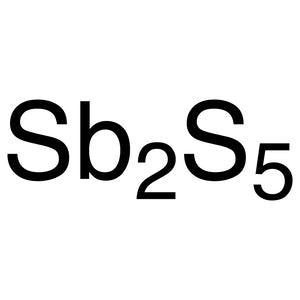
Antimony(V)Sulfide TCI A3628
Regular price Rp 1.035.300,00Regular priceRp 723.450,00Sale price Rp 1.035.300,00