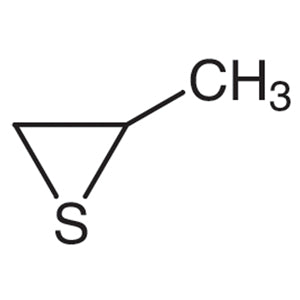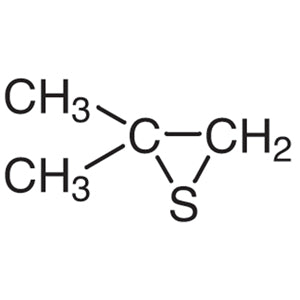
Trimethylene sulfide (TMS), with the CAS number 287-27-4, is a versatile chemical compound widely used in laboratory settings for its reactivity and utility in organic synthesis. As a non-heterocyclic building block, TMS serves as a fundamental component in the creation of complex molecular structures. Its simple molecular structure allows it to participate in various chemical reactions, making it an essential tool for chemists working on synthetic pathways. TMS is particularly valued for its ability to form new bonds with functional groups, which is critical in the development of new compounds in pharmaceutical and materials science research.
One of the key properties that make TMS a preferred choice is its reactivity and volatility. These characteristics enable it to be an effective reagent in substitution reactions and bond-forming processes. Its cyclic structure also allows it to engage in a wide range of chemical transformations, contributing to the efficiency of synthetic routes. Additionally, TMS is known for its ability to interact with a variety of functional groups, making it a flexible and reliable reagent in laboratory applications. Its volatility, however, requires careful handling to ensure safety and effectiveness in use.
In Indonesian laboratories, TMS is commonly used in chemical research, especially in the synthesis of organic compounds. It plays a crucial role in the development of new materials and pharmaceuticals by facilitating the formation of complex molecular structures. Researchers in Indonesia rely on TMS for its reliability and performance in various synthetic processes, making it an indispensable component in their experimental workflows.
- Organic synthesis: Trimethylene sulfide is widely used in the synthesis of complex organic molecules due to its reactivity and ability to form new bonds.
- Pharmaceutical research: TMS is employed in the development of new drugs, as it helps in the creation of functionalized compounds with desired biological activities.
- Material science: The compound is utilized in the production of advanced materials, where its chemical versatility supports the formation of novel structures.
- Analytical chemistry: TMS is used as a reagent in analytical procedures to facilitate the detection and quantification of various compounds.
- Industrial chemical processes: It is applied in industrial settings where efficient and reliable chemical reactions are required for the production of specialty chemicals.
| Brand | TCI |
|---|---|
| CAS number | 287-27-4 |
| Molecular formula | — |
| Purity | — |
| Category | Chemistry > Building Blocks > Non-Heterocyclic Building Blocks |
| Pack sizes | Available in various quantities as per standard laboratory supply |
| Physical form | Liquid |
| Storage | Store in a cool, dry place away from direct sunlight and incompatible materials |
Trimethylene sulfide should be stored in a cool, dry environment, away from direct sunlight and sources of heat. It is recommended to use sealed containers made of materials compatible with its chemical properties, such as glass or high-density polyethylene. Due to its volatility, it is important to ensure proper ventilation in the laboratory when handling TMS. Avoid exposure to incompatible substances, such as strong oxidizing agents, to prevent unwanted reactions. Always use appropriate personal protective equipment, including gloves and safety goggles, to minimize risk during handling. Regular monitoring of storage conditions is essential to maintain the integrity and safety of the compound in the laboratory setting.
—
Produk Terkait
-
PropyleneSulfide(stabilizedwithButylMercaptan) TCI P0321
Regular price From Rp 1.272.600,00Regular priceRp 905.100,00Sale price From Rp 1.272.600,00 -
PentamethyleneSulfide TCI P0044
Regular price Rp 1.776.600,00Regular priceRp 1.257.900,00Sale price Rp 1.776.600,00 -
IsobutyleneSulfide TCI I0461
Regular price From Rp 2.677.500,00Regular priceRp 1.887.900,00Sale price From Rp 2.677.500,00 -
EthyleneSulfide(stabilizedwithButylMercaptan) TCI E0133
Regular price Rp 2.227.050,00Regular priceRp 1.572.900,00Sale price Rp 2.227.050,00 -
N-Benzyl-N,N'-dimethylethylenediamine TCI B3246
Regular price From Rp 3.285.450,00Regular priceRp 2.313.150,00Sale price From Rp 3.285.450,00