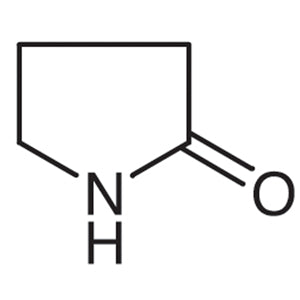
2-Pyrrolidone is a heterocyclic chemical compound containing a single nitrogen atom within a five-membered ring. It serves as a fundamental building block in organic chemistry and pharmacology, playing a crucial role in the synthesis of complex molecules. In laboratory settings, it functions as a precursor for the development of various bioactive compounds, including pharmaceuticals and industrial chemicals. Its structural versatility makes it a valuable tool for chemists seeking to create novel compounds with specific functionalities.
The compound is known for its stability and reactivity, which make it a preferred choice in chemical reactions requiring heterocyclic structures. Its polar nature allows it to dissolve in organic solvents such as ethyl acetate and acetone, facilitating its use in a wide range of synthetic processes. Additionally, its relatively high boiling point simplifies evaporation or distillation steps in laboratory procedures. These properties contribute to its widespread application in both academic and industrial research.
In Indonesian laboratories, 2-Pyrrolidone is commonly used in organic chemistry research. It is particularly favored for its ability to participate in various reaction types, such as coupling and substitution reactions. Its high purity and consistent chemical properties make it a reliable material for scientific investigations, supporting the development of new compounds and formulations in the pharmaceutical and chemical industries.
Related TCI products
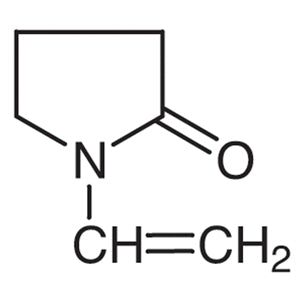
- TCI V0026 88-12-0 1-Vinyl-2-pyrrolidone (stabilized with N,N'-Di-sec-butyl-p-phenylenediamine)
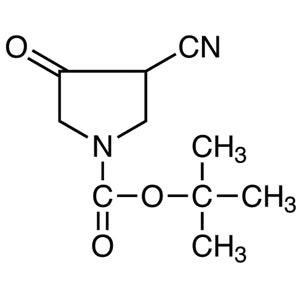
- TCI B4761 175463-32-8 1-tert-Butoxycarbonyl-3-cyano-4-pyrrolidone
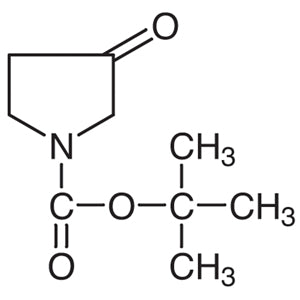
- TCI B3589 101385-93-7 1-tert-Butoxycarbonyl-3-pyrrolidone
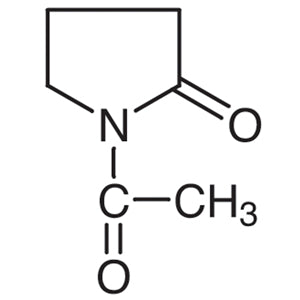
- TCI A1418 932-17-2 1-Acetyl-2-pyrrolidone
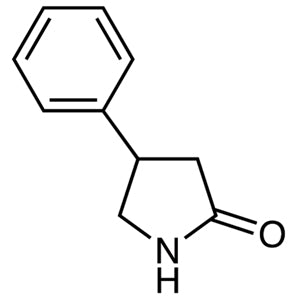
- TCI P2727 1198-97-6 4-Phenyl-2-pyrrolidone
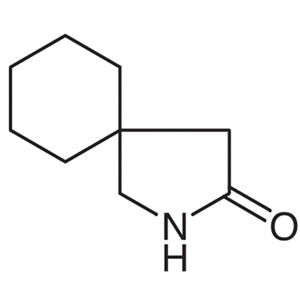
- TCI P1695 64744-50-9 4,4-Pentamethylene-2-pyrrolidone
- Organic synthesis applications benefit from 2-Pyrrolidone’s ability to act as a versatile building block for creating complex molecular structures.
- Pharmaceutical research utilizes this compound in the development of bioactive molecules due to its reactivity and structural adaptability.
- Industrial chemical production relies on 2-Pyrrolidone for the synthesis of various functional compounds with specific chemical properties.
- Analytical chemistry experiments use this material for its solubility and stability in organic solvents, aiding in compound isolation and purification.
- Research in heterocyclic chemistry leverages 2-Pyrrolidone’s unique ring structure to explore new synthetic pathways and molecular designs.
| Brand | TCI |
|---|---|
| CAS number | 616-45-5 |
| Molecular formula | — |
| Purity | — |
| Category | Chemistry > Building Blocks > Heterocyclic Building Blocks |
| Pack sizes | Available in various quantities as per standard laboratory supply |
| Physical form | Liquid |
| Storage | Store in a cool, dry place away from direct sunlight |
2-Pyrrolidone should be stored in a cool, dry environment to maintain its chemical integrity. It is recommended to keep the compound in a tightly sealed container to prevent exposure to air and moisture. Due to its polar nature, it is advisable to use glass or polyethylene containers that are resistant to chemical degradation. In laboratory settings, it is important to handle the compound with appropriate personal protective equipment, such as gloves and safety goggles, to ensure safety during handling and experimentation. Proper ventilation should be maintained in the workspace to minimize inhalation of vapors. The compound should not be stored near incompatible materials, such as strong oxidizers or acids, to avoid potential chemical reactions.
—
Produk Terkait
-
1-Vinyl-2-pyrrolidone(stabilizedwithN,N'-Di-sec-butyl-p-phenylenediamine) TCI V0026
Regular price From Rp 477.750,00Regular price -
1-tert-Butoxycarbonyl-3-cyano-4-pyrrolidone TCI B4761
Regular price From Rp 689.850,00Regular price -
1-tert-Butoxycarbonyl-3-pyrrolidone TCI B3589
Regular price From Rp 530.250,00Regular price -
1-Acetyl-2-pyrrolidone TCI A1418
Regular price From Rp 1.724.100,00Regular price -
4-Phenyl-2-pyrrolidone TCI P2727
Regular price From Rp 1.458.450,00Regular price -
4,4-Pentamethylene-2-pyrrolidone TCI P1695
Regular price Rp 875.700,00Regular price -
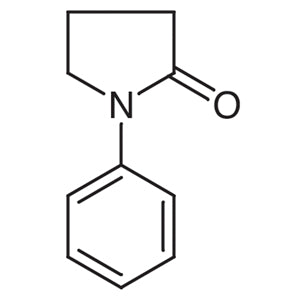
1-Phenyl-2-pyrrolidone TCI P0319
Regular price Rp 875.700,00Regular price -
1-n-Octyl-2-pyrrolidone TCI O0325
Regular price From Rp 505.050,00Regular price