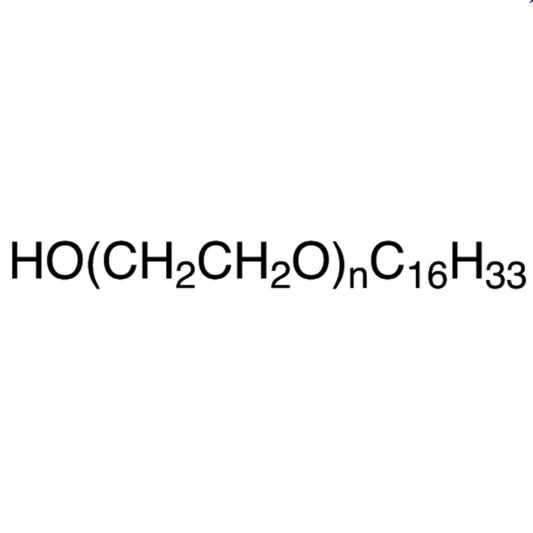
Polyethylene Glycol Monostearate (PEG Monostearate), with the CAS number 9004-99-3, is a versatile chemical compound widely used in laboratory settings involving polymer science and additive applications. It is a derivative of polyethylene glycol, where a stearate group is attached to the polyether chain, making it an effective emulsifier and solubilizer. This compound is commonly found in formulations for cosmetics, pharmaceuticals, and industrial materials, where its ability to blend oil and water phases is highly valuable. Its role in laboratory research is to facilitate the creation of stable emulsions and to act as a compatibilizer in polymer blends.
The key properties that make PEG Monostearate a preferred choice include its non-iodinated and non-toxic nature, ensuring safe handling in laboratory environments. It exhibits good solubility in both water and oil, which enhances its utility in various experimental setups. Additionally, its chemical stability and consistent performance make it a reliable material for long-term studies and repeated use. These characteristics contribute to its widespread application in both academic and industrial research.
In Indonesian laboratories, PEG Monostearate is frequently utilized in cosmetic formulation research, pharmaceutical development, and polymer science studies. Its role in surface property analysis and molecular interaction studies makes it an essential component in material science and industrial chemistry research. The compound's versatility and safety profile make it a go-to choice for researchers in Indonesia.
Related TCI products
- TCI P3064 9005-00-9 Polyethylene Glycol Monostearyl Ether (n=approx. 20)
- TCI P2885 9005-08-7 Polyethylene Glycol Distearate (n=approx. 10)
- TCI P0873 9002-93-1 Polyethylene Glycol Mono-4-octylphenyl Ether (n=approx. 10)
- TCI P0872 9004-81-3 Polyethylene Glycol Monolaurate (n=approx. 10)
- TCI P0841 9004-95-9 Polyethylene Glycol Monocetyl Ether (n=approx. 23)
- TCI P0723 9004-99-3 Polyethylene Glycol Monostearate (n=approx. 55) (palmitate and stearate mixture)
- Cosmetic Formulation Research: PEG Monostearate is used to create stable emulsions in cosmetic products, enhancing texture and consistency.
- Pharmaceutical Development: It serves as a solubilizing agent in drug formulations, improving the bioavailability of hydrophobic compounds.
- Polymer Science Studies: It acts as a compatibilizer in polymer blends, improving interfacial adhesion and mechanical properties.
- Surface Property Analysis: Its ability to interact with both polar and non-polar substances makes it ideal for studying surface tension and interfacial behavior.
- Industrial Chemistry Applications: It is used in the development of coatings and adhesives, where its emulsifying properties are crucial for formulation stability.
| Brand | TCI |
|---|---|
| CAS number | 9004-99-3 |
| Molecular formula | — |
| Purity | — |
| Category | Materials Science > Polymer/Macromolecule Reagents > Polymer Additives |
| Pack sizes | Available in various quantities as per standard laboratory supply |
| Physical form | Solid powder |
| Storage | Store in a cool, dry place away from direct sunlight and moisture |
PEG Monostearate should be stored in a cool, dry environment to maintain its chemical integrity and prevent degradation. It is recommended to use airtight containers to protect it from moisture and contaminants. Due to its non-toxic nature, it is generally safe to handle, but standard laboratory precautions should still be followed, such as wearing gloves and safety goggles. It should be kept away from heat sources and incompatible materials to ensure long-term stability and usability. Proper labeling and storage conditions help in maintaining the quality of the compound for research applications.
—
Product Categories
Produk Terkait
-
PolyethyleneGlycolMonostearylEther(n=approx.20) TCI P3064
Regular price From Rp 505.050,00Regular price -
PolyethyleneGlycolDistearate(n=approx.10) TCI P2885
Regular price Rp 1.220.100,00Regular price -
PolyethyleneGlycolMono-4-octylphenylEther(n=approx.10) TCI P0873
Regular price From Rp 557.550,00Regular price -
PolyethyleneGlycolMonolaurate(n=approx.10) TCI P0872
Regular price From Rp 477.750,00Regular price -
PolyethyleneGlycolMonocetylEther(n=approx.23) TCI P0841
Regular price From Rp 477.750,00Regular price -
PolyethyleneGlycolMonostearate(n=approx.55)(palmitateandstearatemixture) TCI P0723
Regular price From Rp 477.750,00Regular price -
PolyethyleneGlycolMonostearate(n=approx.45)(palmitateandstearatemixture) TCI P0722
Regular price From Rp 477.750,00Regular price -
PolyethyleneGlycolMonostearate(n=approx.25)(palmitateandstearatemixture) TCI P0720
Regular price From Rp 477.750,00Regular price