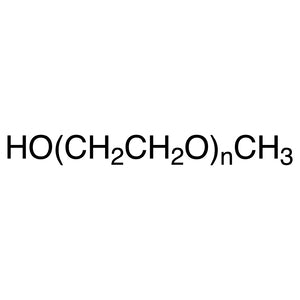
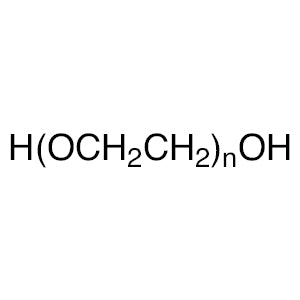
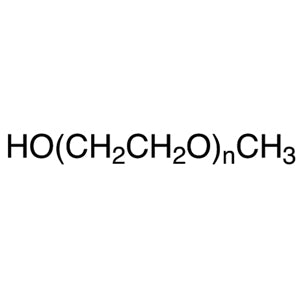
Polyethylene Glycol Monolaurate (PEG Monolaurate), with the CAS number 9004-81-3, is a chemical compound widely used in laboratory experiments, particularly in the fields of materials science and chemistry. This compound is a derivative of polyethylene glycol, featuring a hydrocarbon chain at one end, which gives it amphiphilic properties. Its versatility makes it an essential reagent for various applications in both academic and industrial research settings. As a polymer additive, it plays a crucial role in modifying the behavior of polymers and enhancing their functional properties.
The key properties that make PEG Monolaurate a preferred choice include its ability to act as an emulsifier, stabilizer, and dispersing agent. Its amphiphilic nature allows it to effectively reduce the surface tension between immiscible substances, such as water and oil, enabling the formation of stable emulsions. Additionally, its relatively low melting point facilitates easy handling and adjustment in controlled laboratory conditions. These characteristics make it highly suitable for use in formulations requiring controlled surface interactions and molecular compatibility.
In Indonesian laboratories, PEG Monolaurate is commonly used in research related to surface chemistry, polymer science, and colloidal systems. It is frequently incorporated into experiments involving the synthesis of complex chemical compounds, the development of new materials, and the study of molecular interactions. Its reliability and performance make it a go-to reagent for researchers aiming to achieve precise and reproducible results in their experiments.
TCI brochures (PDF)
- Polymer Additives 2026-04-16 · p. 12
Related TCI products
- TCI P0709 26027-38-3 Polyethylene Glycol Mono-4-nonylphenyl Ether (n=approx. 18)
- TCI P3095 9004-74-4 Polyethylene Glycol Monomethyl Ether 220
- TCI P2830 25322-68-3 Polyethylene Glycol 20000
- TCI P2829 25322-68-3 Polyethylene Glycol 11000
- TCI P2828 25322-68-3 Polyethylene Glycol 1000
- TCI P2241 24991-55-7 Polyethylene Glycol Dimethyl Ether (Mw=ca 240)
- Surface Chemistry Research: PEG Monolaurate is ideal for studying surface interactions due to its amphiphilic nature, enabling the manipulation of interfacial behavior in controlled environments.
- Polymer Formulation Development: Its role as a polymer additive allows for the modification of polymer properties, enhancing stability and functionality in material synthesis.
- Emulsion Stabilization: The compound's ability to form stable emulsions makes it suitable for applications requiring the mixing of immiscible phases, such as in cosmetic or pharmaceutical formulations.
- Colloidal System Studies: It is frequently used in experiments involving colloidal dispersions, where its dispersing properties aid in achieving uniform particle distribution.
- Molecular Interaction Analysis: Its amphiphilic characteristics make it valuable in research focusing on molecular interactions, including surfactant behavior and phase behavior studies.
| Brand | TCI |
|---|---|
| CAS number | 9004-81-3 |
| Molecular formula | — |
| Purity | — |
| Category | Materials Science > Polymer/Macromolecule Reagents > Polymer Additives |
| Pack sizes | Available in various quantities as per standard laboratory supply options |
| Physical form | Solid at room temperature |
| Storage | Store in a cool, dry place away from direct sunlight and moisture |
PEG Monolaurate should be stored in a cool, dry environment to maintain its chemical integrity and prevent degradation. It is recommended to use airtight containers to protect it from moisture and contaminants. As a solid material, it does not require refrigeration but should be kept away from heat sources to avoid melting. In laboratory settings, it is important to handle the compound with care, using appropriate personal protective equipment such as gloves and safety goggles. Due to its amphiphilic nature, it is advisable to avoid prolonged exposure to skin or inhalation. Proper labeling and storage in designated chemical cabinets help ensure safe handling and prevent accidental contamination.
—
Produk Terkait
-
PolyethyleneGlycolMono-4-nonylphenylEther(n=approx.18) TCI P0709
Regular price Rp 795.900,00Regular priceRp 556.500,00Sale price Rp 795.900,00 -
PolyethyleneGlycolMonomethylEther220 TCI P3095
Regular price From Rp 557.550,00Regular priceRp 405.300,00Sale price From Rp 557.550,00 -
PolyethyleneGlycol20000 TCI P2830
Regular price From Rp 477.750,00Regular priceRp 333.900,00Sale price From Rp 477.750,00 -
PolyethyleneGlycol11000 TCI P2829
Regular price Rp 477.750,00Regular priceRp 333.900,00Sale price Rp 477.750,00 -
PolyethyleneGlycol1000 TCI P2828
Regular price From Rp 477.750,00Regular priceRp 333.900,00Sale price From Rp 477.750,00 -
PolyethyleneGlycolDimethylEther(Mw=ca240) TCI P2241
Regular price From Rp 637.350,00Regular priceRp 460.950,00Sale price From Rp 637.350,00 -
PolyethyleneGlycolMonomethylEther4000 TCI P2187
Regular price From Rp 505.050,00Regular priceRp 352.800,00Sale price From Rp 505.050,00 -
PolyethyleneGlycolMonomethylEther2000 TCI P2186
Regular price From Rp 505.050,00Regular priceRp 352.800,00Sale price From Rp 505.050,00