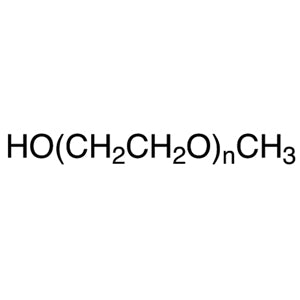
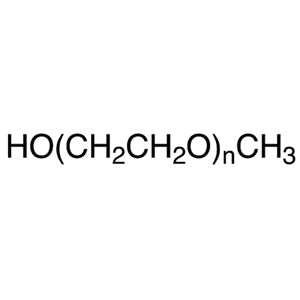
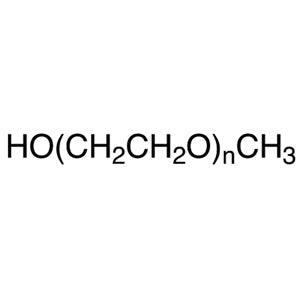
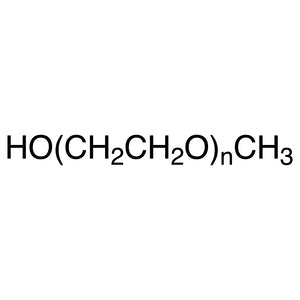
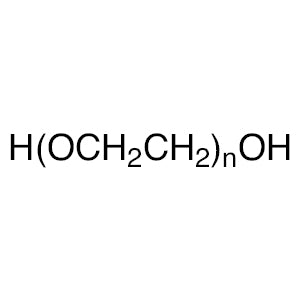
Polyethylene Glycol Monomethyl Ether 4000 (PEG 4000), with CAS number 9004-74-4, is a chemical compound widely used in laboratory settings, particularly in biochemical and biomedical research. This compound is a derivative of polyethylene glycol (PEG), known for its ability to enhance the stability and solubility of biological molecules. PEG 4000 is commonly used in PEGylation processes, where it is attached to proteins, liposomes, or other biomolecules to improve their performance and longevity in therapeutic applications. Its versatility makes it an essential reagent for researchers aiming to develop more effective biopharmaceuticals.
One of the key reasons PEG 4000 is preferred in laboratories is its chemical stability, non-toxicity, and environmental safety. It does not contain harmful substances that could damage the environment or interfere with experimental results. Additionally, PEG 4000 exhibits good solubility in organic solvents such as ethyl acetate and acetone, and its hydrophobic nature allows it to be used in a variety of experimental conditions. These properties make it a reliable and safe choice for a wide range of applications in both academic and industrial research.
In Indonesian laboratories, PEG 4000 is frequently used in biotechnology and pharmaceutical research. It is a key component in the development of drug delivery systems, protein stabilization, and diagnostic assays. Its role in enhancing the functionality and shelf life of biopharmaceutical products makes it a vital material for researchers working in these fields. The compound's reliability and consistent performance contribute to its widespread use in both academic and industrial laboratory settings.
TCI brochures (PDF)
- Drug Delivery System (DDS) Research Reagents 2025-01-29 · p. 2
- Biomaterials Research Reagents 2025-02-19 · p. 6
Related TCI products
- TCI P2186 9004-74-4 Polyethylene Glycol Monomethyl Ether 2000
- TCI P2185 9004-74-4 Polyethylene Glycol Monomethyl Ether 1000
- TCI P2184 9004-74-4 Polyethylene Glycol Monomethyl Ether 550
- TCI P2183 9004-74-4 Polyethylene Glycol Monomethyl Ether 400
- TCI P3095 9004-74-4 Polyethylene Glycol Monomethyl Ether 220
- TCI P2830 25322-68-3 Polyethylene Glycol 20000
- PEGylation of Proteins: PEG 4000 is used to modify proteins, enhancing their solubility and reducing immunogenicity, which is crucial for therapeutic applications.
- Liposome Stabilization: It helps in stabilizing liposomes by increasing their circulation time in the bloodstream, improving drug delivery efficiency.
- Drug Delivery Systems: PEG 4000 is incorporated into drug delivery systems to improve the bioavailability and targeting of therapeutic agents.
- Diagnostic Assays: It is used in diagnostic tests to enhance the detection sensitivity and specificity of biomolecules.
- Biocompatibility Testing: Due to its non-toxic nature, PEG 4000 is used to evaluate the biocompatibility of new biomaterials and drug formulations.
| Brand | TCI |
|---|---|
| CAS number | 9004-74-4 |
| Molecular formula | — |
| Purity | — |
| Category | Chemistry > Chemical Biology > PEGylation |
| Pack sizes | Available in various sizes as per supplier specifications |
| Physical form | Liquid |
| Storage | Store in a cool, dry place away from direct sunlight |
PEG 4000 should be stored in a cool, dry place, away from direct sunlight and sources of heat. It is recommended to use airtight containers to prevent contamination and maintain its chemical integrity. Due to its non-reactive nature, it does not require special handling beyond standard laboratory safety protocols. However, it is advisable to wear appropriate personal protective equipment, such as gloves and safety goggles, when handling the compound. Proper storage ensures the compound remains stable and suitable for use in various experimental applications. Always ensure the container is sealed tightly to prevent evaporation or exposure to moisture, which could affect its performance in laboratory settings.
—
Product Categories
- Chemical BiologyPEGylationmPEG (Methyl Polyethylene Glycols)
- Chemical BiologyBioconjugationPEGylation Reagents and PEG Spacers
- Pharmaceutical Development and Drug Discovery Research ReagentsPEGylationmPEG (Methyl Polyethylene Glycols)
- Pharmaceutical Development and Drug Discovery Research ReagentsDrug Delivery Systems (DDS)Polyethyleneglycols (PEG) (for DDS)
- Polymer/Macromolecule ReagentsPolymersSynthetic Polymers
- Biomaterials/Biocompatible Materials Research ReagentsPolymers [Biomaterials/Biocompatible Materials Research Reagents]PEGs, PEGylation Reagents [Biomaterials/Biocompatible Materials Research Reagents]
- Biomaterials/Biocompatible Materials Research ReagentsPolymers [Biomaterials/Biocompatible Materials Research Reagents]Synthetic Polymers
- Biochemicals and ReagentsBioconjugationPEGylation Reagents and PEG Spacers
- Pharmaceutical Development and Drug Discovery ResearchBioconjugationPEGylation Reagents and PEG Spacers
- Pharmaceutical Development and Drug Discovery ResearchPEGylationmPEG (Methyl Polyethylene Glycols)
- Pharmaceutical Development and Drug Discovery ResearchDrug Delivery Systems (DDS)Polyethyleneglycols (PEG) (for DDS)
Produk Terkait
-
PolyethyleneGlycolMonomethylEther2000 TCI P2186
Regular price From Rp 505.050,00Regular priceRp 352.800,00Sale price From Rp 505.050,00 -
PolyethyleneGlycolMonomethylEther1000 TCI P2185
Regular price From Rp 505.050,00Regular priceRp 352.800,00Sale price From Rp 505.050,00 -
PolyethyleneGlycolMonomethylEther550 TCI P2184
Regular price From Rp 557.550,00Regular priceRp 405.300,00Sale price From Rp 557.550,00 -
PolyethyleneGlycolMonomethylEther400 TCI P2183
Regular price From Rp 557.550,00Regular priceRp 405.300,00Sale price From Rp 557.550,00 -
PolyethyleneGlycolMonomethylEther220 TCI P3095
Regular price From Rp 557.550,00Regular priceRp 405.300,00Sale price From Rp 557.550,00 -
PolyethyleneGlycol20000 TCI P2830
Regular price From Rp 477.750,00Regular priceRp 333.900,00Sale price From Rp 477.750,00 -
PolyethyleneGlycol11000 TCI P2829
Regular price Rp 477.750,00Regular priceRp 333.900,00Sale price Rp 477.750,00 -
PolyethyleneGlycol1000 TCI P2828
Regular price From Rp 477.750,00Regular priceRp 333.900,00Sale price From Rp 477.750,00