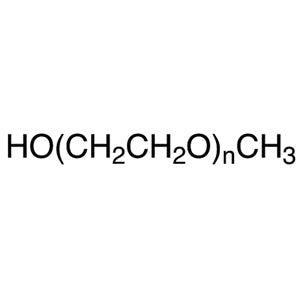
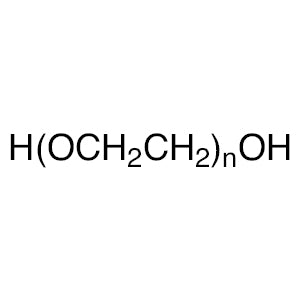
Polyethylene Glycol Monomethyl Ether 400 (PEG 400) is a chemical compound widely used in laboratory settings, particularly in chemical biology and protein modification applications. It is a key component in PEGylation, a process that involves attaching polyethylene glycol molecules to proteins or lipids to enhance their stability, solubility, and half-life in biological systems. This compound plays a critical role in biotechnology and pharmaceutical research, where it is used to improve the therapeutic properties of various biomolecules. Its versatility makes it an essential reagent in modern laboratory workflows.
PEG 400 is favored for its non-reactive nature, chemical stability, and absence of heavy metal ions, making it safe for use in sensitive applications. It is also highly hydrophilic, allowing it to dissolve easily in water and be compatible with aqueous-based reactions. These properties contribute to its reliability in both research and industrial settings. Its inertness ensures minimal interference with other compounds, making it a preferred choice for applications requiring high purity and consistency.
In Indonesian laboratories, PEG 400 is commonly used in molecular biology, pharmacology, and biomedical technology research. It is a staple in studies involving drug development, protein engineering, and bioconjugation. Its widespread use reflects its importance in advancing scientific research and innovation in the region.
TCI brochures (PDF)
- Drug Delivery System (DDS) Research Reagents 2025-01-29 · p. 2
- Biomaterials Research Reagents 2025-02-19 · p. 6
Related TCI products
- TCI P2187 9004-74-4 Polyethylene Glycol Monomethyl Ether 4000
- TCI P2186 9004-74-4 Polyethylene Glycol Monomethyl Ether 2000
- TCI P2185 9004-74-4 Polyethylene Glycol Monomethyl Ether 1000
- TCI P2184 9004-74-4 Polyethylene Glycol Monomethyl Ether 550
- TCI P3095 9004-74-4 Polyethylene Glycol Monomethyl Ether 220
- TCI P2830 25322-68-3 Polyethylene Glycol 20000
- Molecular biology research utilizes PEG 400 for protein conjugation and modification to enhance stability and solubility in biological systems.
- Pharmaceutical development benefits from PEG 400's ability to improve the pharmacokinetic properties of therapeutic proteins and drugs.
- Biomedical technology applications rely on PEG 400 for creating biocompatible materials and drug delivery systems with extended release profiles.
- Bioconjugation experiments use PEG 400 to attach functional groups to biomolecules, enabling targeted drug delivery and improved therapeutic outcomes.
- Analytical chemistry procedures employ PEG 400 as a solvent and stabilizer in assays requiring aqueous compatibility and chemical inertness.
| Brand | TCI |
|---|---|
| CAS number | 9004-74-4 |
| Molecular formula | — |
| Purity | — |
| Category | Chemistry > Chemical Biology > PEGylation |
| Pack sizes | Available in various sizes as per standard laboratory requirements |
| Physical form | Liquid |
| Storage | Store in a cool, dry place away from direct sunlight |
PEG 400 should be stored in a cool, dry environment, away from direct sunlight and sources of heat. It is recommended to keep the container tightly sealed to prevent moisture absorption and contamination. Due to its hydrophilic nature, it is best stored in airtight glass or plastic containers that are resistant to chemical degradation. In laboratory settings, it is important to handle PEG 400 with care, ensuring that it does not come into contact with incompatible substances. Proper labeling and storage conditions help maintain its stability and effectiveness for long-term use. Always follow standard safety protocols when handling chemical reagents to ensure a safe working environment.
—
Product Categories
- Chemical BiologyPEGylationmPEG (Methyl Polyethylene Glycols)
- Chemical BiologyBioconjugationPEGylation Reagents and PEG Spacers
- Pharmaceutical Development and Drug Discovery Research ReagentsPEGylationmPEG (Methyl Polyethylene Glycols)
- Pharmaceutical Development and Drug Discovery Research ReagentsDrug Delivery Systems (DDS)Polyethyleneglycols (PEG) (for DDS)
- Polymer/Macromolecule ReagentsPolymersSynthetic Polymers
- Biomaterials/Biocompatible Materials Research ReagentsPolymers [Biomaterials/Biocompatible Materials Research Reagents]PEGs, PEGylation Reagents [Biomaterials/Biocompatible Materials Research Reagents]
- Biomaterials/Biocompatible Materials Research ReagentsPolymers [Biomaterials/Biocompatible Materials Research Reagents]Synthetic Polymers
- Biochemicals and ReagentsBioconjugationPEGylation Reagents and PEG Spacers
- Pharmaceutical Development and Drug Discovery ResearchBioconjugationPEGylation Reagents and PEG Spacers
- Pharmaceutical Development and Drug Discovery ResearchPEGylationmPEG (Methyl Polyethylene Glycols)
- Pharmaceutical Development and Drug Discovery ResearchDrug Delivery Systems (DDS)Polyethyleneglycols (PEG) (for DDS)
Produk Terkait
-
PolyethyleneGlycolMonomethylEther4000 TCI P2187
Regular price From Rp 505.050,00Regular priceRp 352.800,00Sale price From Rp 505.050,00 -
PolyethyleneGlycolMonomethylEther2000 TCI P2186
Regular price From Rp 505.050,00Regular priceRp 352.800,00Sale price From Rp 505.050,00 -
PolyethyleneGlycolMonomethylEther1000 TCI P2185
Regular price From Rp 505.050,00Regular priceRp 352.800,00Sale price From Rp 505.050,00 -
PolyethyleneGlycolMonomethylEther550 TCI P2184
Regular price From Rp 557.550,00Regular priceRp 405.300,00Sale price From Rp 557.550,00 -
PolyethyleneGlycolMonomethylEther220 TCI P3095
Regular price From Rp 557.550,00Regular priceRp 405.300,00Sale price From Rp 557.550,00 -
PolyethyleneGlycol20000 TCI P2830
Regular price From Rp 477.750,00Regular priceRp 333.900,00Sale price From Rp 477.750,00 -
PolyethyleneGlycol11000 TCI P2829
Regular price Rp 477.750,00Regular priceRp 333.900,00Sale price Rp 477.750,00 -
PolyethyleneGlycol1000 TCI P2828
Regular price From Rp 477.750,00Regular priceRp 333.900,00Sale price From Rp 477.750,00