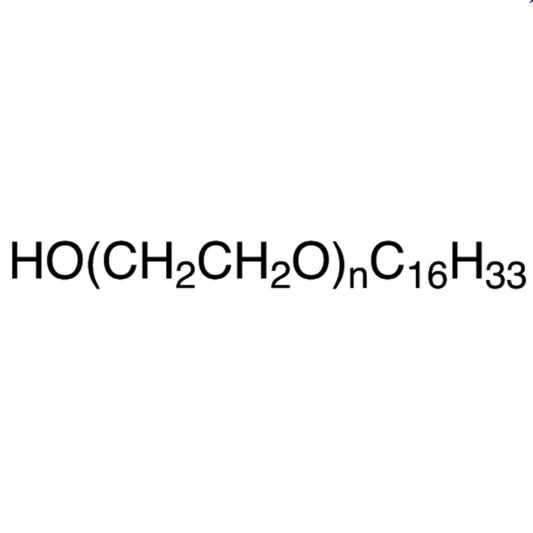
Polyethylene Glycol Monostearate (PEG Monostearate), with CAS number 9004-99-3, is a versatile chemical compound widely used in scientific and industrial applications. This material is a mixture of palmitate and stearate groups attached to a polyethylene glycol backbone, making it an effective emulsifier and surfactant. In the laboratory, it plays a crucial role in facilitating the mixing of immiscible substances such as water and oil, which is essential for many chemical and material science experiments. Its unique molecular structure enables it to function as a surface-active agent, reducing interfacial tension between different phases.
One of the key properties that make PEG Monostearate a preferred choice is its stability and non-reactivity under normal laboratory conditions. It remains chemically inert and does not degrade easily, ensuring consistent performance across various applications. Additionally, its hydrophilic head group and hydrophobic tail provide excellent emulsifying capabilities, making it suitable for both aqueous and lipid-based systems. The compound's non-toxic and environmentally safe nature further enhances its appeal for use in research and development settings.
In Indonesian laboratories, PEG Monostearate is commonly used in formulation studies, chemical development, and performance testing of additives. It is also relevant in surface property analysis and molecular interaction studies. Its reliability and effectiveness make it a go-to material for researchers working on cosmetic, pharmaceutical, and industrial formulations. The compound’s broad applicability and consistent performance support its use in diverse scientific investigations.
- Formulation Development: Used to create stable emulsions in cosmetic and pharmaceutical product development due to its surfactant properties.
- Surface Tension Studies: Ideal for analyzing interfacial behavior between aqueous and organic phases in material science research.
- Emulsification Testing: Applied in experiments to assess the effectiveness of emulsifiers in blending immiscible liquids.
- Additive Performance Evaluation: Utilized to test the compatibility and effectiveness of polymer additives in various formulations.
- Molecular Interaction Analysis: Employed in studies examining how molecular structures influence surface and interfacial properties.
| Brand | TCI |
|---|---|
| CAS number | 9004-99-3 |
| Molecular formula | — |
| Purity | — |
| Category | Materials Science > Polymer/Macromolecule Reagents > Polymer Additives |
| Pack sizes | Available in various quantities as per supplier specifications |
| Physical form | Solid powder |
| Storage | Store in a cool, dry place away from moisture and direct sunlight |
Polyethylene Glycol Monostearate should be stored in a cool, dry environment to maintain its chemical integrity and prevent degradation. It is best kept in a sealed container to avoid moisture absorption, which could affect its performance. Due to its non-hazardous nature, it does not require special handling beyond standard laboratory safety protocols. It is recommended to store it away from incompatible substances such as strong acids or bases. Regular inspection of the container is advised to ensure no contamination or physical changes occur. Proper labeling and storage conditions help maintain the material’s effectiveness and safety in laboratory settings.
—
Produk Terkait
-
PolyethyleneGlycolMonostearylEther(n=approx.20) TCI P3064
Regular price From Rp 505.050,00Regular price -
PolyethyleneGlycolDistearate(n=approx.10) TCI P2885
Regular price Rp 1.220.100,00Regular price -
PolyethyleneGlycolMono-4-octylphenylEther(n=approx.10) TCI P0873
Regular price From Rp 557.550,00Regular price -
PolyethyleneGlycolMonolaurate(n=approx.10) TCI P0872
Regular price From Rp 477.750,00Regular price -
PolyethyleneGlycolMonocetylEther(n=approx.23) TCI P0841
Regular price From Rp 477.750,00Regular price -
PolyethyleneGlycolMonostearate(n=approx.45)(palmitateandstearatemixture) TCI P0722
Regular price From Rp 477.750,00Regular price -
PolyethyleneGlycolMonostearate(n=approx.40)(palmitateandstearatemixture) TCI P0721
Regular price From Rp 477.750,00Regular price -
PolyethyleneGlycolMonostearate(n=approx.25)(palmitateandstearatemixture) TCI P0720
Regular price From Rp 477.750,00Regular price