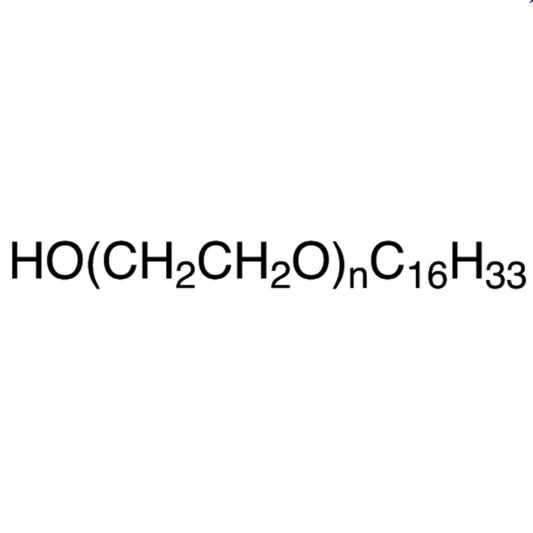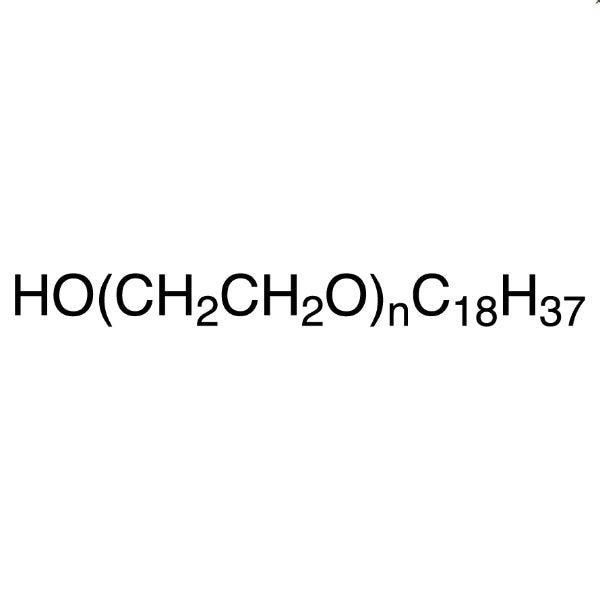
Polyethylene Glycol Monostearyl Ether (PPEG), with CAS number 9005-00-9, is a non-ionic surfactant widely used in laboratory settings. It plays a critical role in reducing interfacial tension between immiscible substances, such as water and oil, enabling better mixing and dispersion of components. This property makes it essential in various chemical processes where compatibility between different phases is required. Its molecular structure allows it to act as an emulsifier, facilitating the creation of stable emulsions and improving the efficiency of chemical reactions.
PPEG is preferred for its water solubility, non-ionic nature, and chemical stability. These characteristics ensure that it does not alter the pH of solutions significantly, making it suitable for a wide range of experimental conditions. Its non-reactive nature also contributes to its reliability in long-term storage and use. Additionally, PPEG has a strong affinity for hydrophobic molecules, making it ideal for applications in cosmetic and pharmaceutical formulations. Its versatility and consistent performance make it a reliable choice for researchers and scientists.
In Indonesian laboratories, PPEG is commonly used in chemical, pharmaceutical, and materials research. It is frequently found in experiments involving emulsion preparation, formulation development, and process optimization. Its role in enhancing the compatibility of substances is crucial for achieving desired outcomes in both academic and industrial research settings. Its availability and reliability make it a standard component in many laboratory workflows.
Related TCI products
- TCI P2885 9005-08-7 Polyethylene Glycol Distearate (n=approx. 10)
- TCI P0873 9002-93-1 Polyethylene Glycol Mono-4-octylphenyl Ether (n=approx. 10)
- TCI P0872 9004-81-3 Polyethylene Glycol Monolaurate (n=approx. 10)
- TCI P0841 9004-95-9 Polyethylene Glycol Monocetyl Ether (n=approx. 23)
- TCI P0723 9004-99-3 Polyethylene Glycol Monostearate (n=approx. 55) (palmitate and stearate mixture)
- TCI P0722 9004-99-3 Polyethylene Glycol Monostearate (n=approx. 45) (palmitate and stearate mixture)
- Emulsion Preparation: PPEG is ideal for creating stable emulsions by reducing the surface tension between oil and water phases, ensuring uniform dispersion and long-term stability.
- Pharmaceutical Formulation: It is used in drug delivery systems to improve the solubility and bioavailability of hydrophobic compounds, enhancing the effectiveness of formulations.
- Cosmetic Development: PPEG helps in the formulation of creams, lotions, and other cosmetic products by improving the mixing of oil-based and water-based ingredients.
- Material Science Research: It is employed in polymer science to modify the properties of materials, such as improving flexibility or reducing surface tension in composite systems.
- Chemical Reaction Optimization: PPEG facilitates the mixing of incompatible reactants, enhancing reaction efficiency and yield in synthetic processes.
| Brand | TCI |
|---|---|
| CAS number | 9005-00-9 |
| Molecular formula | — |
| Purity | — |
| Category | Materials Science > Polymer/Macromolecule Reagents > Polymer Additives |
| Pack sizes | Available in various quantities as per standard laboratory supply |
| Physical form | Liquid |
| Storage | Store in a cool, dry place away from direct sunlight |
PPEG should be stored in a cool, dry environment to maintain its stability and effectiveness. It is recommended to keep it in a sealed container to prevent moisture absorption and contamination. Since it is a liquid, it is best stored in glass or high-density polyethylene containers to avoid any chemical interactions. In laboratory settings, it is important to handle PPEG with care, using appropriate personal protective equipment such as gloves and safety goggles. Due to its non-ionic and non-reactive nature, it is generally safe to handle, but proper storage and handling protocols should be followed to ensure its longevity and performance.
—
Product Categories
Produk Terkait
-
PolyethyleneGlycolDistearate(n=approx.10) TCI P2885
Regular price Rp 1.220.100,00Regular price -
PolyethyleneGlycolMono-4-octylphenylEther(n=approx.10) TCI P0873
Regular price From Rp 557.550,00Regular price -
PolyethyleneGlycolMonolaurate(n=approx.10) TCI P0872
Regular price From Rp 477.750,00Regular price -
PolyethyleneGlycolMonocetylEther(n=approx.23) TCI P0841
Regular price From Rp 477.750,00Regular price -
PolyethyleneGlycolMonostearate(n=approx.55)(palmitateandstearatemixture) TCI P0723
Regular price From Rp 477.750,00Regular price -
PolyethyleneGlycolMonostearate(n=approx.45)(palmitateandstearatemixture) TCI P0722
Regular price From Rp 477.750,00Regular price -
PolyethyleneGlycolMonostearate(n=approx.40)(palmitateandstearatemixture) TCI P0721
Regular price From Rp 477.750,00Regular price -
PolyethyleneGlycolMonostearate(n=approx.25)(palmitateandstearatemixture) TCI P0720
Regular price From Rp 477.750,00Regular price