4-Propylbenzenesulfonyl Chloride is a chemical compound widely used as a building block in the synthesis of complex organic compounds. This reagent plays a crucial role in various laboratory processes, particularly in organic chemistry research. Its unique molecular structure, featuring a sulfonyl chloride group attached to a benzene ring with a propyl substituent, makes it highly versatile for chemical transformations. Due to its reactivity, it is commonly employed in substitution reactions, coupling reactions, and the formation of intermediate compounds.
The compound is valued for its chemical reactivity and stability under controlled conditions. Its ability to participate in nucleophilic, electrophilic, and substitution reactions makes it a preferred choice for synthetic chemists. The stability of 4-Propylbenzenesulfonyl Chloride allows it to be used in a wide range of experimental scales, from small-scale research to larger industrial applications. Its predictable behavior in different reaction environments ensures reliable results, making it a trusted reagent in laboratory settings.
In Indonesian laboratories, 4-Propylbenzenesulfonyl Chloride is a key component in organic chemistry, pharmaceutical, and materials research. It is frequently used in the development of new compounds and the modification of existing ones. Institutions and research centers in Indonesia rely on this compound for its effectiveness in synthesizing intermediates and conducting complex chemical reactions. Its relevance continues to grow as research in these fields expands.
- Synthesis of Organic Compounds: This compound is ideal for creating complex organic molecules due to its reactive sulfonyl chloride group, which facilitates various chemical transformations.
- Pharmaceutical Research: It is used in drug development to create intermediates that are essential for synthesizing active pharmaceutical ingredients.
- Material Science Applications: Its chemical versatility allows it to be used in the synthesis of functional materials and polymers.
- Intermediate Compound Production: It serves as a key reagent in the production of intermediates that are further processed into final products.
- Chemical Reaction Optimization: Its predictable behavior in different reaction conditions makes it suitable for optimizing synthetic pathways in laboratory settings.
| Brand | TCI |
|---|---|
| CAS number | 146949-07-7 |
| Molecular formula | — |
| Purity | — |
| Category | Chemistry > Building Blocks > Non-Heterocyclic Building Blocks |
| Pack sizes | Available in various quantities as per supplier specifications |
| Physical form | Solid or liquid, depending on the specific product variant |
| Storage | Store in a cool, dry place away from moisture and direct sunlight |
4-Propylbenzenesulfonyl Chloride should be stored in a cool, dry environment to maintain its chemical stability. It is recommended to keep it in a tightly sealed container to prevent exposure to moisture and air. Due to its reactivity, it should be handled in a well-ventilated laboratory area, preferably under a fume hood. Avoid contact with incompatible materials such as strong bases or reducing agents. Always wear appropriate personal protective equipment, including gloves and safety goggles, when handling this compound. Proper storage and handling ensure the safety of laboratory personnel and the integrity of the compound during experiments.
—
Produk Terkait
-
TCI B5774 5,10-Bis(4,4,5,5-tetramethyl-1,3,2-dioxaborolan-2-yl)naphtho[1,2-c:5,6-c']bis([1,2,5]oxadiazole)
Regular price Rp 10.255.350,00Regular price -
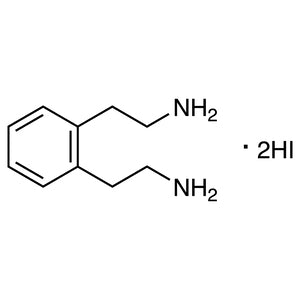
Dihydroiodide TCI B6569
Regular price From Rp 1.936.200,00Regular price -
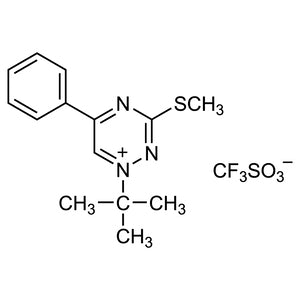
Trifluoromethanesulfonate TCI B7003
Regular price From Rp 1.936.200,00Regular price
![5,10-Bis(4,4,5,5-tetramethyl-1,3,2-dioxaborolan-2-yl)naphtho[1,2-c:5,6-c']bis([1,2,5]oxadiazole) - TCI B5774 - AMI Scientific](http://amiscientific.com/cdn/shop/files/TCI2510B5774.jpg?v=1769180228&width=533)