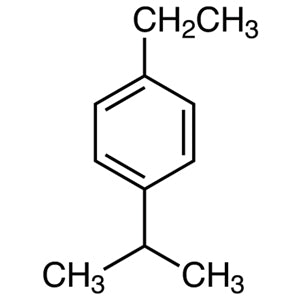
1-Ethyl-4-isopropylbenzene is a chemical compound widely used as a foundational material in various laboratory reactions. It serves as a key building block in synthetic chemistry, particularly in the development of complex organic molecules. This compound is commonly found in the category of non-heterocyclic building blocks, making it a versatile tool for chemists. Its role extends beyond simple synthesis, as it is often utilized in the preparation of aromatic compounds and their derivatives. Due to its stability and controlled reactivity, it is a reliable choice for researchers seeking consistency in their experiments.
The compound's chemical properties make it a preferred choice in laboratory settings. It exhibits a stable molecular structure and moderate reactivity, allowing it to be used in a wide range of chemical processes without undergoing unwanted side reactions. Its defined boiling and melting points facilitate easy purification and identification during experimental procedures. These characteristics ensure that it remains a valuable resource in both research and industrial applications. Additionally, its inertness under normal conditions makes it suitable for use in experiments requiring controlled environments.
In Indonesian laboratories, 1-Ethyl-4-isopropylbenzene is frequently used in chemical synthesis and analytical research. It plays a crucial role in the development of new chemical products, including pharmaceuticals and specialty chemicals. Its reliability and consistent performance make it an essential component in both academic and industrial research settings. As a fundamental building block, it supports the advancement of chemical knowledge and innovation in the field.
- Organic synthesis applications benefit from this compound's stability and reactivity, enabling the creation of complex aromatic derivatives.
- It is ideal for use in analytical chemistry due to its well-defined physical properties, aiding in accurate identification and purification processes.
- In pharmaceutical research, it serves as a precursor for the development of new drug compounds, supporting the synthesis of active pharmaceutical ingredients.
- It is commonly used in industrial chemical processes where controlled reactivity and consistent performance are essential.
- Its non-heterocyclic nature makes it a preferred choice for researchers working on synthetic pathways that require predictable chemical behavior.
| Brand | TCI |
|---|---|
| CAS number | 4218-48-8 |
| Molecular formula | — |
| Purity | — |
| Category | Chemistry > Building Blocks > Non-Heterocyclic Building Blocks |
| Pack sizes | Available in various quantities as per standard laboratory supply specifications |
| Physical form | Liquid |
| Storage | Store in a cool, dry place away from direct sunlight and incompatible materials |
This compound should be stored in a cool, dry environment, away from direct sunlight and sources of heat. It is recommended to use sealed, airtight containers to prevent exposure to moisture and air. Due to its chemical stability, it does not require special refrigeration but should be kept in a well-ventilated area. When handling, it is advisable to use appropriate personal protective equipment such as gloves and safety goggles to ensure safety. Avoid contact with incompatible substances and ensure proper ventilation during use. Always follow standard laboratory safety protocols to minimize risks associated with chemical exposure.
—
Produk Terkait
-
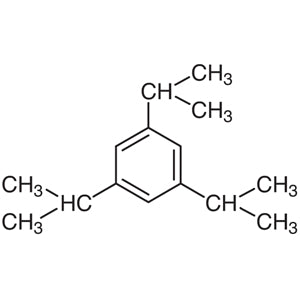
1,3,5-Triisopropylbenzene TCI T0458
Regular price From Rp 823.200,00Regular price -
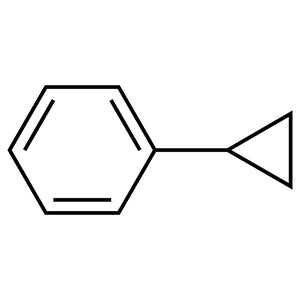
Cyclopropylbenzene TCI P2963
Regular price From Rp 3.630.900,00Regular price -
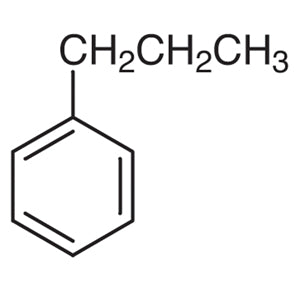
Propylbenzene TCI P0523
Regular price From Rp 823.200,00Regular price -
1-Ethynyl-4-propylbenzene TCI E0750
Regular price From Rp 1.035.300,00Regular price -
1,3-Diisopropylbenzene TCI D2490
Regular price From Rp 610.050,00Regular price -
Diisopropylbenzene(mixtureofisomers) TCI D0929
Regular price Rp 505.050,00Regular price -
1,4-Diisopropylbenzene TCI D0928
Regular price From Rp 1.087.800,00Regular price -
1,3-Diisopropylbenzene TCI D0927
Regular price From Rp 477.750,00Regular price