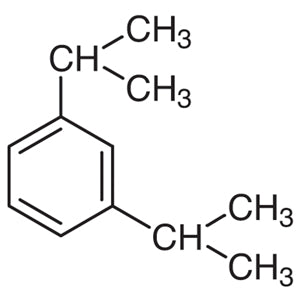
1,3-Diisopropylbenzene is a chemical compound widely used in laboratory settings for its versatility in organic synthesis. As a building block in chemical reactions, it serves as a key intermediate in the creation of more complex molecules. Its structural simplicity allows it to participate in various functional group transformations, making it an essential component in synthetic chemistry. This compound is particularly valuable for researchers aiming to develop new compounds with specific properties, such as pharmaceuticals or materials with tailored characteristics. Its role in the laboratory is critical for advancing chemical research and innovation.
The chemical properties of 1,3-Diisopropylbenzene make it a preferred choice in laboratory applications. It exhibits a stable aromatic structure, which contributes to its reactivity under controlled conditions. The compound is non-polar and volatile, enabling it to dissolve easily in organic solvents like ethyl acetate and hexane. These solubility characteristics are advantageous for conducting substitution reactions and other synthetic processes. Additionally, its low reactivity under normal conditions ensures safety during handling and storage, making it a reliable material for routine laboratory use.
In Indonesian laboratories, 1,3-Diisopropylbenzene is commonly used in organic chemistry research, especially in the synthesis of aromatic compounds. It is a staple in academic and industrial research settings, supporting the development of new chemical materials and pharmaceuticals. Its availability in various packaging options ensures accessibility for both educational institutions and research facilities, facilitating its use in a wide range of chemical experiments and studies.
- Aromatic Compound Synthesis: 1,3-Diisopropylbenzene is ideal for creating complex aromatic structures due to its stable aromatic ring and reactivity in substitution reactions.
- Organic Chemistry Research: Its role as a building block supports the development of new chemical compounds, making it a valuable resource for academic and industrial research.
- Solvent Compatibility Testing: The compound’s solubility in organic solvents makes it suitable for testing the compatibility of different solvents in chemical reactions.
- Functional Group Modification: Its ability to interact with various functional groups allows it to be used in modifying existing molecules for new applications.
- Teaching and Training: It is frequently used in educational settings to demonstrate fundamental chemical reactions and synthetic techniques.
| Brand | TCI |
|---|---|
| CAS number | 99-62-7 |
| Molecular formula | — |
| Purity | — |
| Category | Chemistry > Building Blocks > Non-Heterocyclic Building Blocks |
| Pack sizes | Available in various sizes to suit different laboratory needs |
| Physical form | Liquid |
| Storage | Store in a cool, dry place away from direct sunlight |
1,3-Diisopropylbenzene should be stored in a cool, dry environment to maintain its chemical stability. It is recommended to keep it in a sealed container made of inert material such as glass or stainless steel to prevent contamination and evaporation. Due to its volatility, it should be stored away from heat sources and direct sunlight. Proper ventilation is essential when handling the compound to minimize exposure to vapors. Laboratory personnel should wear appropriate personal protective equipment, including gloves and safety goggles, when working with this substance. Regular monitoring of storage conditions ensures the compound remains safe and effective for use in chemical experiments.
—
Produk Terkait
-
Diisopropylbenzene(mixtureofisomers) TCI D0929
Regular price Rp 505.050,00Regular price -
1,4-Diisopropylbenzene TCI D0928
Regular price From Rp 1.087.800,00Regular price -
1,3-Diisopropylbenzene TCI D0927
Regular price From Rp 477.750,00Regular price -
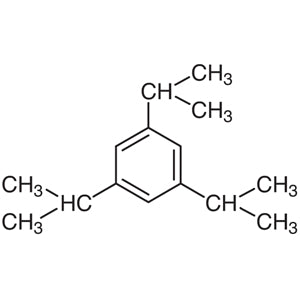
1,3,5-Triisopropylbenzene TCI T0458
Regular price From Rp 823.200,00Regular price -
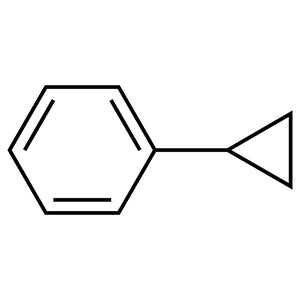
Cyclopropylbenzene TCI P2963
Regular price From Rp 3.630.900,00Regular price -
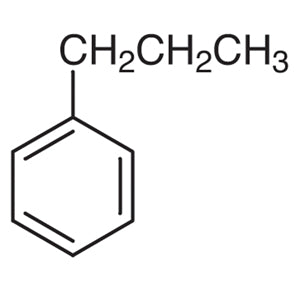
Propylbenzene TCI P0523
Regular price From Rp 823.200,00Regular price -
1-Ethyl-4-isopropylbenzene TCI E1406
Regular price From Rp 2.491.650,00Regular price -
1-Ethynyl-4-propylbenzene TCI E0750
Regular price From Rp 1.035.300,00Regular price