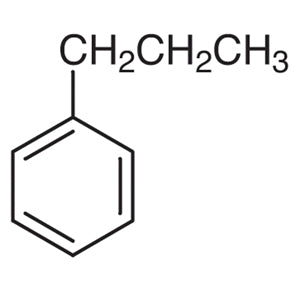
Propylbenzene is an organic chemical compound widely used as a foundational material in various laboratory reactions. As a building block in chemical synthesis, it plays a crucial role in the development of more complex organic molecules. Its versatility makes it a valuable asset in both academic and industrial research settings. This compound is commonly employed as a reagent or auxiliary material in chemical processes, contributing to the efficiency and success of experimental procedures. Due to its stability and ease of handling, propylbenzene is a preferred choice among chemists for its consistent performance in diverse applications.
Propylbenzene is characterized by its non-polar nature and relatively high boiling point, which makes it suitable for reactions requiring elevated temperatures. These physical properties ensure that it remains stable under various experimental conditions, enhancing its reliability in laboratory settings. Additionally, its lack of heterocyclic components makes it safer for use in specific chemical reactions, reducing potential complications. Its simple molecular structure also allows for predictable behavior in chemical transformations, making it a trusted material for both research and development.
In Indonesian laboratories, propylbenzene is extensively used in chemical research, particularly in organic synthesis and analytical chemistry. It is commonly found in university laboratories, research institutes, and pharmaceutical industries. Its consistent properties and broad applicability make it an essential component in the chemical toolkit of Indonesian scientists and researchers. Its presence in various laboratory environments highlights its importance in advancing chemical studies and innovation.
- Organic synthesis where propylbenzene serves as a versatile building block for creating complex molecules.
- Analytical chemistry for use in chromatographic and spectroscopic techniques due to its stable properties.
- Pharmaceutical research as a reagent in the development of new drug compounds and formulations.
- Industrial chemical processes where it is used as a solvent or intermediate in manufacturing.
- Teaching laboratories for demonstrating fundamental chemical reactions and molecular structures.
| Brand | TCI |
|---|---|
| CAS number | 103-65-1 |
| Molecular formula | — |
| Purity | — |
| Category | Chemistry > Building Blocks > Non-Heterocyclic Building Blocks |
| Pack sizes | Available in various quantities as per standard laboratory supply sizes |
| Physical form | Liquid |
| Storage | — |
Propylbenzene should be stored in a cool, dry, and well-ventilated area away from direct sunlight. It is recommended to use sealed containers made of materials compatible with organic solvents, such as glass or high-density polyethylene. Proper labeling of containers is essential for safety and identification. Laboratory personnel should wear appropriate personal protective equipment, including gloves and safety goggles, when handling this compound. Due to its non-polar nature, it is important to ensure that storage areas are free from incompatible substances to prevent any accidental reactions. Regular inspection of storage conditions and containers is advised to maintain the integrity and safety of the material.
—
Produk Terkait
-
1-(trans-4-Pentylcyclohexyl)-4-propylbenzene TCI P3259
Regular price From Rp 1.378.650,00Regular price -
1-Ethynyl-4-propylbenzene TCI E0750
Regular price From Rp 1.035.300,00Regular price -
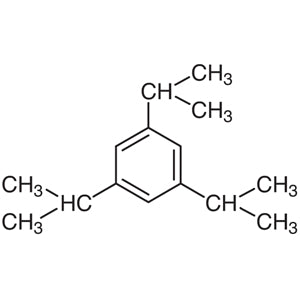
1,3,5-Triisopropylbenzene TCI T0458
Regular price From Rp 823.200,00Regular price -
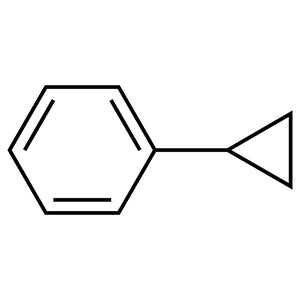
Cyclopropylbenzene TCI P2963
Regular price From Rp 3.630.900,00Regular price -
1-Ethyl-4-isopropylbenzene TCI E1406
Regular price From Rp 2.491.650,00Regular price -
1,4-Dipropylbenzene TCI D2780
Regular price From Rp 5.857.950,00Regular price -
1,3-Diisopropylbenzene TCI D2490
Regular price From Rp 610.050,00Regular price -
Diisopropylbenzene(mixtureofisomers) TCI D0929
Regular price Rp 505.050,00Regular price