Diisopropylbenzene, commonly known as cumene, is an organic compound widely used in various chemical reactions within laboratory settings. It is a mixture of isomers of an aromatic hydrocarbon, featuring a benzene ring with two isopropyl groups attached at positions 1 and 2. This compound plays a crucial role in synthetic chemistry, serving as a precursor for the production of phenol and phenylacetic acid. Its versatility makes it an essential reagent for researchers working on organic synthesis and functional group transformations.
The properties of cumene make it a preferred choice in laboratory applications. It exhibits a relatively high boiling point, which is beneficial for reactions requiring elevated temperatures. Additionally, cumene is chemically inert, meaning it does not readily participate in unwanted side reactions, thus maintaining the integrity of the experimental process. Its non-polar nature allows it to act as an effective solvent for a wide range of organic compounds, making it a valuable tool in both synthesis and analytical procedures.
In Indonesian laboratories, cumene is frequently used in organic chemistry research, particularly in the synthesis of aromatic compounds and in the separation of chemical components. Its stable and non-reactive nature ensures that it does not interfere with the chemical processes it supports. The distinct aroma of cumene also aids in its identification and handling within the laboratory environment.
Related TCI products
- Organic synthesis for the production of phenol and phenylacetic acid due to its reactivity and availability.
- Solvent in chemical reactions where non-reactive and non-polar properties are required for dissolving organic compounds.
- Use in chromatographic techniques for the separation and purification of complex mixtures.
- Support in the preparation of functionalized aromatic compounds through various synthetic pathways.
- Application in analytical chemistry for dissolving and analyzing organic substances without altering their chemical structure.
| Brand | TCI |
|---|---|
| CAS number | 25321-09-9 |
| Molecular formula | — |
| Purity | — |
| Category | Chemistry > Building Blocks > Non-Heterocyclic Building Blocks |
| Pack sizes | Available in standard laboratory quantities as per supplier specifications |
| Physical form | Liquid |
| Storage | Store in a cool, dry place away from direct sunlight and incompatible materials |
Cumene should be stored in a cool, dry environment, away from direct sunlight and sources of heat. It is recommended to use sealed containers made of materials such as glass or stainless steel to prevent contamination and evaporation. Due to its non-polar nature, it should be kept separate from reactive or incompatible substances. Laboratory personnel should handle cumene with care, using appropriate personal protective equipment to ensure safety. Proper ventilation is essential when working with this compound to minimize exposure. Regular monitoring of storage conditions ensures the stability and usability of the material for extended periods.
—
Produk Terkait
-
Dodecylbenzene(hardtype)(mixtureofbranchedchainisomers) TCI D0988
Regular price From Rp 637.350,00Regular price -
1,3-Diisopropylbenzene TCI D2490
Regular price From Rp 610.050,00Regular price -
1,4-Diisopropylbenzene TCI D0928
Regular price From Rp 1.087.800,00Regular price -
1,3-Diisopropylbenzene TCI D0927
Regular price From Rp 477.750,00Regular price -
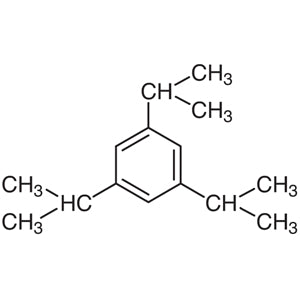
1,3,5-Triisopropylbenzene TCI T0458
Regular price From Rp 823.200,00Regular price -
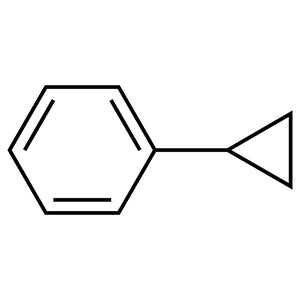
Cyclopropylbenzene TCI P2963
Regular price From Rp 3.630.900,00Regular price -
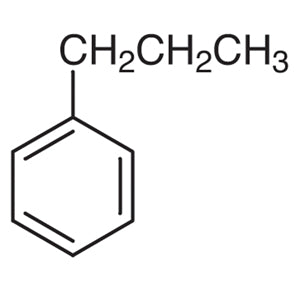
Propylbenzene TCI P0523
Regular price From Rp 823.200,00Regular price -
1-Ethyl-4-isopropylbenzene TCI E1406
Regular price From Rp 2.491.650,00Regular price