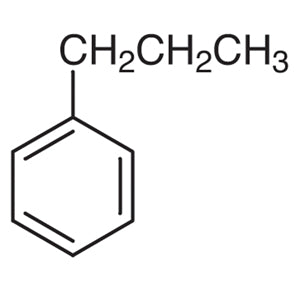
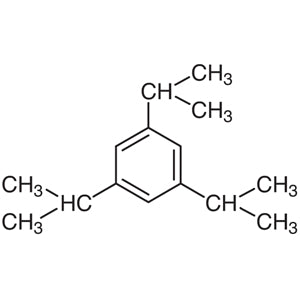
1,4-Dipropylbenzene is an organic chemical compound widely used in laboratory settings for constructing complex molecular structures. It serves as a fundamental building block in chemical synthesis, particularly in the development of aromatic compounds. This material is valued for its ability to participate in various chemical reactions, including substitution and copolymerization processes. Its role in organic chemistry is essential for researchers aiming to create new materials or pharmaceutical compounds.
The compound is known for its stable molecular structure, which ensures it remains intact under normal laboratory conditions. This stability makes it a reliable choice for chemical reactions that require consistent molecular behavior. Additionally, 1,4-Dipropylbenzene exhibits low toxicity at typical concentrations, contributing to its safety profile in controlled laboratory environments. These properties make it a preferred material for both research and educational purposes.
In Indonesian laboratories, 1,4-Dipropylbenzene is commonly used in organic chemistry research, especially in pharmaceutical and materials science applications. It is also integrated into educational programs at research institutions and universities, where it is used in practical chemistry experiments to teach fundamental concepts of molecular synthesis and chemical reactivity.
- Aromatic Compound Synthesis: 1,4-Dipropylbenzene is ideal for synthesizing aromatic compounds due to its stable structure and reactivity in substitution reactions.
- Organic Chemistry Research: It is frequently used in research to develop new chemical compounds and materials, supporting innovation in pharmaceutical and industrial applications.
- Educational Demonstrations: The compound is used in teaching labs to illustrate molecular building blocks and reaction mechanisms in organic chemistry courses.
- Copolymerization Reactions: Its ability to participate in copolymerization makes it suitable for polymer science applications, aiding in the creation of advanced materials.
- Material Science Development: It contributes to the synthesis of new materials, supporting research in polymer and composite development.
| Brand | TCI |
|---|---|
| CAS number | 4815-57-0 |
| Molecular formula | — |
| Purity | — |
| Category | Chemistry > Building Blocks > Non-Heterocyclic Building Blocks |
| Pack sizes | — |
| Physical form | Liquid |
| Storage | Store in a cool, dry place away from direct sunlight |
1,4-Dipropylbenzene should be stored in a cool, dry location, away from direct sunlight and sources of heat. It is recommended to use airtight containers made of materials such as glass or polyethylene to prevent contamination and evaporation. Due to its low toxicity, it is generally safe to handle in a well-ventilated laboratory environment. However, standard safety protocols should be followed, including the use of personal protective equipment such as gloves and safety goggles. The compound should not be exposed to open flames or sparks, as it is flammable. Regular monitoring of storage conditions ensures the compound remains stable and suitable for use in laboratory applications.
—
Produk Terkait
-
Propylbenzene TCI P0523
Regular price From Rp 823.200,00Regular price -
1-Ethynyl-4-propylbenzene TCI E0750
Regular price From Rp 1.035.300,00Regular price -
1-Ethyl-4-isopropylbenzene TCI E1406
Regular price From Rp 2.491.650,00Regular price -
1,3-Diisopropylbenzene TCI D2490
Regular price From Rp 610.050,00Regular price -
Diisopropylbenzene(mixtureofisomers) TCI D0929
Regular price Rp 505.050,00Regular price -
1,4-Diisopropylbenzene TCI D0928
Regular price From Rp 1.087.800,00Regular price -
1,3-Diisopropylbenzene TCI D0927
Regular price From Rp 477.750,00Regular price -
1,3,5-Triisopropylbenzene TCI T0458
Regular price From Rp 823.200,00Regular price