Palladium 5% on Barium Sulfate is a catalyst widely used in hydrogenation reactions to accelerate chemical processes without participating directly in the reaction. This material plays a crucial role in laboratory settings where efficient and controlled chemical transformations are required. It is particularly effective in applications involving the hydrogenation of alkanes or aromatic compounds, making it a valuable tool for chemists. Its ability to facilitate reactions under various conditions enhances its utility in both research and industrial settings.
The properties that make this catalyst a preferred choice include its stability, reusability, and high catalytic efficiency. Unlike many other catalysts, it does not easily degrade, allowing it to be reused multiple times, which reduces both cost and waste. Its robust structure ensures consistent performance across different reaction conditions, making it reliable for a wide range of applications. The combination of palladium as the active component and barium sulfate as the support provides a balanced and effective catalytic system.
In Indonesian laboratories, this catalyst is commonly used in chemical research, especially in the fields of catalysis and inorganic chemistry. It is a go-to material for institutions and universities conducting experiments that require a stable and efficient catalyst. Its application is particularly prevalent in hydrogenation processes, where it helps achieve desired chemical transformations with minimal resource consumption.
- Hydrogenation of alkanes to produce alkenes or alkanes with controlled reaction rates and high yield.
- Catalytic hydrogenation of aromatic compounds to enhance reactivity and achieve desired product structures.
- Support for research in inorganic chemistry where stable and reusable catalysts are essential for experimental reproducibility.
- Use in academic laboratories for teaching and experimental demonstrations involving catalytic processes.
- Application in industrial-scale chemical synthesis where efficient and cost-effective catalysts are required for large-scale reactions.
| Brand | TCI |
|---|---|
| CAS number | 7440-05-3 |
| Molecular formula | — |
| Purity | — |
| Category | Chemistry > Catalysis and Inorganic Chemistry > Hydrogenation [Catalysis] |
| Pack sizes | Available in standard laboratory quantities as per supplier specifications |
| Physical form | Powder or solid, depending on manufacturer and packaging |
| Storage | Store in a cool, dry place away from moisture and direct sunlight |
This catalyst should be stored in a cool, dry environment to maintain its stability and effectiveness. It is recommended to use airtight containers to prevent exposure to moisture, which could affect its performance. Due to its chemical nature, it should be handled with care, avoiding direct contact with skin or inhalation of dust. In laboratory settings, it is important to ensure proper ventilation and use of personal protective equipment when handling. The material should not be stored near incompatible substances, and it should be kept in a secure location to prevent accidental spills or contamination. Regular inspection of storage conditions is advised to ensure the catalyst remains in optimal condition for use.
—
Produk Terkait
-
TCI B5774 5,10-Bis(4,4,5,5-tetramethyl-1,3,2-dioxaborolan-2-yl)naphtho[1,2-c:5,6-c']bis([1,2,5]oxadiazole)
Regular price Rp 10.255.350,00Regular price -
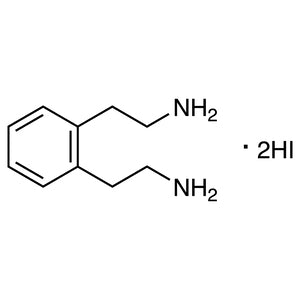
Dihydroiodide TCI B6569
Regular price From Rp 1.936.200,00Regular price -
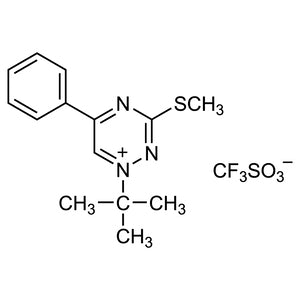
Trifluoromethanesulfonate TCI B7003
Regular price From Rp 1.936.200,00Regular price
![5,10-Bis(4,4,5,5-tetramethyl-1,3,2-dioxaborolan-2-yl)naphtho[1,2-c:5,6-c']bis([1,2,5]oxadiazole) - TCI B5774 - AMI Scientific](http://amiscientific.com/cdn/shop/files/TCI2510B5774.jpg?v=1769180228&width=533)