

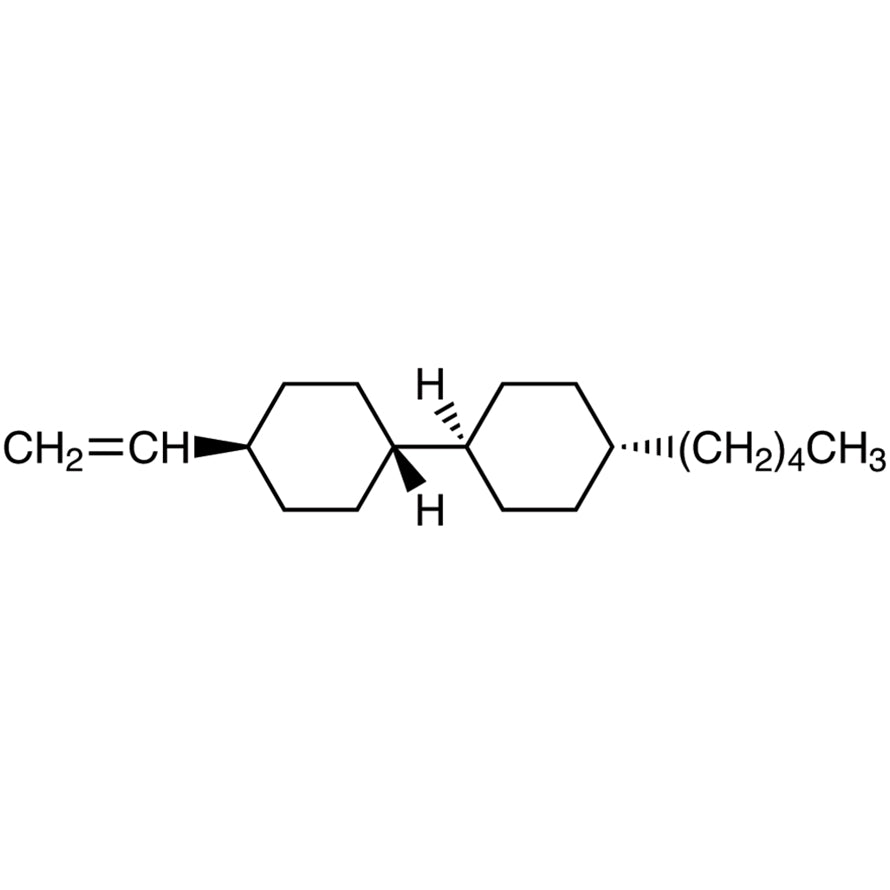
TCI P2318, also known as trans,trans-4-Pentyl-4'-vinylbicyclohexyl, is a specialized chemical compound used in materials science research, particularly in the field of liquid crystals. This compound plays a crucial role in the development of advanced materials with unique optical and electronic properties. Its complex molecular structure allows for precise molecular orientation control, making it an essential component in the creation of responsive materials. In laboratory settings, it serves as a building block for synthesizing materials that react to electric or magnetic fields, such as those used in display technologies and optical components.
One of the key reasons for its popularity is its high purity and excellent chemical stability, which are critical for maintaining the integrity of experimental results. The compound's non-reactive nature under normal conditions ensures safe handling and ease of use, while its ability to exhibit varied physical and chemical properties enhances its versatility in material research. These characteristics make it a reliable choice for scientists aiming to explore new applications in the field of liquid crystal technology.
In Indonesian laboratories, this compound is commonly used in research related to materials science, especially in academic and industrial settings focused on developing advanced optical and electronic materials. Its availability and consistent performance make it a preferred choice for researchers working on projects involving liquid crystal-based technologies. The compound's stability and ease of manipulation further support its widespread application in both academic and applied research environments.
Related TCI products
- TCI B5123 153429-47-1 trans,trans-4-Butyl-4'-vinylbicyclohexyl
- TCI P2317 116020-44-1 trans,trans-4-Propyl-4'-vinylbicyclohexyl
- TCI M2638 155041-85-3 trans,trans-4-(4-Methylphenyl)-4'-vinylbicyclohexyl
- TCI B4915 129738-42-7 trans,trans-4'-(3-Butenyl)-4-(p-tolyl)bicyclohexyl
- TCI P2433 82598-08-1 trans,trans-4'-Pentyl-4-bicyclohexylmethanol
- TCI E1487 124728-81-0 (trans,trans)-4-(4-Ethoxy-2,3-difluorophenyl)-4'-pentyl-1,1'-bi(cyclohexane)
- Liquid Crystal Display (LCD) Development: This compound is ideal for creating materials that respond to electric fields, making it suitable for LCD technology research.
- Optical Component Fabrication: Its molecular structure allows for precise alignment, which is essential in the production of optical components with specific light interaction properties.
- Electronic Material Research: The compound's ability to exhibit unique electronic properties makes it valuable in studies related to conductive and semiconductive materials.
- Material Stability Testing: Due to its high chemical stability, it is used in experiments assessing the durability and performance of new material formulations.
- Advanced Material Synthesis: Its complex structure enables the synthesis of novel materials with tailored optical and electronic characteristics for various applications.
| Brand | TCI |
|---|---|
| CAS number | 129738-34-7 |
| Molecular formula | — |
| Purity | — |
| Category | Materials Science > Material Building Blocks > Liquid Crystal (LC) Building Blocks |
| Pack sizes | — |
| Physical form | — |
| Storage | Store in a cool, dry place away from direct sunlight |
This compound should be stored in a cool, dry environment, away from direct sunlight and sources of heat. It is recommended to use airtight containers to prevent contamination and maintain its chemical stability. Due to its non-reactive nature under normal conditions, it does not require special handling beyond standard laboratory safety protocols. However, it is important to ensure that the storage area is well-ventilated to avoid any potential accumulation of vapors. Proper labeling of containers is essential to ensure safe handling and to prevent accidental misuse. The compound's stability and ease of use make it a reliable choice for laboratory applications, provided it is stored under appropriate conditions.
—
Produk Terkait
-
trans,trans-4-Butyl-4'-vinylbicyclohexyl TCI B5123
Regular price From Rp 769.650,00Regular priceRp 537.600,00Sale price From Rp 769.650,00 -
trans,trans-4-Propyl-4'-vinylbicyclohexyl TCI P2317
Regular price From Rp 2.704.800,00Regular priceRp 1.891.050,00Sale price From Rp 2.704.800,00 -
trans,trans-4-(4-Methylphenyl)-4'-vinylbicyclohexyl TCI M2638
Regular price Rp 2.227.050,00Regular priceRp 1.557.150,00Sale price Rp 2.227.050,00 -
trans,trans-4'-(3-Butenyl)-4-(p-tolyl)bicyclohexyl TCI B4915
Regular price From Rp 1.378.650,00Regular priceRp 963.900,00Sale price From Rp 1.378.650,00 -
trans,trans-4'-Pentyl-4-bicyclohexylmethanol TCI P2433
Regular price From Rp 848.400,00Regular priceRp 609.000,00Sale price From Rp 848.400,00 -
(trans,trans)-4-(4-Ethoxy-2,3-difluorophenyl)-4'-pentyl-1,1'-bi(cyclohexane) TCI E1487
Regular price From Rp 795.900,00Regular priceRp 556.500,00Sale price From Rp 795.900,00 -
trans,trans-4-[(E)-1-Propenyl]-4'-propylbicyclohexyl TCI P2371
Regular price From Rp 1.485.750,00Regular priceRp 1.038.450,00Sale price From Rp 1.485.750,00 -
(trans,trans)-4-Ethyl-4'-propyl-1,1'-bicyclohexyl TCI E1465
Regular price Rp 743.400,00Regular priceRp 519.750,00Sale price Rp 743.400,00


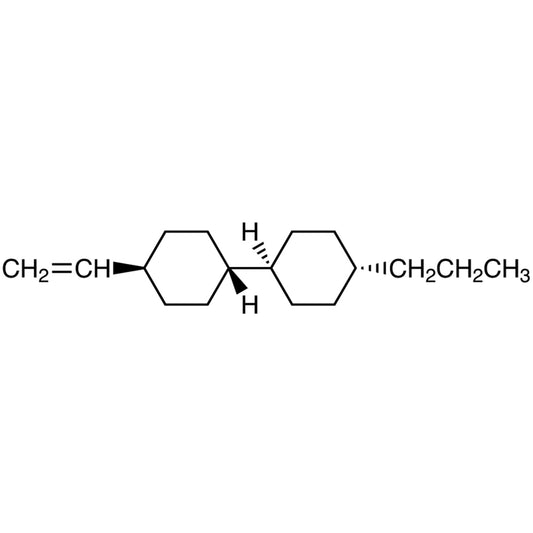


![279246-65-0 trans,trans-4-[(E)-1-Propenyl]-4'-propylbicyclohexyl - AMI Scientific](http://amiscientific.com/cdn/shop/files/TCI2510P2371.jpg?v=1768819381&width=533)
![279246-65-0 trans,trans-4-[(E)-1-Propenyl]-4'-propylbicyclohexyl - AMI Scientific](http://amiscientific.com/cdn/shop/files/TCI2510P2371_34c1628b-7da8-4b17-8c08-cb6bde310085.jpg?v=1769057513&width=533)
