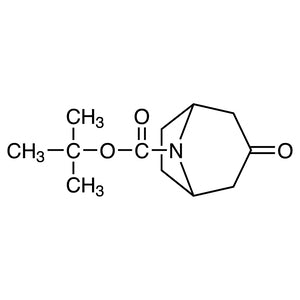
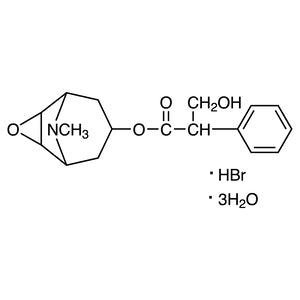
Pseudopelletierine is a naturally occurring alkaloid widely used in chemical and biochemical experiments within laboratory settings. As a key compound in the alkaloid family, it plays a vital role in various scientific investigations, particularly in the study of molecular interactions and biological activities. Its complex structure makes it an essential reagent for researchers exploring the properties of bioactive compounds and their potential applications in pharmacology and organic chemistry. This compound is commonly found in plant-based extracts and is used to analyze the chemical composition of natural products, making it a valuable tool for biochemists and pharmacologists.
Pseudopelletierine is preferred due to its chemical stability under controlled conditions, which simplifies storage and usage in experimental procedures. It exhibits good solubility in organic solvents, enabling efficient dissolution and integration into chemical reactions. These properties make it a reliable and versatile compound for a range of laboratory applications. Additionally, its non-toxic and non-degradable nature enhances its safety profile, making it a suitable choice for long-term research projects. Its consistent performance and predictable behavior in laboratory environments further contribute to its popularity among scientists.
In Indonesian laboratories, Pseudopelletierine is commonly used in pharmacological, biochemical, and organic chemistry research. It supports studies on natural products, drug development, and molecular mechanisms. Its availability and reliability make it an essential component in the research toolkit of Indonesian scientists working in these fields. The compound is widely utilized in academic and industrial settings to advance scientific understanding and innovation.
- Pharmacological research utilizes Pseudopelletierine to study the biological activity of natural compounds and their potential therapeutic applications.
- Biochemical experiments benefit from its complex structure, allowing researchers to investigate molecular interactions and enzyme activity.
- Organic chemistry studies use it as a reagent for synthetic pathways and structural analysis of alkaloids.
- Chromatographic analysis relies on its solubility properties to separate and identify bioactive compounds in plant extracts.
- Natural product screening incorporates Pseudopelletierine to evaluate the efficacy of plant-derived compounds in various biological assays.
| Brand | TCI |
|---|---|
| CAS number | 552-70-5 |
| Molecular formula | — |
| Purity | — |
| Category | Life Science > Biochemicals and Reagents > Alkaloids |
| Pack sizes | Available in standard laboratory quantities |
| Physical form | Solid powder |
| Storage | Store in a cool, dry place away from direct light |
Pseudopelletierine should be stored in a cool, dry environment to maintain its chemical stability. It is recommended to keep it in airtight containers to prevent moisture absorption and contamination. Due to its non-toxic nature, it poses minimal risk during handling, but standard laboratory safety protocols should still be followed. The compound is stable under normal laboratory conditions and does not require refrigeration. It is advisable to use appropriate personal protective equipment when handling to ensure safe laboratory practices. Proper storage and handling ensure the compound remains effective for use in various research applications.
—
Product Categories
Produk Terkait
-
AtropineSulfateMonohydrate TCI A0550
Regular price From Rp 1.856.400,00Regular price -
TropisetronHydrochloride TCI T2743
Regular price From Rp 3.340.050,00Regular price -
N-(tert-Butoxycarbonyl)nortropinone TCI B3401
Regular price From Rp 1.590.750,00Regular price -
Atropine TCI A0754
Regular price From Rp 3.498.600,00Regular price -
Tropine TCI T0534
Regular price Rp 848.400,00Regular price -
ScopolamineMethylBromide TCI S0231
Regular price Rp 2.995.650,00Regular price -
ScopolamineMethylNitrate TCI S0230
Regular price From Rp 4.452.000,00Regular price -
ScopolamineHydrobromideTrihydrate TCI S0021
Regular price From Rp 2.677.500,00Regular price