Tropine (120-29-6) is a chemical compound widely used in laboratory settings for various chemical experiments and scientific research. As a fundamental building block in chemistry, it serves as a versatile starting material for the synthesis of more complex molecules. Its simple molecular structure facilitates controlled chemical reactions, making it an essential component in both organic and pharmaceutical research. Tropine is particularly valued for its ability to participate in multiple reaction types, including substitution, oxidation, and reduction, which allows researchers to explore a wide range of chemical transformations.
One of the key properties that make tropine a preferred choice in laboratories is its chemical stability and reactivity. It exhibits consistent behavior under various reaction conditions, which ensures reliable results in experimental setups. Additionally, its low toxicity in small doses makes it safer to handle compared to many other chemical compounds. These characteristics contribute to its popularity among researchers who require a stable and predictable reagent for their experiments. The ease with which tropine can be manipulated in different chemical environments enhances its utility in both academic and industrial research settings.
In Indonesian laboratories, tropine is commonly used in organic chemistry and pharmacological studies. It is a key component in the development of bioactive compounds and intermediate substances used in drug synthesis. Its presence in research institutions and educational facilities highlights its importance in advancing scientific knowledge and practical applications in the field of chemistry. Tropine's role in supporting both theoretical and applied research makes it a valuable resource for scientists and students alike.
TCI brochures (PDF)
- Alkaloids 2025-10-10 · p. 3
- Organic synthesis experiments benefit from tropine's simple structure, allowing for the creation of complex molecules with controlled modifications.
- Pharmacological research utilizes tropine to study molecular mechanisms and drug interactions in biological systems.
- Intermediate compound production relies on tropine's reactivity to facilitate the synthesis of more complex chemical structures.
- Educational institutions use tropine in teaching chemical reactions and molecular synthesis techniques to students.
- Analytical chemistry applications incorporate tropine as a reference standard for qualitative and quantitative analysis.
| Brand | TCI |
|---|---|
| CAS number | 120-29-6 |
| Molecular formula | — |
| Purity | — |
| Category | Chemistry > Building Blocks > Non-Heterocyclic Building Blocks |
| Pack sizes | Available in various quantities as per standard laboratory supply |
| Physical form | Solid, typically in crystalline form |
| Storage | Store in a cool, dry place away from direct light and moisture |
Tropine should be stored in a cool, dry environment to maintain its chemical stability. It is recommended to keep it in a tightly sealed container to prevent exposure to moisture and air, which could affect its reactivity. Suitable storage conditions include a controlled room temperature, ideally between 15°C to 25°C, to ensure long-term preservation. Laboratory personnel should handle tropine with appropriate personal protective equipment, such as gloves and safety goggles, to minimize direct contact. While tropine is not highly toxic in small doses, it is still advisable to follow standard laboratory safety protocols when working with any chemical compound. Proper labeling and storage practices help prevent cross-contamination and ensure safe handling in research environments.
—
Produk Terkait
-
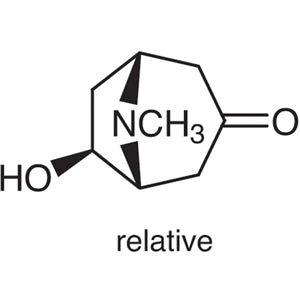
(+/-)-exo-6-Hydroxytropinone TCI H1289
Regular price Rp 2.384.550,00Regular priceRp 1.683.150,00Sale price Rp 2.384.550,00 -
AtropineSulfateMonohydrate TCI A0550
Regular price From Rp 1.908.900,00Regular priceRp 1.350.300,00Sale price From Rp 1.908.900,00 -
TropisetronHydrochloride TCI T2743
Regular price From Rp 3.392.550,00Regular priceRp 2.387.700,00Sale price From Rp 3.392.550,00 -
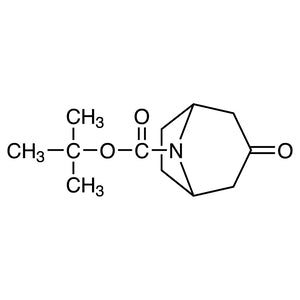
N-(tert-Butoxycarbonyl)nortropinone TCI B3401
Regular price From Rp 1.643.250,00Regular priceRp 1.164.450,00Sale price From Rp 1.643.250,00 -
Atropine TCI A0754
Regular price From Rp 3.551.100,00Regular priceRp 2.499.000,00Sale price From Rp 3.551.100,00 -
ScopolamineMethylBromide TCI S0231
Regular price Rp 3.048.150,00Regular priceRp 2.147.250,00Sale price Rp 3.048.150,00 -
ScopolamineMethylNitrate TCI S0230
Regular price From Rp 4.504.500,00Regular priceRp 3.165.750,00Sale price From Rp 4.504.500,00 -
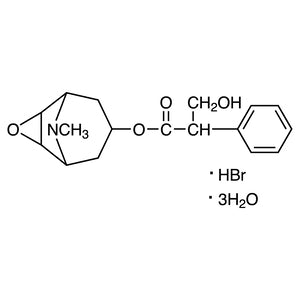
ScopolamineHydrobromideTrihydrate TCI S0021
Regular price From Rp 2.730.000,00Regular priceRp 1.924.650,00Sale price From Rp 2.730.000,00