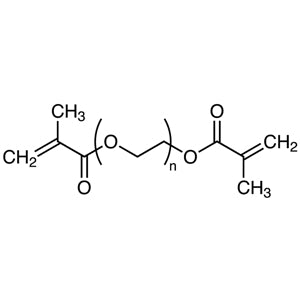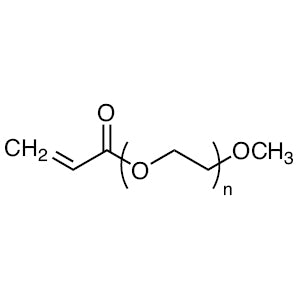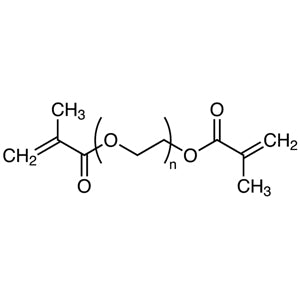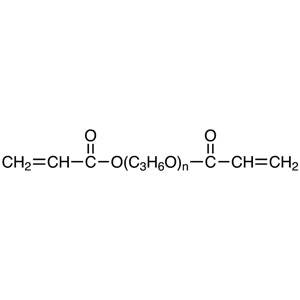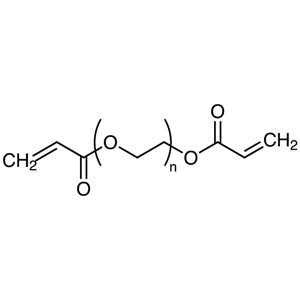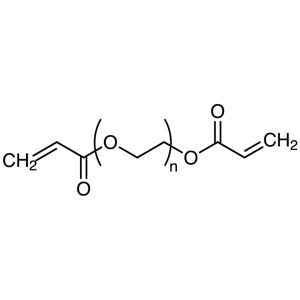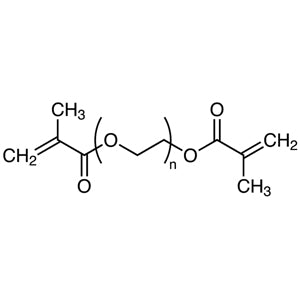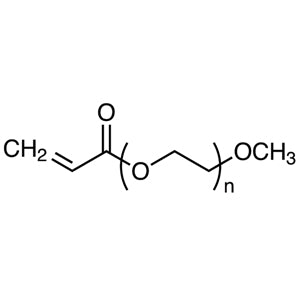
Polyethylene Glycol Monomethyl Ether Acrylate (PEGMA) is a chemical compound widely used in laboratory settings for polymerization and polymer modification applications. It serves as a key monomer in the synthesis of water-based polymers, particularly in the development of biodegradable and hydrophilic materials. Its versatility makes it an essential component in various research areas, including material science, pharmaceuticals, and biomedical engineering. In the laboratory, PEGMA is often employed as a building block for creating new materials such as coatings, adhesives, and medical devices. Its chemical stability and reactivity make it a valuable tool for researchers aiming to innovate in polymer chemistry.
PEGMA is preferred due to its chemical stability and compatibility with radical polymerization reactions. It is stabilized with MEHQ (methyl ethyl ketone peroxide), enhancing its safety during storage and use in laboratory environments. The compound is non-toxic and non-irritating, making it suitable for a wide range of chemical experiments. Its hydrophilic nature and ability to form biodegradable materials align with modern research priorities, particularly in the development of eco-friendly and sustainable products. These properties ensure its continued relevance in both academic and industrial research settings.
In Indonesian laboratories, PEGMA is commonly used in material science, pharmaceutical research, and biotechnology applications. Its role in creating biodegradable materials supports national efforts toward environmental sustainability. The compound's availability and adaptability make it a popular choice for researchers working on innovative polymer-based solutions. Its application in various fields highlights its importance in advancing scientific and industrial development in Indonesia.
TCI brochures (PDF)
- Sulfoxide Monomer for Modification of Material Surfaces with Reduced Nonspecific Adsorption of Proteins and Cells 2024-05-31 · p. 1
- Biomaterials Research Reagents 2025-02-19 · p. 9
- Monomers 2025-05-28 · p. 5
Related TCI products
- TCI T1352 25852-47-5 Polyethylene Glycol Dimethacrylate (n=approx 4) (stabilized with MEHQ)
- TCI P2870 32171-39-4 Polyethylene Glycol Monomethyl Ether Acrylate (n=approx 13) (stabilized with MEHQ)
- TCI P2760 25852-47-5 Polyethylene Glycol Dimethacrylate (n=approx 14) (stabilized with MEHQ)
- TCI P2759 52496-08-9 Polypropylene Glycol Diacrylate (n=approx 12) (stabilized with MEHQ)
- TCI P2757 26570-48-9 Polyethylene Glycol Diacrylate (n=approx 14) (stabilized with MEHQ)
- TCI P2756 26570-48-9 Polyethylene Glycol Diacrylate (n=approx 4) (stabilized with MEHQ)
- Polymer synthesis and modification in material science research due to its reactivity and compatibility with radical polymerization.
- Development of biodegradable and hydrophilic materials for pharmaceutical and biomedical applications.
- Formulation of coatings and adhesives in industrial and academic laboratories due to its chemical stability.
- Use in medical device development for its non-toxic and non-irritating properties.
- Support for environmental research in the creation of sustainable and eco-friendly products.
| Brand | TCI |
|---|---|
| CAS number | 32171-39-4 |
| Molecular formula | — |
| Purity | — |
| Category | Materials Science > Polymer/Macromolecule Reagents > Monomers |
| Pack sizes | — |
| Physical form | — |
| Storage | Store in a cool, dry place away from direct sunlight and incompatible materials. |
PEGMA should be stored in a cool, dry environment to maintain its stability and prevent degradation. It is recommended to keep the compound in a sealed container to minimize exposure to air and moisture. Due to its stabilized nature with MEHQ, it is less reactive compared to other monomers, but standard laboratory safety protocols should still be followed. Avoid contact with strong oxidizing agents or incompatible substances. Ensure proper ventilation when handling to maintain a safe working environment. Regular inspection of storage conditions is advised to ensure the material remains in optimal condition for use.
—
Product Categories
Produk Terkait
-
PolyethyleneGlycolDimethacrylate(n=approx4)(stabilizedwithMEHQ) TCI T1352
Regular price From Rp 505.050,00Regular price -
PolyethyleneGlycolMonomethylEtherAcrylate(n=approx13)(stabilizedwithMEHQ) TCI P2870
Regular price From Rp 1.035.300,00Regular price -
PolyethyleneGlycolDimethacrylate(n=approx14)(stabilizedwithMEHQ) TCI P2760
Regular price From Rp 610.050,00Regular price -
PolypropyleneGlycolDiacrylate(n=approx12)(stabilizedwithMEHQ) TCI P2759
Regular price From Rp 769.650,00Regular price -
PolyethyleneGlycolDiacrylate(n=approx14)(stabilizedwithMEHQ) TCI P2757
Regular price From Rp 557.550,00Regular price -
PolyethyleneGlycolDiacrylate(n=approx4)(stabilizedwithMEHQ) TCI P2756
Regular price From Rp 557.550,00Regular price -
PolyethyleneGlycolDimethacrylate(n=approx9)(stabilizedwithMEHQ) TCI P2709
Regular price From Rp 610.050,00Regular price -
PolyethyleneGlycolDiacrylate(n=approx9)(stabilizedwithMEHQ) TCI P2708
Regular price From Rp 557.550,00Regular price