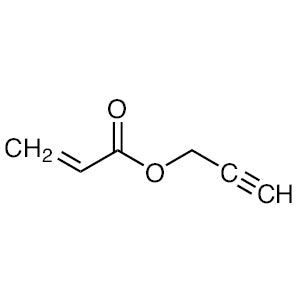
Propargyl Acrylate is a bifunctional chemical compound widely used as a building block in organic synthesis and polymer chemistry. Its molecule carries two reactive groups at once: an acrylate group with a carbon-carbon double bond and a propargyl group with a terminal carbon-carbon triple bond. The presence of these two functional groups makes it a bridge between conventional polymer chemistry and modern click chemistry, allowing researchers to design polymers with more complex structures and functions. In the laboratory, this material serves as an intermediate monomer for preparing functional copolymers, hydrogels, and interface materials that can be further modified after polymerization. Because the acrylate group is highly reactive, the product is stabilized with BHT to prevent premature polymerization during storage and handling.
The main advantage of this material lies in its bifunctional character, which is rarely found in a single monomer. The acrylate group can undergo radical polymerization and copolymerization with various vinyl monomers, while the terminal alkyne group remains available for subsequent reactions such as copper-catalyzed azide-alkyne cycloaddition. This dual reactivity gives researchers exceptional flexibility in building macromolecular architectures, enabling sequential strategies in which the acrylate is polymerized first and the alkyne is functionalized afterward. The compound also shows good compatibility with standard laboratory polymerization techniques, making it easy to incorporate into existing experimental workflows. With its clean, well-defined reactivity and the built-in BHT stabilizer, it delivers reliable and reproducible results for demanding synthetic applications.
In Indonesian laboratories, this compound is typically used by research groups working on polymer materials, advanced coatings, and biomedical hydrogels, where its dual functionality supports the preparation of crosslinkable and post-modifiable networks. It is also applied in academic and industrial projects focused on click chemistry, surface modification, and the synthesis of functional monomers. The compound is generally handled at small to medium scale in fume hoods, and its compatibility with common radical initiators and vinyl co-monomers makes it a convenient choice for researchers developing novel copolymers. As Indonesian institutions continue to expand their materials science and chemistry programs, this building block offers a practical route for exploring sophisticated polymer designs.
TCI brochures (PDF)
- Click Chemistry 2026-09-08 · p. 14
- Biomaterials Research Reagents 2025-02-19 · p. 9
- Monomers 2025-05-28 · p. 5
Related TCI products
- TCI A0145 96-33-3 Methyl Acrylate (stabilized with MEHQ)
- TCI A0144 103-11-7 2-Ethylhexyl Acrylate Monomer (stabilized with MEHQ)
- TCI A0142 141-32-2 Butyl Acrylate (stabilized with MEHQ)
- TCI U0117 31098-20-1 3-Sulfopropyl Acrylate Potassium Salt
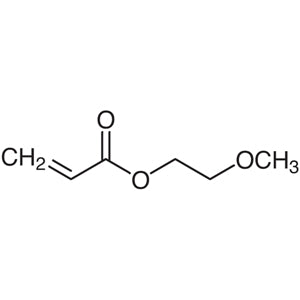
- TCI A1405 3121-61-7 2-Methoxyethyl Acrylate (stabilized with MEHQ)
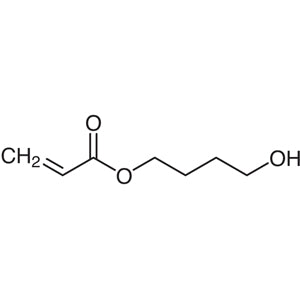
- TCI A1390 2478-10-6 4-Hydroxybutyl Acrylate (stabilized with MEHQ)
- Synthesis of functional copolymers: the acrylate group readily copolymerizes with vinyl monomers, allowing researchers to introduce pendant alkyne groups that can be modified later through click-type reactions.
- Click chemistry post-modification: the terminal alkyne participates in azide-alkyne cycloaddition, enabling precise attachment of labels, drugs, or biomolecules to polymer backbones after polymerization.
- Hydrogel preparation: the bifunctional monomer can be incorporated into crosslinkable networks, providing reactive sites for further functionalization and giving hydrogels tunable chemical properties.
- Surface and interface modification: as a reactive monomer it can anchor onto substrates or coating layers, creating alkyne-decorated surfaces that are ready for subsequent click-based functionalization.
- Polymer structure design and research: the combination of a radical-polymerizable acrylate and a clickable alkyne makes it a versatile tool for building block chemistry and advanced macromolecular architecture studies.
| Brand | TCI |
|---|---|
| CAS number | 10477-47-1 |
| Molecular formula | — |
| Purity | — |
| Category | Chemistry > Building Blocks > Non-Heterocyclic Building Blocks |
| Pack sizes | — |
| Physical form | — |
| Storage | stabilized with BHT; store under conditions that prevent premature polymerization |
- Product name: P2878 Propargyl Acrylate (stabilized with BHT)
As a BHT-stabilized acrylate monomer, Propargyl Acrylate should be stored in a cool, dry, and well-ventilated area, away from direct sunlight, heat sources, and ignition hazards. The container must be kept tightly closed when not in use to limit exposure to air and moisture, which could affect stability. Suitable containers are the original manufacturer's packaging or equivalent tightly sealed laboratory bottles made of compatible materials. General laboratory precautions apply: handle in a fume hood, wear appropriate personal protective equipment including gloves and safety glasses, and avoid contact with skin and eyes. Do not expose the material to free-radical initiators, peroxides, or elevated temperatures, as these may trigger premature polymerization.
—
Product Categories
Produk Terkait
-
MethylAcrylate(stabilizedwithMEHQ) TCI A0145
Regular price From Rp 477.750,00Regular priceRp 333.900,00Sale price From Rp 477.750,00 -
2-EthylhexylAcrylateMonomer(stabilizedwithMEHQ) TCI A0144
Regular price From Rp 505.050,00Regular priceRp 352.800,00Sale price From Rp 505.050,00 -
ButylAcrylate(stabilizedwithMEHQ) TCI A0142
Regular price From Rp 505.050,00Regular priceRp 352.800,00Sale price From Rp 505.050,00 -
3-SulfopropylAcrylatePotassiumSalt TCI U0117
Regular price Rp 1.565.550,00Regular priceRp 1.094.100,00Sale price Rp 1.565.550,00 -
2-MethoxyethylAcrylate(stabilizedwithMEHQ) TCI A1405
Regular price From Rp 505.050,00Regular priceRp 352.800,00Sale price From Rp 505.050,00 -
4-HydroxybutylAcrylate(stabilizedwithMEHQ) TCI A1390
Regular price From Rp 557.550,00Regular priceRp 389.550,00Sale price From Rp 557.550,00 -
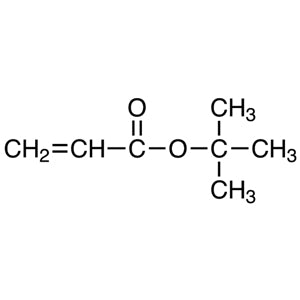
tert-ButylAcrylate(stabilizedwithMEHQ) TCI A1389
Regular price From Rp 452.550,00Regular priceRp 316.050,00Sale price From Rp 452.550,00 -
HydroxypropylAcrylate(mixtureof2-Hydroxypropyland2-Hydroxy-1-methylethylAcrylate)(stabilizedwithMEHQ) TCI A0744
Regular price From Rp 477.750,00Regular priceRp 333.900,00Sale price From Rp 477.750,00