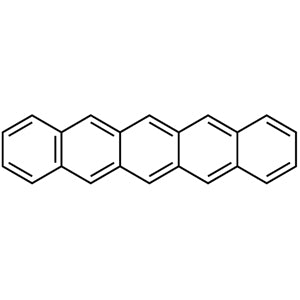
Alpha-Quinquethiophene is an organic compound widely used in electronic material research, particularly in the development of organic photovoltaic (OPV) cells. This compound plays a critical role in laboratory settings where researchers aim to create efficient and sustainable energy solutions. Its unique molecular structure, composed of five sequentially arranged thiophene units, enables it to exhibit favorable conductivity and stability properties. These characteristics make it a valuable component in the fabrication of active layers within OPV devices, which are designed to convert sunlight into electricity.
The chemical stability and controlled reactivity of Alpha-Quinquethiophene make it a preferred choice for high-precision laboratory applications. Its ability to undergo chemical modifications allows researchers to tailor its optical and electronic properties, enhancing its versatility in various experimental setups. This adaptability is crucial for advancing research in organic electronics, where precise control over molecular behavior is essential. The compound’s reliability and consistency further support its use in rigorous scientific investigations.
In Indonesian laboratories, Alpha-Quinquethiophene is commonly used in renewable energy and electronic material research. Researchers from educational institutions and research organizations rely on this compound to develop new technologies and improve existing ones. Its application in OPV materials contributes to the country’s efforts in promoting sustainable energy solutions and advancing materials science.
- Organic Photovoltaic (OPV) Material Development: This compound is ideal for creating active layers in OPV devices due to its unique molecular structure and conductivity properties.
- Electronic Material Research: Its stability and reactivity make it suitable for studying the behavior of organic semiconductors in various experimental conditions.
- Renewable Energy Innovation: Researchers use it to explore new ways to harness solar energy efficiently, supporting Indonesia’s goals in sustainable energy solutions.
- Molecular Modification Studies: The compound’s ability to be chemically modified allows for the study of optical and electronic properties in controlled environments.
- Advanced Materials Fabrication: It is used in the synthesis of complex organic materials that require precise molecular design and structural control.
| Brand | TCI |
|---|---|
| CAS number | 5660-45-7 |
| Molecular formula | — |
| Purity | — |
| Category | Materials Science > Electronic Materials > Organic Solar Cell (OPV) Materials |
| Pack sizes | — |
| Physical form | — |
| Storage | Store in a cool, dry place away from light and moisture |
Alpha-Quinquethiophene should be stored in a cool, dry environment, away from direct light and moisture to maintain its chemical stability. It is recommended to use airtight containers to prevent exposure to air and potential degradation. In laboratory settings, proper personal protective equipment (PPE) such as gloves and safety goggles should be worn when handling the compound to ensure safety. The material should be kept in a well-ventilated area to minimize inhalation risks. Regular monitoring of storage conditions is essential to ensure the integrity of the compound remains unaffected. Proper labeling and secure storage are also important to prevent accidental exposure or contamination.
—
Produk Terkait
-
alpha-Septithiophene TCI S0505
Regular price Rp 3.922.800,00Regular price -
alpha-Sexithiophene(purifiedbysublimation) TCI S0504
Regular price Rp 1.246.350,00Regular price -
alpha-Quaterthiophene TCI Q0078
Regular price Rp 2.121.000,00Regular price -
alpha-Octithiophene TCI O0313
Regular price Rp 13.488.300,00Regular price -
ZincPhthalocyanine(purifiedbysublimation) TCI Z0037
Regular price Rp 4.902.450,00Regular price -
PBTTPD TCI P2710
Regular price Rp 11.448.150,00Regular price -
Poly(3-hexylthiophene-2,5-diyl)(regioregular)[fororganicelectronics] TCI P2513
Regular price From Rp 4.056.150,00Regular price -
Pentacene(purifiedbysublimation) TCI P0030
Regular price From Rp 1.087.800,00Regular price


![110134-47-9 Poly(3-hexylthiophene-2,5-diyl) (regioregular) [for organic electronics] - AMI Scientific](http://amiscientific.com/cdn/shop/files/TCI2510P2513.jpg?v=1767136282&width=533)