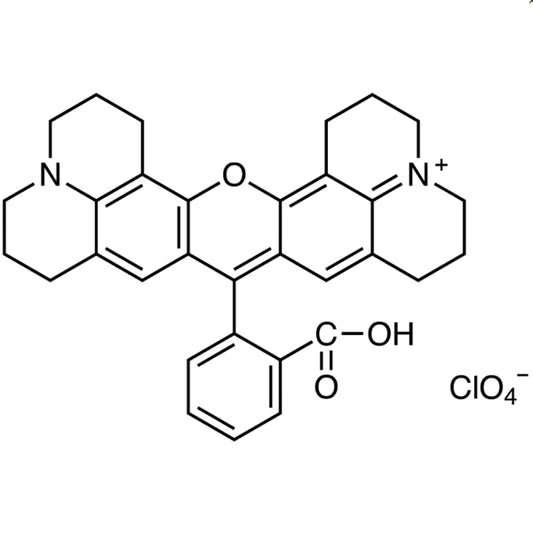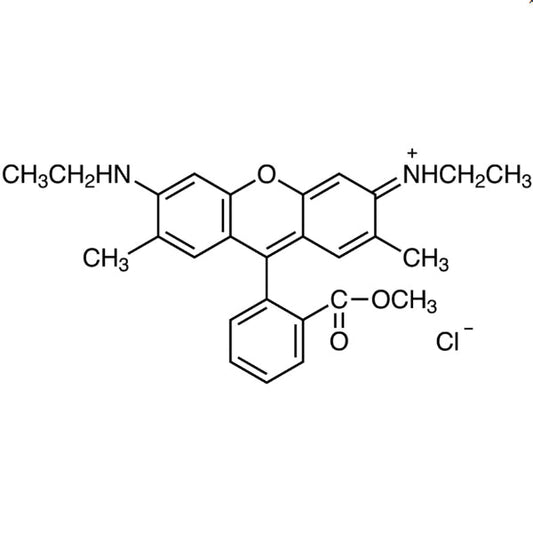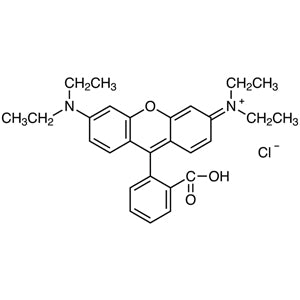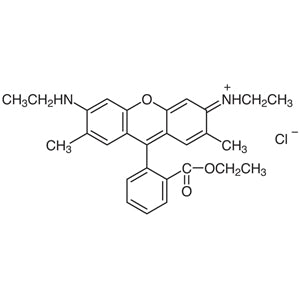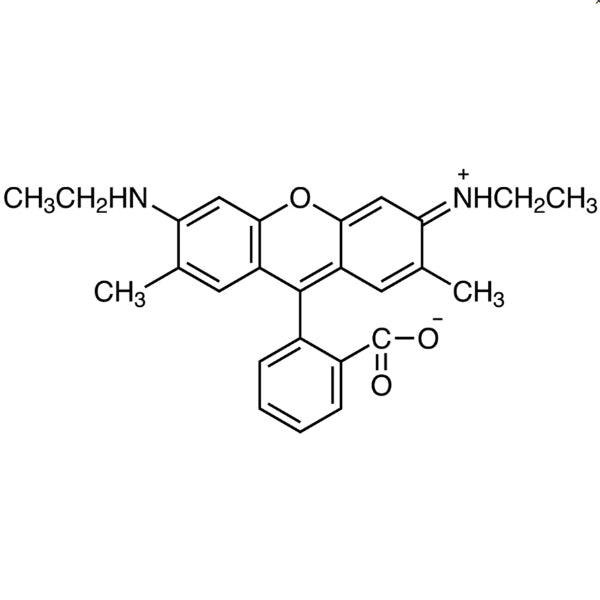
Rhodamine 19 is an organic compound widely used in various scientific fields, particularly in chemistry and materials science. It is a fluorescent dye known for its ability to absorb and emit light across a range of wavelengths, making it a valuable tool in optical and photonic research. In the laboratory, Rhodamine 19 plays a crucial role in fluorescence-based experiments, enabling scientists to observe and analyze optical phenomena with high sensitivity. Its unique optical properties allow for precise detection and quantification of substances, supporting a wide array of analytical techniques.
The chemical stability and strong fluorescence characteristics of Rhodamine 19 make it a preferred choice for many laboratory applications. It exhibits excellent resistance to photodegradation and remains chemically inert under normal conditions, ensuring consistent performance over time. The compound’s ability to absorb light in specific wavelength ranges and emit it with high intensity is essential for applications such as fluorescence spectroscopy and imaging. These properties contribute to its reliability and effectiveness in both research and industrial settings.
In Indonesian laboratories, Rhodamine 19 is commonly used in material science and optical research. It is particularly favored for its role in fluorescence studies, where it helps in the characterization of photonic materials and optical components. Its stability and consistent performance make it an essential reagent for scientists working on advanced materials and optical technologies. The compound’s versatility supports a wide range of experimental needs, from basic research to applied development projects.
- Fluorescence Spectroscopy: Rhodamine 19 is ideal for fluorescence spectroscopy due to its strong emission properties, allowing for precise measurement of light absorption and emission characteristics.
- Optical Imaging: Its high fluorescence intensity makes it suitable for optical imaging applications, enabling clear visualization of structures and processes in various materials.
- Photonic Material Characterization: The compound is used to study the optical properties of photonic materials, aiding in the development of advanced optical components and devices.
- Environmental Monitoring: Rhodamine 19’s stability and detectability make it useful in environmental monitoring for tracking pollutants and analyzing water quality.
- Biochemical Assays: Its fluorescent properties are applied in biochemical assays to detect and quantify biomolecules with high sensitivity and accuracy.
| Brand | TCI |
|---|---|
| CAS number | 25152-49-2 |
| Molecular formula | — |
| Purity | — |
| Category | Materials Science > Photonic Materials and Optical Materials > Xanthene Dyes |
| Pack sizes | Available in various quantities as per standard laboratory supply |
| Physical form | Solid powder |
| Storage | Store in a cool, dark place away from light and moisture |
Rhodamine 19 should be stored in a cool, dark environment to prevent degradation and maintain its optical properties. It is recommended to use airtight containers to protect it from moisture and light exposure. The compound is generally stable under normal laboratory conditions but should be handled with care to avoid contamination. When in use, it is important to follow standard safety protocols, such as wearing appropriate personal protective equipment. Proper storage ensures consistent performance and reliability in experimental applications. Always ensure that the material is kept in a secure location away from incompatible substances.
—
Product Categories
Produk Terkait
-
Rhodamine19Perchlorate TCI R0191
Regular price From Rp 2.016.000,00Regular price -
Rhodamine800 TCI R0190
Regular price Rp 6.704.250,00Regular price -
Rhodamine700 TCI R0189
Regular price Rp 4.957.050,00Regular price -
Rhodamine640Perchlorate TCI R0188
Regular price From Rp 1.298.850,00Regular price -
Rhodamine590Chloride TCI R0187
Regular price Rp 2.041.200,00Regular price -
RhodamineB TCI R0040
Regular price From Rp 1.167.600,00Regular price -
Rhodamine6G TCI R0039
Regular price Rp 1.298.850,00Regular price -
OctadecylRhodamineBChloride TCI O0512
Regular price From Rp 5.114.550,00Regular price