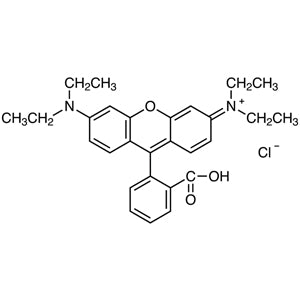
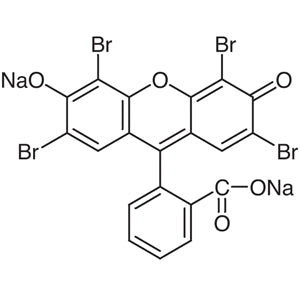
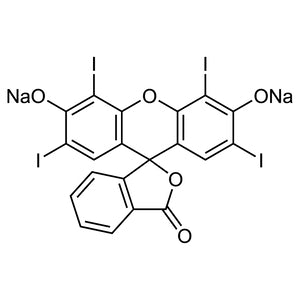
Rhodamine 6G is a chemical compound widely used as a basic dye in laboratory experiments. It serves as a vital tool in various scientific fields, including chemistry, biology, and materials science. This dye is known for its bright green color and stability under specific conditions, making it an essential component in research settings. Its ability to bind to different substrates allows it to be used in a variety of applications, from fluorescence studies to molecular tracking. Rhodamine 6G is particularly valued for its role in enabling researchers to observe and analyze complex phenomena with greater clarity and precision.
Rhodamine 6G is preferred due to its chemical properties that facilitate molecular interactions and its resistance to light and temperature changes. These characteristics ensure that the dye maintains its integrity over extended periods, enhancing the reliability of experimental results. Its high stability and consistent performance make it a trusted choice for both short-term and long-term research projects. Additionally, the dye's ability to act as an indicator or tracer in chemical reactions contributes to its widespread use in laboratory environments. Its versatility and reliability have made it a standard in many research laboratories, particularly in Indonesia.
In Indonesian laboratories, Rhodamine 6G is commonly used in chemical, biological, and environmental research. It plays a crucial role in studies involving chemical reactions, sample analysis, and monitoring techniques. Its application in tracking molecular interactions and identifying substances has made it a key component in various scientific investigations. The dye's effectiveness and stability have made it a preferred choice for researchers seeking accurate and reliable results in their experiments.
TCI brochures (PDF)
- Efflux Pump Research Reagents 2024-12-24 · p. 2
- Visible Light Photoredox Catalysts 2026-04-28 · p. 4
- Organic Photoreaction Reagents 2025-02-13 · p. 8
- Titration Reagents and TLC Stains 2026-05-07 · p. 11
- Chemical reaction monitoring due to its ability to act as a fluorescent indicator in solution-based experiments.
- Biological staining for cell membrane visualization and fluorescent labeling in microscopy studies.
- Environmental analysis for tracking pollutants and assessing water quality through colorimetric responses.
- Material science research for studying molecular interactions and surface binding properties.
- Fluorescence spectroscopy applications where stable and bright emission is required for accurate data collection.
| Brand | TCI |
|---|---|
| CAS number | 989-38-8 |
| Molecular formula | — |
| Purity | — |
| Category | Chemistry > Stains and Dyes (for Research and Experimental Use) > Basic Dyes (for Research and Experimental Use) |
| Pack sizes | Available in various quantities as per standard laboratory requirements |
| Physical form | Powder or solution, depending on the product variant |
| Storage | Store in a cool, dark place away from direct sunlight and moisture |
Rhodamine 6G should be stored in a cool, dark environment to maintain its stability and prevent degradation. It is recommended to keep the compound in a tightly sealed container to avoid exposure to moisture and air. When handling the dye, it is important to use appropriate personal protective equipment, such as gloves and safety goggles, to ensure safety. The substance should be stored away from incompatible materials to prevent chemical reactions. In laboratory settings, it is essential to follow standard safety protocols and ensure proper ventilation when working with this compound. Proper storage and handling practices help preserve the integrity of the dye and ensure its effectiveness in research applications.
—
Product Categories
Produk Terkait
-
RhodamineB TCI R0040
Regular price From Rp 1.167.600,00Regular priceRp 815.850,00Sale price From Rp 1.167.600,00 -
AcidRed87 TCI T0037
Regular price Rp 903.000,00Regular priceRp 631.050,00Sale price Rp 903.000,00 -
RhodamineB[Ionassociationreagentforphotometricandfluorimetricanalysis] TCI A5102
Regular price Rp 1.115.100,00Regular priceRp 779.100,00Sale price Rp 1.115.100,00 -
RhodamineBHydrazide TCI R0260
Regular price From Rp 3.100.650,00Regular priceRp 2.168.250,00Sale price From Rp 3.100.650,00 -
ErythrosineB TCI T0557
Regular price Rp 1.008.000,00Regular priceRp 704.550,00Sale price Rp 1.008.000,00 -
Uranine TCI F0096
Regular price From Rp 637.350,00Regular priceRp 445.200,00Sale price From Rp 637.350,00 -
Fluorescein TCI F0095
Regular price Rp 875.700,00Regular priceRp 612.150,00Sale price Rp 875.700,00 -
2',7'-DichlorofluoresceinSodiumSalt TCI D0424
Regular price From Rp 1.192.800,00Regular priceRp 849.450,00Sale price From Rp 1.192.800,00