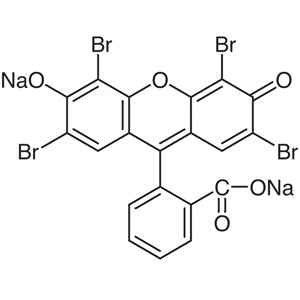
2',7'-Dichlorofluorescein Sodium Salt is a chemical compound widely used in scientific experiments, particularly in the fields of optical materials and phot chemistry. This compound is a member of the xanthene dye family, known for its strong fluorescent properties and sensitivity to chemical environments. In laboratory settings, it serves as a valuable tool for qualitative analysis, helping researchers detect the presence of specific ions such as chloride or hydroxide. Its unique ability to emit light through fluorescence when exposed to certain wavelengths makes it an essential component in many analytical procedures.
One of the key reasons this compound is preferred is its high sensitivity and strong fluorescence response. It exhibits excellent stability under controlled conditions and can change color based on the surrounding chemical environment, making it ideal for applications requiring high accuracy and precision. Its optical properties allow it to be used in various analytical techniques, including fluorescence spectroscopy and ion detection. These characteristics make it a reliable and versatile material for both research and educational purposes.
In Indonesian laboratories, 2',7'-Dichlorofluorescein Sodium Salt is commonly used in research related to optical materials, analytical chemistry, and environmental science. It is a popular choice for qualitative and quantitative analysis in academic and industrial settings. Its reliability and performance make it a standard material in many laboratories across Indonesia, supporting a wide range of scientific investigations and educational activities.
TCI brochures (PDF)
- Iodinated Fluorescein for Various Applications 2024-11-22 · p. 2
- Titration Reagents and TLC Stains 2026-05-07 · p. 10
- Fluorescence Spectroscopy: This compound is ideal for fluorescence spectroscopy due to its strong emission properties, allowing for accurate detection of fluorescent compounds in complex mixtures.
- Ion Detection: It is widely used as an indicator for detecting specific ions such as chloride and hydroxide in solution, making it valuable in analytical chemistry applications.
- Environmental Monitoring: Its sensitivity to chemical environments makes it suitable for environmental studies, where it can be used to detect pollutants or changes in water quality.
- Educational Research: It is frequently used in academic settings for teaching and research, providing students with hands-on experience in fluorescence-based analytical techniques.
- Optical Material Development: Its optical properties make it a useful material for developing new photonic and optical materials in material science research.
| Brand | TCI |
|---|---|
| CAS number | 80471-69-8 |
| Molecular formula | — |
| Purity | — |
| Category | Materials Science > Photonic Materials and Optical Materials > Xanthene Dyes |
| Pack sizes | Available in various quantities as per standard laboratory supply |
| Physical form | Sodium salt of 2',7'-dichlorofluorescein |
| Storage | Store in a cool, dry place away from light |
This compound should be stored in a cool, dry place away from direct light to maintain its stability and fluorescence properties. It is recommended to use airtight containers to prevent moisture absorption, which could affect its performance. Due to its chemical sensitivity, it should be handled with care, using appropriate personal protective equipment such as gloves and safety goggles. Avoid exposure to incompatible substances to ensure safety in the laboratory environment. Proper storage and handling are essential to preserve its analytical capabilities and ensure consistent results in experiments.
—
Produk Terkait
-
2',7'-Dichlorofluorescein[forFluorescentindicator] TCI D0371
Regular price From Rp 955.500,00Regular price -
Fluorescein TCI F0095
Regular price Rp 875.700,00Regular price -
FluoresceinDiacetate TCI F0240
Regular price Rp 1.485.750,00Regular price -
FluoresceinChloride[ReagentforAmines] TCI D0369
Regular price From Rp 1.273.650,00Regular price -
AcidRed87 TCI T0037
Regular price Rp 903.000,00Regular price -
Rhodamine6G TCI R0039
Regular price Rp 1.298.850,00Regular price -
Uranine TCI F0096
Regular price From Rp 637.350,00Regular price -
Calcein(mixtureofisomers)[forFluorometricDeterminationofCa] TCI C0004
Regular price From Rp 1.670.550,00Regular price
![2',7'-Dichlorofluorescein [for Fluorescent indicator] (CAS 76-54-0) - TCI D0371 - AMI Scientific](http://amiscientific.com/cdn/shop/files/TCI2510D0371.jpg?v=1771058004&width=533)
![2',7'-Dichlorofluorescein [for Fluorescent indicator] (CAS 76-54-0) - TCI D0371 - AMI Scientific](http://amiscientific.com/cdn/shop/files/TCI2510D0371_ce9ba31d-9c31-48d8-ae37-56d2081e0f23.jpg?v=1771058582&width=533)

![Fluorescein Chloride [Reagent for Amines] (CAS 630-88-6) - TCI D0369 - AMI Scientific](http://amiscientific.com/cdn/shop/files/TCI2510D0369.jpg?v=1768817259&width=533)