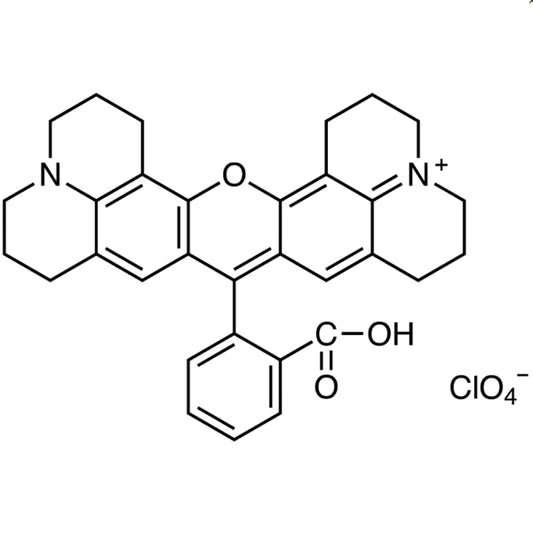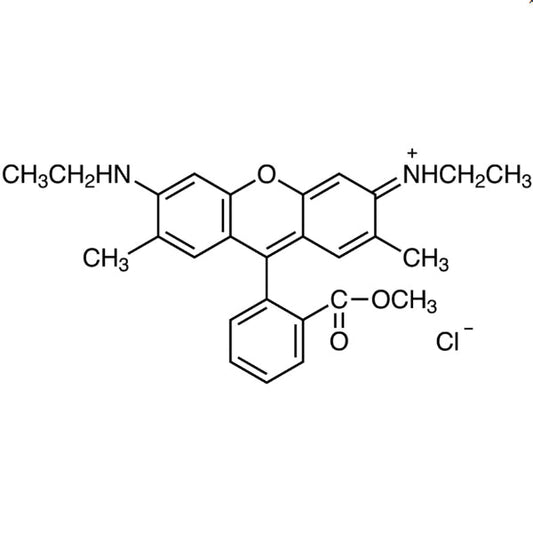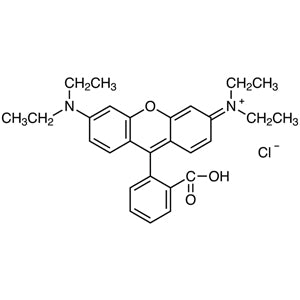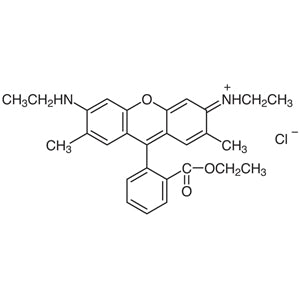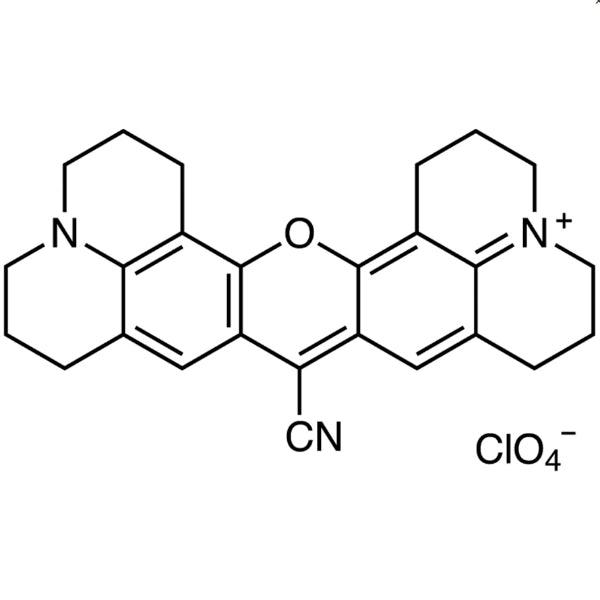
Rhodamine 800 is an organic compound widely used in the fields of materials science and optics. It belongs to the class of xanthene dyes, known for their complex molecular structure and ability to absorb and emit light within specific wavelength ranges. This compound plays a crucial role in laboratory settings, particularly in the development of optical materials and advanced photonic applications. Its unique optical properties make it an essential tool for researchers working on fluorescence-based technologies and light interaction studies.
Rhodamine 800 is preferred due to its strong fluorescence characteristics, with an emission wavelength range of approximately 630–660 nm. Its high chemical stability ensures consistent performance across various experimental conditions, making it reliable for repeated use. Additionally, its good solubility in organic solvents such as ethanol and acetone facilitates easy integration into experimental workflows. These properties collectively make it a versatile and effective material for a wide range of scientific applications.
In Indonesian laboratories, Rhodamine 800 is commonly used in research focused on optical materials, chemical indicators, and fluorescence-based analysis. It is particularly valuable in studies involving light absorption and emission, as well as in the development of fluorescent coatings and sensors. Its availability and performance make it a popular choice among researchers in both academic and industrial settings.
- Fluorescent Coating Development: Rhodamine 800 is ideal for creating fluorescent coatings due to its strong emission properties and solubility in organic solvents.
- Chemical Sensing Applications: Its ability to absorb and emit light makes it suitable for use in chemical sensors that detect specific analytes through fluorescence changes.
- Optical Material Research: The compound is widely used in the study of photonic materials, where its optical properties are essential for understanding light-matter interactions.
- Light Absorption Studies: Rhodamine 800’s absorption characteristics are valuable in experiments that investigate how materials interact with different wavelengths of light.
- Fluorescence Imaging Techniques: Its high fluorescence intensity supports its use in imaging applications, where clear and consistent light emission is critical.
| Brand | TCI |
|---|---|
| CAS number | 137993-41-0 |
| Molecular formula | — |
| Purity | — |
| Category | Materials Science > Photonic Materials and Optical Materials > Xanthene Dyes |
| Pack sizes | Available in various quantities as per standard laboratory supply |
| Physical form | Solid powder |
| Storage | Store in a cool, dark place away from moisture and direct sunlight |
Rhodamine 800 should be stored in a cool, dark environment to maintain its chemical stability and fluorescence properties. It is recommended to keep the compound in a tightly sealed container to prevent exposure to moisture and contaminants. Avoid direct sunlight and high temperatures, as these can degrade the material’s optical performance. In laboratory settings, it is important to handle the compound with care, using appropriate personal protective equipment when necessary. Proper storage ensures that the material remains effective for use in research applications. Always ensure that the storage area is well-ventilated and free from potential chemical interactions.
—
Product Categories
Produk Terkait
-
Rhodamine19Perchlorate TCI R0191
Regular price From Rp 2.016.000,00Regular price -
Rhodamine700 TCI R0189
Regular price Rp 4.957.050,00Regular price -
Rhodamine640Perchlorate TCI R0188
Regular price From Rp 1.298.850,00Regular price -
Rhodamine590Chloride TCI R0187
Regular price Rp 2.041.200,00Regular price -
Rhodamine19 TCI R0186
Regular price From Rp 2.306.850,00Regular price -
RhodamineB TCI R0040
Regular price From Rp 1.167.600,00Regular price -
Rhodamine6G TCI R0039
Regular price Rp 1.298.850,00Regular price -
OctadecylRhodamineBChloride TCI O0512
Regular price From Rp 5.114.550,00Regular price