Rhodium(II) Pivalate Dimer (TCI R0276) is a chemical compound widely used in laboratory settings, particularly in catalysis and inorganic chemistry. It is a versatile reagent that plays a crucial role in facilitating various chemical reactions, including reductions, oxidations, and the synthesis of both organic and inorganic compounds. Its unique structure enables it to act as an effective catalyst, making it a valuable tool for researchers working in advanced chemical processes. This compound is especially useful in applications requiring high reactivity and specificity.
The compound's high reactivity and ability to form complexes with a variety of ligands make it a preferred choice for many laboratory applications. Its chemical stability under certain conditions allows for controlled use in different experimental setups, while its reactivity in chemically energized environments ensures it can participate in complex reactions. The molecular structure of Rhodium(II) Pivalate Dimer enables it to interact with a wide range of substrates and other catalysts, enhancing its utility in diverse chemical processes.
In Indonesian laboratories, Rhodium(II) Pivalate Dimer is commonly used in research and development projects involving catalytic processes. Its reliability and effectiveness in various chemical reactions make it a go-to material for chemists and researchers. Its application is particularly relevant in academic and industrial settings where precise and efficient catalytic reactions are required.
Advantages (TCI brochure)
- Effective for the formation of heterocycles including nitrogen and oxygen
TCI brochures (PDF)
Related TCI products
- TCI B1045 12092-47-6 Chloro(1,5-cyclooctadiene)rhodium(I) Dimer
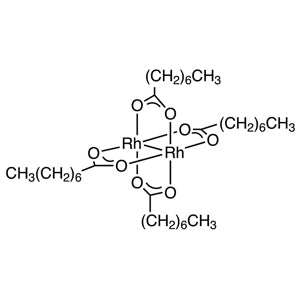
- TCI R0161 73482-96-9 Rhodium(II) Octanoate Dimer
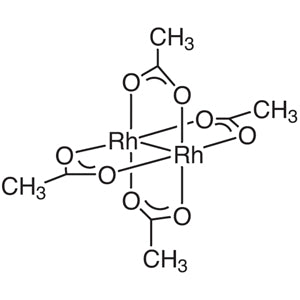
- TCI R0069 15956-28-2 Rhodium(II) Acetate Dimer
- TCI P1788 12354-85-7 (Pentamethylcyclopentadienyl)rhodium(III) Dichloride Dimer
- TCI N0453 12257-42-0 Norbornadiene Rhodium(I) Chloride Dimer
- TCI H1562 73468-85-6 Hydroxy(1,5-cyclooctadiene)rhodium(I) Dimer
- Catalytic Reduction Reactions: Rhodium(II) Pivalate Dimer is ideal for catalytic reduction due to its ability to facilitate electron transfer and promote reaction efficiency in organic synthesis.
- Oxidation Processes: The compound's reactivity allows it to act as a catalyst in oxidation reactions, enhancing the rate of reaction and improving product yield.
- Organic Compound Synthesis: Its capacity to interact with various substrates makes it a valuable reagent in the synthesis of complex organic molecules.
- Inorganic Chemistry Research: It is frequently used in studies involving transition metals, contributing to the understanding of coordination chemistry and catalytic mechanisms.
- Industrial Catalysis Applications: The compound’s stability and reactivity make it suitable for use in industrial catalytic processes requiring high performance and specificity.
From the TCI brochure
- [3+2] and [5+2] cycloadditions of quinolinium ylides with alkynes (2 mol%)
| Brand | TCI |
|---|---|
| CAS number | 65545-21-3 |
| Molecular formula | — |
| Purity | — |
| Category | Chemistry > Catalysis and Inorganic Chemistry > Transition Elements |
| Pack sizes | Available in various quantities as per supplier specifications |
| Physical form | Solid powder |
| Storage | Store in a cool, dry place away from moisture and direct sunlight |
Rhodium(II) Pivalate Dimer should be stored in a cool, dry environment to maintain its chemical stability. It is recommended to keep the compound in a sealed container to prevent exposure to moisture and air. Suitable storage containers include glass or high-density polyethylene vessels that are resistant to chemical corrosion. In laboratory settings, it is important to handle the compound with care, using appropriate personal protective equipment such as gloves and safety goggles. Avoid direct contact with skin and inhalation of vapors. Ensure proper ventilation in the workspace to minimize exposure risks. Always follow standard laboratory safety protocols when working with reactive chemical compounds.
—
Produk Terkait
-
Chloro(1,5-cyclooctadiene)rhodium(I)Dimer TCI B1045
Regular price From Rp 2.942.100,00Regular priceRp 2.072.700,00Sale price From Rp 2.942.100,00 -
Rhodium(II)OctanoateDimer TCI R0161
Regular price From Rp 5.855.850,00Regular priceRp 4.110.750,00Sale price From Rp 5.855.850,00 -
Rhodium(II)AcetateDimer TCI R0069
Regular price From Rp 3.895.500,00Regular priceRp 2.739.450,00Sale price From Rp 3.895.500,00 -
(Pentamethylcyclopentadienyl)rhodium(III)DichlorideDimer TCI P1788
Regular price From Rp 4.399.500,00Regular priceRp 3.092.250,00Sale price From Rp 4.399.500,00 -
NorbornadieneRhodium(I)ChlorideDimer TCI N0453
Regular price Rp 6.573.000,00Regular priceRp 4.611.600,00Sale price Rp 6.573.000,00 -
Hydroxy(1,5-cyclooctadiene)rhodium(I)Dimer TCI H1562
Regular price From Rp 4.161.150,00Regular priceRp 2.925.300,00Sale price From Rp 4.161.150,00 -
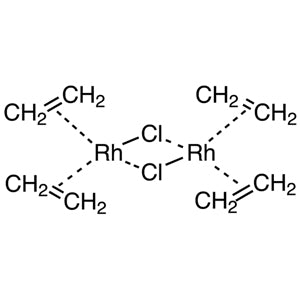
Chlorobis(ethylene)rhodium(I)Dimer TCI C2461
Regular price Rp 5.565.000,00Regular priceRp 3.907.050,00Sale price Rp 5.565.000,00 -
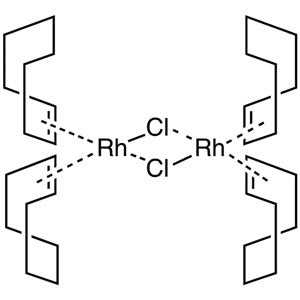
Chlorobis(cyclooctene)rhodium(I)Dimer TCI C2253
Regular price From Rp 2.862.300,00Regular priceRp 2.017.050,00Sale price From Rp 2.862.300,00