Sulfanilic Acid from TCI is 4-aminobenzenesulfonic acid, an aromatic compound with an amine group and a sulfonic acid group in the para position. TCI lists it among its non-heterocyclic building blocks. In the laboratory, sulfanilic acid is a classic starting material for synthesizing azo dyes, including the indicator methyl orange. It is also one of the reagent components used to determine nitrite by colorimetry, so it is a common item in both synthetic and analytical work.
Sulfanilic acid exists as a zwitterion in the solid state: the strong sulfonic acid group gives up a proton to the amine group on the same molecule. This structure makes the compound fairly stable and easy to handle as a solid. Its aromatic amine group can be diazotized with nitrite, and the diazonium salt that forms can then be coupled with electron-rich aromatic compounds to give azo dyes. The sulfonic acid group makes the final product soluble in water, which the dye industry values highly. Because it is both reactive and practical to handle, chemists choose it for teaching labs as well as for routine analysis.
In Indonesian laboratories, sulfanilic acid is used in university organic chemistry practicals, especially the methyl orange synthesis experiment, which is a standard part of the curriculum. Students use it to learn diazotization and azo coupling with a reaction that clearly shows when it has worked. Water testing laboratories also use sulfanilic acid in colorimetric reagents to determine nitrite. The material also serves research groups that need a reliable non-heterocyclic aromatic building block.
TCI brochures (PDF)
- Reactive Oxygen Species (ROS) and Oxidative Stress Research Reagents 2026-04-23 · p. 1
- Reagents for Biological Research 2025-03-11 · p. 36
Related TCI products
- TCI U0107 121-57-3 Sulfanilic Acid [for Biochemical Research]
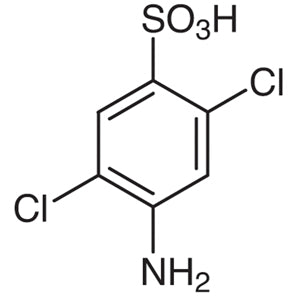
- TCI D0415 88-50-6 2,5-Dichlorosulfanilic Acid
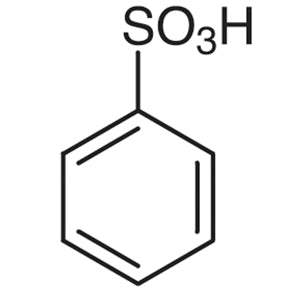
- TCI B3408 98-11-3 Benzenesulfonic Acid Anhydrous
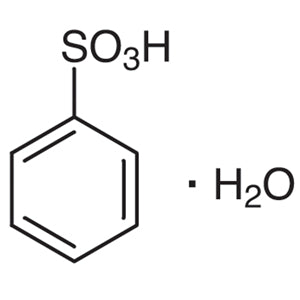
- TCI B0030 26158-00-9 Benzenesulfonic Acid Monohydrate
- TCI T0267 6192-52-5 p-Toluenesulfonic Acid Monohydrate
- TCI S0137 5965-83-3 5-Sulfosalicylic Acid Dihydrate
- Azo dye synthesis: the aromatic amine group diazotizes with nitrite, and the diazonium salt couples with electron-rich aromatics to form azo dyes that the sulfonic acid group makes water-soluble.
- Methyl orange preparation: sulfanilic acid is the classic starting material for this indicator, so it is the standard choice when preparing methyl orange in teaching or research laboratories.
- Colorimetric nitrite determination: it is one of the reagent components in nitrite tests, where diazotization followed by coupling produces a colored product that can be measured by colorimetry.
- University organic chemistry practicals: as a stable, easy-to-handle solid, it suits student experiments that demonstrate diazotization, azo coupling, and zwitterion behavior in a single procedure.
- Organic synthesis building block: TCI classifies it as a non-heterocyclic building block, and its amine and sulfonic acid groups in the para position give researchers two distinct functional handles for building larger molecules.
| Brand | TCI (product code S0120) |
|---|---|
| CAS number | 121-57-3 |
| Molecular formula | — |
| Purity | — |
| Category | Chemistry > Building Blocks > Non-Heterocyclic Building Blocks |
| Pack sizes | as listed on this product page |
| Physical form | solid (exists as a zwitterion in the solid state) |
| Storage | keep in a tightly closed container in a cool, dry place; follow the TCI label and Safety Data Sheet |
Store sulfanilic acid in its original, tightly closed container in a cool, dry, well-ventilated area, away from direct sunlight and moisture. Keep it apart from strong oxidizing agents and incompatible chemicals, and reseal the container promptly after each use. Wear standard laboratory protective equipment when handling it, including gloves, safety glasses, and a lab coat. Avoid creating or breathing in dust by weighing it carefully, preferably in a fume hood or a ventilated weighing area. Wash your hands thoroughly after handling. Always check the TCI Safety Data Sheet for full hazard information, first-aid measures, and disposal instructions before use.
—
Produk Terkait
-
SulfanilicAcid[forBiochemicalResearch] TCI U0107
Regular price Rp 505.050,00Regular priceRp 352.800,00Sale price Rp 505.050,00 -
2,5-DichlorosulfanilicAcid TCI D0415
Regular price From Rp 2.545.200,00Regular priceRp 1.779.750,00Sale price From Rp 2.545.200,00 -
BenzenesulfonicAcidAnhydrous TCI B3408
Regular price Rp 1.565.550,00Regular priceRp 1.094.100,00Sale price Rp 1.565.550,00 -
BenzenesulfonicAcidMonohydrate TCI B0030
Regular price From Rp 743.400,00Regular priceRp 519.750,00Sale price From Rp 743.400,00 -
p-ToluenesulfonicAcidMonohydrate TCI T0267
Regular price From Rp 477.750,00Regular priceRp 333.900,00Sale price From Rp 477.750,00 -
5-SulfosalicylicAcidDihydrate TCI S0137
Regular price From Rp 557.550,00Regular priceRp 405.300,00Sale price From Rp 557.550,00 -
Sulfanilamide[forBiochemicalResearch] TCI S0833
Regular price Rp 1.113.000,00Regular priceRp 793.800,00Sale price Rp 1.113.000,00 -
SodiumSulfanilateHydrate[forBiochemicalResearch] TCI S0832
Regular price Rp 875.700,00Regular priceRp 612.150,00Sale price Rp 875.700,00