2-Salicylideneaminophenol is a chemical compound widely used in laboratory settings, particularly in catalysis and inorganic chemistry. As a nitrogen-donor ligand, it plays a crucial role in the formation of metal complexes, especially with transition metals. Its ability to coordinate with metal ions makes it a valuable tool in catalytic processes, where it enhances reactivity and facilitates the formation of active catalysts. This compound is commonly employed in research that requires the synthesis of complex metal-based compounds.
The chemical properties of 2-Salicylideneaminophenol make it a preferred choice in laboratory applications. It exhibits stability under certain conditions but is highly sensitive to moisture and air exposure. Its molecular structure allows it to interact with a variety of metal ions, making it versatile for different catalytic reactions. The compound’s reactivity and ability to form stable complexes contribute to its effectiveness in both synthetic and analytical processes.
In Indonesian laboratories, 2-Salicylideneaminophenol is extensively used in chemical research, particularly in catalysis and organic synthesis. Its reliability in forming metal complexes ensures consistent results in experiments requiring high reactivity and structural stability. Researchers in Indonesia rely on this compound for its performance in complex chemical reactions, making it an essential reagent in various scientific studies.
TCI brochures (PDF)
- Ligands 2025-12-01 · p. 10
Related TCI products
- Metal complex synthesis: This compound is ideal for forming stable metal complexes, especially with transition metals, which are essential in catalytic reactions.
- Catalytic reactions: Its role as a nitrogen-donor ligand makes it suitable for enhancing catalytic activity and improving reaction efficiency.
- Organic synthesis: It is frequently used in the synthesis of organic compounds, where its reactivity and coordination ability are advantageous.
- Analytical chemistry: The compound’s chemical properties make it useful in analytical applications that require precise metal ion detection and complex formation.
- Research and development: Its versatility and effectiveness in forming metal complexes make it a key component in various R&D projects in Indonesian laboratories.
| Brand | TCI |
|---|---|
| CAS number | 1761-56-4 |
| Molecular formula | — |
| Purity | — |
| Category | Chemistry > Catalysis and Inorganic Chemistry > Nitrogen-Donor Ligands [Catalysis] |
| Pack sizes | Available in various quantities as per supplier specifications |
| Physical form | Solid (as per standard product description) |
| Storage | Store in a cool, dry place away from moisture and air exposure |
This compound should be stored in a cool, dry environment to prevent degradation due to moisture and air exposure. It is recommended to use airtight containers to minimize contact with atmospheric moisture. Proper labeling of storage containers is essential for safe handling. Laboratory personnel should wear appropriate personal protective equipment, such as gloves and safety goggles, when handling the compound. Avoid direct skin contact and inhalation of vapors. Ensure that the storage area is well-ventilated and free from sources of heat or ignition. Regular monitoring of storage conditions is advised to maintain the compound's stability and effectiveness.
—
Produk Terkait
-
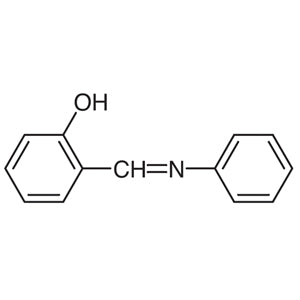
N-Salicylideneaniline TCI S0267
Regular price From Rp 928.200,00Regular priceRp 664.650,00Sale price From Rp 928.200,00 -
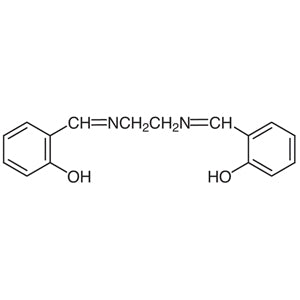
N,N'-Bis(salicylidene)ethylenediamine TCI H0199
Regular price From Rp 1.351.350,00Regular priceRp 960.750,00Sale price From Rp 1.351.350,00 -
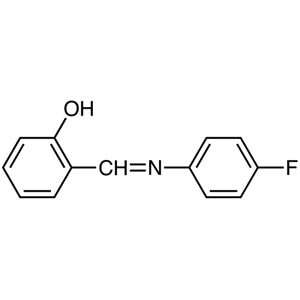
4-Fluoro-N-salicylideneaniline TCI F0893
Regular price From Rp 689.850,00Regular priceRp 497.700,00Sale price From Rp 689.850,00 -
N,N'-Bis(salicylidene)-1,2-phenylenediamine TCI D2572
Regular price From Rp 1.246.350,00Regular priceRp 887.250,00Sale price From Rp 1.246.350,00 -
2-Aminophenol-4-sulfonamide TCI A1031
Regular price From Rp 2.068.500,00Regular priceRp 1.461.600,00Sale price From Rp 2.068.500,00 -
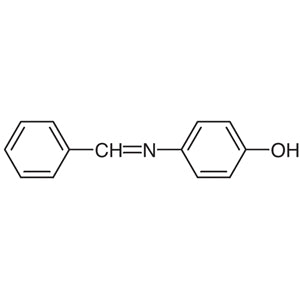
4-Benzylideneaminophenol TCI B1620
Regular price Rp 1.696.800,00Regular priceRp 1.202.250,00Sale price Rp 1.696.800,00 -
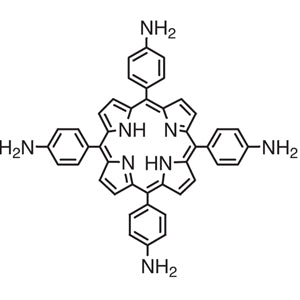
5,10,15,20-Tetrakis(4-aminophenyl)porphyrin TCI T1494
Regular price Rp 6.227.550,00Regular priceRp 4.370.100,00Sale price Rp 6.227.550,00 -
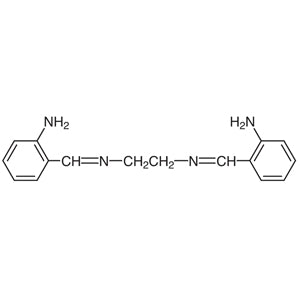
N,N'-Bis(2-aminobenzal)ethylenediamine TCI A0261
Regular price Rp 3.021.900,00Regular priceRp 2.128.350,00Sale price Rp 3.021.900,00