


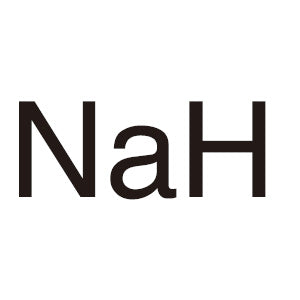
Sodium hydride (NaH) is a chemical compound in solid form widely used in various chemical reactions, particularly in organic synthesis and reduction reactions. As a strong base and highly reactive reagent, it plays a crucial role in laboratory settings where controlled chemical environments are required. Its ability to act as a nucleophile and its utility in deprotonation processes make it an essential component in synthetic chemistry. This product is available as a powder dispersed in paraffin liquid, which enhances its usability and reduces the risk of excessive reactions.
The properties that make sodium hydride a preferred choice include its high reactivity, strong basicity, and stability in dispersed form. The 60% purity ensures consistent performance in laboratory applications, while the paraffin dispersion prevents premature reaction with moisture or air. This formulation also improves handling and storage safety, making it more practical for routine use in chemical laboratories. Its reactivity and versatility make it suitable for a wide range of chemical processes, including hydrogenation and dehydrogenation reactions.
In Indonesian laboratories, sodium hydride is commonly used in research involving organic synthesis and catalytic reactions. Its availability in 100g and 500g pack sizes makes it convenient for both small-scale experiments and larger laboratory operations. The dispersed form in paraffin also ensures that it remains stable and safe during storage and handling, which is particularly important in environments where moisture and air exposure are concerns.
TCI brochures (PDF)
- Reducing Agents 2026-04-06 · p. 7
- Titanium Reagents Julia-Kocienski Olefination Reagents Peterson Reaction Reagents Z-Selective Horner-Wadsworth-Emmons Reagents 2025-03-28 · p. 2
- Glycosidation 2026-04-14 · p. 2
- Metallic Salts 2025-11-06 · p. 10
- Reagents for Glyco Chemistry & Biology 5th Edition · p. 147
Related TCI products
- Organic synthesis reactions benefit from sodium hydride’s strong basicity and reactivity, making it ideal for deprotonation and hydrogenation processes.
- Catalytic reduction reactions often utilize sodium hydride as a reagent due to its ability to provide hydride ions under controlled conditions.
- Dehydrogenation processes in chemical synthesis rely on sodium hydride’s reactivity to facilitate the removal of hydrogen atoms from organic compounds.
- Preparation of organometallic compounds often involves sodium hydride as a source of hydride ions, enhancing reaction efficiency.
- Reductive coupling reactions in synthetic chemistry use sodium hydride to create complex molecular structures through controlled hydrogen transfer.
From the TCI brochure
- Base in HWE reaction with D1523 in THF at 0 C
| Brand | TCI |
|---|---|
| CAS number | 7646-69-7 |
| Molecular formula | — |
| Purity | — |
| Category | Chemistry > Catalysis and Inorganic Chemistry > Main-group Elements |
| Pack sizes | 100g, 500g |
| Physical form | Powder dispersed in paraffin liquid |
| Storage | Store in a cool, dry place away from moisture and air exposure |
Sodium hydride should be stored in a cool, dry place, away from moisture and air exposure to prevent premature reactions. It is recommended to use airtight containers made of inert materials such as glass or polyethylene to ensure stability and safety. Due to its high reactivity, it must be handled with care, using appropriate personal protective equipment like gloves and goggles. Avoid contact with water or acidic substances, as these can cause vigorous reactions. In laboratory settings, sodium hydride should be kept in a designated chemical storage area to minimize risks and ensure compliance with safety protocols. Proper labeling and storage conditions are essential to maintain its effectiveness and ensure safe usage.
—
Product Categories
- Catalysis and Inorganic ChemistryMain-group Elements [Catalysis and Inorganic Chemistry]Sodium [Catalysis and Inorganic Chemistry]
- Catalysis and Inorganic ChemistryMetallic Salts [Catalysis and Inorganic Chemistry]Hydride Salts and Tetrahydridoaluminate Salts [Metallic Salts]
- Chemical BiologyGlycoscienceReagents for Oligosaccharide Synthesis [Glycoscience]
- Synthetic ReagentsReduction [Synthetic Reagents]Metal Hydrides [Reduction]
Produk Terkait
-
LithiumAluminumHydride(Powder) TCI L0203
Regular price From Rp 2.121.000,00Regular priceRp 1.482.600,00Sale price From Rp 2.121.000,00 -
SodiumBorohydride TCI S0480
Regular price From Rp 769.650,00Regular priceRp 537.600,00Sale price From Rp 769.650,00 -
SodiumBorohydride(Granulated) TCI O0577
Regular price From Rp 743.400,00Regular priceRp 519.750,00Sale price From Rp 743.400,00 -
SodiumAzide TCI S0489
Regular price Rp 875.700,00Regular priceRp 612.150,00Sale price Rp 875.700,00 -
Hexane[forLiquidParaffinTest] TCI H0405
Regular price Rp 477.750,00Regular priceRp 333.900,00Sale price Rp 477.750,00 -
GrapheneOxide(10mg/mL,DispersioninWater) TCI G0557
Regular price From Rp 1.644.300,00Regular priceRp 1.149.750,00Sale price From Rp 1.644.300,00 -
XanthaneHydride TCI X0001
Regular price From Rp 2.942.100,00Regular priceRp 2.072.700,00Sale price From Rp 2.942.100,00 -
1,4-Bis(2-methylstyryl)benzene[SoluteforLiquidScintillationCounting] TCI B1024
Regular price From Rp 1.908.900,00Regular priceRp 1.334.550,00Sale price From Rp 1.908.900,00


