


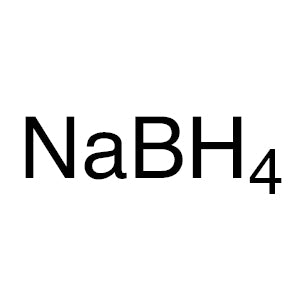
Sodium Borohydride (Granulated), with the CAS number 16940-66-2, is a chemical compound widely used in laboratory settings for its strong reducing properties. It plays a crucial role in various chemical reactions, particularly in reduction processes, where it acts as a powerful hydride source. This granulated form is especially useful in chemical synthesis, offering controlled reactivity and ease of handling. Its versatility makes it an essential reagent in both inorganic and organic chemistry applications, supporting a wide range of experimental needs in research and education.
The granulated form of sodium borohydride is preferred due to its stability in controlled environments and its ability to be safely handled in laboratory conditions. It is a white powder that reacts vigorously with water and air, necessitating careful storage and use. Its reactivity with oxygen and moisture means it must be stored in a dry, sealed container to prevent decomposition. Despite its reactivity, its granulated form allows for precise dosing and controlled reactions, making it a reliable choice for many chemical processes.
In Indonesian laboratories, sodium borohydride is commonly used in chemical synthesis, analytical chemistry, and catalytic testing. It is an integral part of both academic and industrial research, supporting the development of new compounds and materials. Its role in educational curricula and research projects highlights its importance in advancing chemical knowledge and innovation in the region.
TCI brochures (PDF)
- Reducing Agents 2026-04-06 · p. 6
- Metallic Salts 2025-11-06 · p. 10
- Boron Compounds 2025-10-07 · p. 22
Related TCI products
- TCI S0480 16940-66-2 Sodium Borohydride
- TCI T0917 33725-74-5 Tetrabutylammonium Borohydride [Reducing Reagent]
- TCI P1681 13762-51-1 Potassium Borohydride
- TCI S0394 56553-60-7 Sodium Triacetoxyborohydride
- TCI S0481 7646-69-7 Sodium Hydride (60%, dispersion in Paraffin Liquid)
- TCI P1440 18583-60-3 Potassium Tris(1-pyrazolyl)borohydride
- Organic synthesis where sodium borohydride is used to reduce carbonyl compounds to alcohols, offering a reliable and efficient method for producing complex organic molecules.
- Inorganic chemistry experiments that require a strong reducing agent for the synthesis of various metal compounds and hydrides.
- Catalytic testing in which sodium borohydride serves as a hydride source, enabling the evaluation of catalyst efficiency in reduction reactions.
- Analytical chemistry applications where it is used for the reduction of metal ions, aiding in the detection and quantification of specific elements.
- Educational laboratories where it is employed to demonstrate redox reactions and the properties of strong reducing agents in a controlled setting.
| Brand | TCI |
|---|---|
| CAS number | 16940-66-2 |
| Molecular formula | — |
| Purity | — |
| Category | Chemistry > Catalysis and Inorganic Chemistry > Main-group Elements |
| Pack sizes | Granulated form available in standard laboratory quantities |
| Physical form | White granules |
| Storage | Must be stored in a dry, sealed container away from moisture and air |
Sodium borohydride should be stored in a cool, dry place, away from moisture and sources of heat. It is essential to use airtight containers to prevent exposure to air and humidity, which can lead to decomposition. Due to its reactivity with water and oxygen, it should never be handled near open flames or in environments with high humidity. When working with this compound, it is recommended to use appropriate personal protective equipment, such as gloves and safety goggles, to ensure safe handling. Proper ventilation is also necessary to minimize the risk of inhalation of any vapors that may be released during handling.
—
Product Categories
- Catalysis and Inorganic ChemistryMain-group Elements [Catalysis and Inorganic Chemistry]Sodium [Catalysis and Inorganic Chemistry]
- Catalysis and Inorganic ChemistryMetallic Salts [Catalysis and Inorganic Chemistry]Tetrafluoroborates, Tetracyanoborates, Tetrahydroborates, Difluoro(oxalato)borates [Metallic Salts]
- Chemical BiologyGlycoscienceReagents for Oligosaccharide Synthesis [Glycoscience]
- Synthetic ReagentsReduction [Synthetic Reagents]Borohydrides [Reduction]
Produk Terkait
-
SodiumBorohydride TCI S0480
Regular price From Rp 769.650,00Regular priceRp 537.600,00Sale price From Rp 769.650,00 -
TetrabutylammoniumBorohydride[ReducingReagent] TCI T0917
Regular price From Rp 1.618.050,00Regular priceRp 1.146.600,00Sale price From Rp 1.618.050,00 -
PotassiumBorohydride TCI P1681
Regular price Rp 928.200,00Regular priceRp 648.900,00Sale price Rp 928.200,00 -
SodiumTriacetoxyborohydride TCI S0394
Regular price From Rp 2.174.550,00Regular priceRp 1.520.400,00Sale price From Rp 2.174.550,00 -
SodiumHydride(60%,dispersioninParaffinLiquid) TCI S0481
Regular price From Rp 955.500,00Regular priceRp 667.800,00Sale price From Rp 955.500,00 -
PotassiumTris(1-pyrazolyl)borohydride TCI P1440
Regular price From Rp 1.670.550,00Regular priceRp 1.183.350,00Sale price From Rp 1.670.550,00 -
BenzyltriethylammoniumBorohydride TCI B3128
Regular price From Rp 1.934.100,00Regular priceRp 1.368.150,00Sale price From Rp 1.934.100,00 -
TetramethylammoniumBorohydride[ReducingReagent] TCI T0852
Regular price From Rp 928.200,00Regular priceRp 648.900,00Sale price From Rp 928.200,00


![TCI T0917 33725-74-5 Tetrabutylammonium Borohydride [Reducing Reagent]](http://amiscientific.com/cdn/shop/files/TCI2510T0917_dc8c0434-b959-4e20-9f35-f6fbe0871027.jpg?v=1792655918&width=533)
![33725-74-5 Tetrabutylammonium Borohydride [Reducing Reagent] - AMI Scientific](http://amiscientific.com/cdn/shop/files/TCI2510T0917.jpg?v=1767140761&width=533)


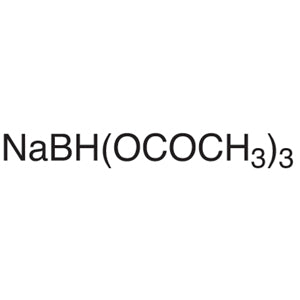


![TCI T0852 16883-45-7 Tetramethylammonium Borohydride [Reducing Reagent]](http://amiscientific.com/cdn/shop/files/TCI2510T0852_b4ce9c24-fee3-490c-87c2-c0c046940221.jpg?v=1792655861&width=533)
![16883-45-7 Tetramethylammonium Borohydride [Reducing Reagent] - AMI Scientific](http://amiscientific.com/cdn/shop/files/TCI2510T0852.jpg?v=1769143526&width=533)