


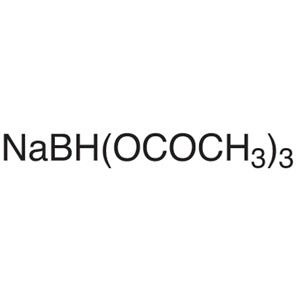
Sodium Triacetoxyborohydride (Na-TAB), with CAS number 56553-60-7, is a chemical compound widely used in organic and biochemical research. This reagent is particularly valued for its ability to selectively reduce glycosidic bonds, making it an essential tool in glycoscience. In laboratory settings, Na-TAB is employed to convert glycosides into glycols, a process critical for molecular structure analysis and the synthesis of complex compounds. Its utility extends across various research fields, including medicinal chemistry and bioorganic studies, where precise chemical transformations are required.
One of the key advantages of Na-TAB is its effectiveness in mild basic conditions, which minimizes side reactions and ensures greater control over the chemical process. This property makes it a preferred choice for researchers seeking reliable and efficient reagents. Additionally, Na-TAB exhibits good stability under typical laboratory conditions, simplifying storage and handling. Its controlled chemical and reactive properties further enhance its appeal as a dependable reagent in both academic and industrial research environments.
In Indonesian laboratories, Na-TAB is commonly used in biochemical and pharmacological studies, as well as in the synthesis of organic compounds. Its role in glycoscience research is particularly significant, supporting the development of new drugs and the understanding of molecular structures. The compound’s versatility and reliability make it a valuable asset in the research toolkit of scientists working in diverse fields.
TCI brochures (PDF)
- Reducing Agents 2026-04-06 · p. 2
- Reagents for Glyco Chemistry & Biology 5th Edition · p. 147
- Boron Compounds 2025-10-07 · p. 23
Related TCI products
- TCI S0480 16940-66-2 Sodium Borohydride
- TCI O0577 16940-66-2 Sodium Borohydride (Granulated)
- TCI T1553 109704-53-2 Tetramethylammonium Triacetoxyborohydride
- TCI T0917 33725-74-5 Tetrabutylammonium Borohydride [Reducing Reagent]
- TCI P1681 13762-51-1 Potassium Borohydride
- TCI P1440 18583-60-3 Potassium Tris(1-pyrazolyl)borohydride
- Glycoscience Research: Na-TAB is ideal for reducing glycosidic bonds, enabling the study of carbohydrate structures and their functional roles in biological systems.
- Organic Synthesis: Its selective reducing properties make it suitable for the synthesis of complex organic molecules, particularly in the production of glycol derivatives.
- Medicinal Chemistry: Na-TAB is used to modify glycosidic structures, aiding in the development of pharmaceutical compounds with improved bioavailability and efficacy.
- Biochemical Analysis: The compound supports the structural analysis of carbohydrates, which is crucial for understanding metabolic pathways and disease mechanisms.
- Pharmacological Studies: Na-TAB facilitates the preparation of glycol-based compounds, which are often used in drug development and therapeutic research.
| Brand | TCI |
|---|---|
| CAS number | 56553-60-7 |
| Molecular formula | — |
| Purity | — |
| Category | Chemistry > Chemical Biology > Glycoscience |
| Pack sizes | Available in various quantities as per standard laboratory supply |
| Physical form | Solid powder |
| Storage | Store in a cool, dry place away from moisture and direct sunlight |
Na-TAB should be stored in a cool, dry environment to maintain its chemical stability and prevent degradation. It is recommended to keep the compound in a sealed container to avoid exposure to moisture and air, which can affect its reactivity. Due to its chemical nature, it is important to handle Na-TAB with appropriate personal protective equipment, such as gloves and safety goggles, to ensure laboratory safety. The compound is not flammable but should be stored away from incompatible materials. Regular monitoring of storage conditions is advised to ensure optimal performance and safety in laboratory settings.
—
Produk Terkait
-
SodiumBorohydride TCI S0480
Regular price From Rp 769.650,00Regular priceRp 537.600,00Sale price From Rp 769.650,00 -
SodiumBorohydride(Granulated) TCI O0577
Regular price From Rp 743.400,00Regular priceRp 519.750,00Sale price From Rp 743.400,00 -
TetramethylammoniumTriacetoxyborohydride TCI T1553
Regular price From Rp 3.260.250,00Regular priceRp 2.279.550,00Sale price From Rp 3.260.250,00 -
TetrabutylammoniumBorohydride[ReducingReagent] TCI T0917
Regular price From Rp 1.618.050,00Regular priceRp 1.146.600,00Sale price From Rp 1.618.050,00 -
PotassiumBorohydride TCI P1681
Regular price Rp 928.200,00Regular priceRp 648.900,00Sale price Rp 928.200,00 -
PotassiumTris(1-pyrazolyl)borohydride TCI P1440
Regular price From Rp 1.670.550,00Regular priceRp 1.183.350,00Sale price From Rp 1.670.550,00 -
TetramethylammoniumBorohydride[ReducingReagent] TCI T0852
Regular price From Rp 928.200,00Regular priceRp 648.900,00Sale price From Rp 928.200,00 -
TetraethylammoniumBorohydride TCI T0837
Regular price From Rp 2.147.250,00Regular priceRp 1.517.250,00Sale price From Rp 2.147.250,00


