


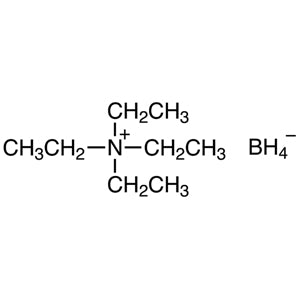
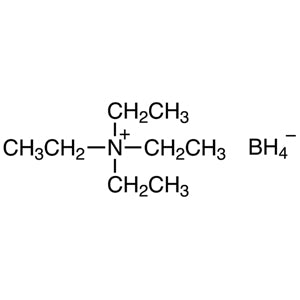
Tetraethylammonium Borohydride (TEAB) is a chemical compound widely used in reduction reactions within organic synthesis. It serves as a versatile reagent in laboratories, enabling the conversion of functional groups such as aldehydes, ketones, and esters into simpler compounds. Its role is critical in achieving selective reductions under mild and non-toxic conditions, making it an essential tool for chemists working on complex molecular transformations. TEAB is particularly valued for its ability to act as a hydride source without generating excess hydroxide ions, which minimizes the risk of side reactions and enhances the efficiency of synthetic processes.
One of the key properties that make TEAB a preferred choice is its stability under specific conditions and resistance to degradation. This ensures consistent performance across multiple experiments, reducing the need for frequent reagent replacement. Additionally, TEAB offers a high level of selectivity in reduction reactions, allowing chemists to target specific functional groups without affecting other parts of the molecule. Its compatibility with a wide range of solvents and reaction conditions further enhances its utility in diverse laboratory settings.
In Indonesian laboratories, TEAB is commonly used in organic chemistry research, pharmaceutical development, and industrial chemical production. Its relevance is growing as local research efforts expand, especially in the fields of pharmacy and food chemistry. The compound's reliability and effectiveness make it a go-to reagent for researchers aiming to achieve precise and controlled chemical transformations.
TCI brochures (PDF)
- Reducing Agents 2026-04-06 · p. 6
- Quaternary Ammonium Salts 2025-11-10 · p. 8
- Boron Compounds 2025-10-07 · p. 23
Related TCI products
- TCI S0480 16940-66-2 Sodium Borohydride
- TCI P1681 13762-51-1 Potassium Borohydride
- TCI P1440 18583-60-3 Potassium Tris(1-pyrazolyl)borohydride
- TCI B3128 85874-45-9 Benzyltriethylammonium Borohydride
- TCI T0917 33725-74-5 Tetrabutylammonium Borohydride [Reducing Reagent]
- TCI T0852 16883-45-7 Tetramethylammonium Borohydride [Reducing Reagent]
- Organic synthesis of complex compounds requires a reliable and selective reducing agent, and TEAB provides efficient reduction without unwanted side reactions.
- Drug development involves multiple reduction steps, and TEAB's mild conditions make it ideal for synthesizing active pharmaceutical ingredients.
- Industrial chemical production benefits from TEAB's stability and effectiveness in large-scale reactions, ensuring consistent product quality.
- Food chemistry research often involves the modification of organic compounds, and TEAB's non-toxic properties make it suitable for such applications.
- Analytical chemistry experiments may require precise reduction reactions, and TEAB's controlled hydride release supports accurate results.
| Brand | TCI |
|---|---|
| CAS number | 17083-85-1 |
| Molecular formula | — |
| Purity | — |
| Category | Chemistry > Synthetic Reagents > Reduction [Synthetic Reagents] |
| Pack sizes | Available in various quantities as per supplier specifications |
| Physical form | Solid or liquid, depending on formulation |
| Storage | Store in a cool, dry place away from moisture and strong oxidizing agents |
TEAB should be stored in a cool, dry environment to maintain its stability and effectiveness. It is recommended to keep the compound in airtight containers to prevent exposure to moisture and air, which can lead to degradation. Due to its hydride content, TEAB should be handled with care, and appropriate personal protective equipment should be worn when working with it. It is advisable to store TEAB away from strong oxidizing agents to avoid potential chemical interactions. In laboratory settings, proper ventilation should be ensured to minimize inhalation risks. Regular inspection of storage conditions is essential to ensure the reagent remains in optimal condition for use.
—
Produk Terkait
-
SodiumBorohydride TCI S0480
Regular price From Rp 769.650,00Regular priceRp 537.600,00Sale price From Rp 769.650,00 -
PotassiumBorohydride TCI P1681
Regular price Rp 928.200,00Regular priceRp 648.900,00Sale price Rp 928.200,00 -
PotassiumTris(1-pyrazolyl)borohydride TCI P1440
Regular price From Rp 1.670.550,00Regular priceRp 1.183.350,00Sale price From Rp 1.670.550,00 -
BenzyltriethylammoniumBorohydride TCI B3128
Regular price From Rp 1.934.100,00Regular priceRp 1.368.150,00Sale price From Rp 1.934.100,00 -
TetrabutylammoniumBorohydride[ReducingReagent] TCI T0917
Regular price From Rp 1.618.050,00Regular priceRp 1.146.600,00Sale price From Rp 1.618.050,00 -
TetramethylammoniumBorohydride[ReducingReagent] TCI T0852
Regular price From Rp 928.200,00Regular priceRp 648.900,00Sale price From Rp 928.200,00 -
SodiumBorohydride(Granulated) TCI O0577
Regular price From Rp 743.400,00Regular priceRp 519.750,00Sale price From Rp 743.400,00 -
TetramethylammoniumTriacetoxyborohydride TCI T1553
Regular price From Rp 3.260.250,00Regular priceRp 2.279.550,00Sale price From Rp 3.260.250,00


