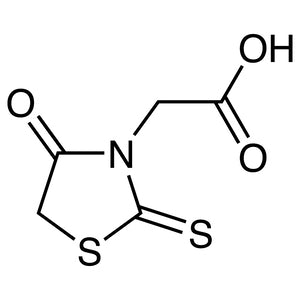
Thiophene-2-acetic acid is a chemical compound widely used in laboratory settings for its versatile reactivity and structural versatility. It belongs to the class of heterocyclic building blocks, making it a valuable tool in synthetic chemistry. This compound serves as a foundational element in the synthesis of complex organic molecules, particularly those involving heterocyclic frameworks. Its unique structure, combining a thiophene ring with a carboxylic acid group, allows it to participate in a variety of chemical reactions, enhancing its utility in research and development.
The compound's high reactivity and ability to form stable intermediates make it a preferred choice for chemists working in diverse fields. Its capacity to react with various functional groups enables the creation of new compounds with tailored properties. The compound’s chemical stability under controlled conditions further supports its use in multiple synthetic pathways. These characteristics make it an essential reagent in both academic and industrial research environments.
In Indonesian laboratories, Thiophene-2-acetic acid is commonly used in pharmaceutical and materials science research. Its solubility in organic solvents like ethylamine and acetone facilitates its integration into standard laboratory procedures. Researchers rely on its predictable behavior and compatibility with a range of reagents, making it a staple in both teaching and applied research settings.
TCI brochures (PDF)
- Thiophenes 2026-06-29 · p. 8
Related TCI products
- TCI T1152 6964-21-2 Thiophene-3-acetic Acid
- TCI T2941 652-37-9 Theophylline-7-acetic Acid
- TCI T2737 21743-75-9 1H-Tetrazole-5-acetic Acid
- TCI B2912 4865-84-3 1,2-Benzisoxazole-3-acetic Acid
- TCI B1941 6295-57-4 (2-Benzothiazolylthio)acetic Acid
- TCI A2478 65872-41-5 (Z)-2-(2-Amino-4-thiazolyl)-2-(methoxyimino)acetic Acid
- Pharmaceutical synthesis where Thiophene-2-acetic acid is used to build complex heterocyclic structures essential for drug development.
- Organic chemistry research involving substitution and condensation reactions due to its reactivity and functional group compatibility.
- Material science applications where the compound contributes to the synthesis of advanced polymers and functional materials.
- Analytical chemistry experiments requiring a reliable and well-characterized building block for compound derivatization.
- Teaching laboratories where students learn about heterocyclic chemistry and synthetic methodologies through hands-on experimentation.
| Brand | TCI |
|---|---|
| CAS number | 1918-77-0 |
| Molecular formula | — |
| Purity | — |
| Category | Chemistry > Building Blocks > Heterocyclic Building Blocks |
| Pack sizes | Available in various quantities as per standard laboratory supply formats |
| Physical form | Solid, crystalline appearance |
| Storage | Store in a cool, dry place away from moisture and direct sunlight |
Thiophene-2-acetic acid should be stored in a cool, dry environment to maintain its chemical integrity. It is recommended to keep the compound in airtight containers to prevent exposure to moisture and air, which may affect its stability. Due to its reactivity, it should be handled with care, using appropriate personal protective equipment such as gloves and safety goggles. It is advisable to store it in a well-ventilated area to minimize any potential risks associated with its chemical nature. Avoid contact with strong bases or reactive metals to ensure safe handling and long-term usability in laboratory settings.
—
Produk Terkait
-
Thiophene-3-aceticAcid TCI T1152
Regular price From Rp 1.988.700,00Regular priceRp 1.405.950,00Sale price From Rp 1.988.700,00 -
Theophylline-7-aceticAcid TCI T2941
Regular price Rp 1.087.800,00Regular priceRp 775.950,00Sale price Rp 1.087.800,00 -
1H-Tetrazole-5-aceticAcid TCI T2737
Regular price From Rp 5.672.100,00Regular priceRp 3.981.600,00Sale price From Rp 5.672.100,00 -
1,2-Benzisoxazole-3-aceticAcid TCI B2912
Regular price Rp 2.835.000,00Regular priceRp 1.998.150,00Sale price Rp 2.835.000,00 -
(2-Benzothiazolylthio)aceticAcid TCI B1941
Regular price From Rp 1.060.500,00Regular priceRp 757.050,00Sale price From Rp 1.060.500,00 -
(Z)-2-(2-Amino-4-thiazolyl)-2-(methoxyimino)aceticAcid TCI A2478
Regular price From Rp 742.350,00Regular priceRp 534.450,00Sale price From Rp 742.350,00 -
(2-Amino-4-thiazolyl)aceticAcid TCI A0954
Regular price From Rp 1.378.650,00Regular priceRp 979.650,00Sale price From Rp 1.378.650,00 -
Rhodanine-3-aceticAcid TCI R0054
Regular price From Rp 795.900,00Regular priceRp 572.250,00Sale price From Rp 795.900,00