Ethyl p-Toluenesulfonate (ETP) is a chemical compound widely utilized in organic laboratory reactions. As an ester, it serves as a versatile reagent that can participate in various synthetic pathways. Its role as a sulfonate donor makes it particularly valuable in reactions involving amines, alcohols, and alkali metals. This compound is commonly used in the synthesis of complex organic molecules, making it an essential tool for chemists working in both academic and industrial settings. Its ability to undergo nucleophilic substitution and other reaction mechanisms enhances its utility in a broad range of chemical processes.
One of the key properties that make ETP a preferred choice is its solubility in common organic solvents such as ethyl acetate, acetone, and ethanol. This solubility allows for easy handling and manipulation in different experimental conditions. Additionally, ETP exhibits good stability under controlled laboratory environments, which simplifies storage and usage. These characteristics contribute to its popularity among researchers and students who require reliable and consistent reagents for their experiments.
In Indonesian laboratories, ETP is frequently employed by chemists, students, and educational institutions. Its application spans across pharmaceutical research, industrial chemical production, and general organic synthesis. The compound’s reliability and versatility make it a staple in both teaching and research laboratories, supporting a wide array of chemical investigations and experiments.
TCI brochures (PDF)
- Alkylation Reagents for Ester Synthesis 2026-04-06 · p. 4
- Organic synthesis reactions benefit from ETP's ability to act as a sulfonate donor, facilitating nucleophilic substitution and other key reaction mechanisms.
- Pharmaceutical research utilizes ETP to synthesize complex molecules, supporting drug development and compound testing.
- Industrial chemical production relies on ETP for its stability and reactivity, enabling efficient manufacturing processes.
- Teaching laboratories use ETP to demonstrate fundamental organic chemistry principles and reaction mechanisms.
- Analytical chemistry applications benefit from ETP's solubility and reactivity, supporting various analytical techniques and experiments.
| Brand | TCI |
|---|---|
| CAS number | 80-40-0 |
| Molecular formula | — |
| Purity | — |
| Category | Chemistry > Building Blocks > Non-Heterocyclic Building Blocks |
| Pack sizes | Available in standard laboratory quantities |
| Physical form | Solid powder |
| Storage | Store in a cool, dry place away from direct sunlight |
Ethyl p-Toluenesulfonate should be stored in a cool, dry environment to maintain its stability and prevent degradation. It is recommended to keep the compound in a tightly sealed container to minimize exposure to moisture and air. Due to its chemical nature, it should be stored away from incompatible substances such as strong bases or oxidizing agents. Proper labeling of storage containers is essential for safety and identification. In laboratory settings, it is important to handle ETP with appropriate personal protective equipment, including gloves and safety goggles, to ensure safe handling and prevent accidental contact. Regular monitoring of storage conditions ensures the compound remains in optimal condition for use in experiments.
—
Produk Terkait
-
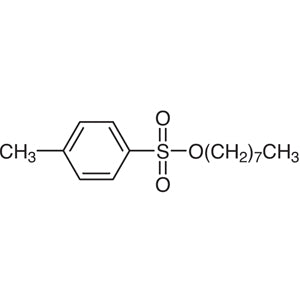
n-Octylp-Toluenesulfonate TCI T0885
Regular price Rp 2.625.000,00Regular priceRp 1.835.400,00Sale price Rp 2.625.000,00 -
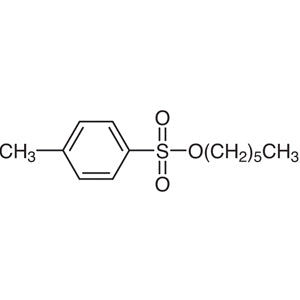
Hexylp-Toluenesulfonate TCI T0883
Regular price From Rp 1.776.600,00Regular priceRp 1.242.150,00Sale price From Rp 1.776.600,00 -
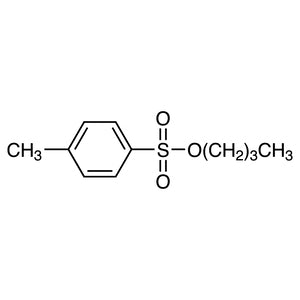
Butylp-Toluenesulfonate TCI T0727
Regular price From Rp 1.115.100,00Regular priceRp 779.100,00Sale price From Rp 1.115.100,00 -
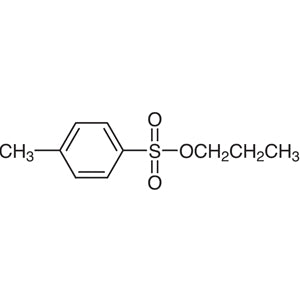
Propylp-Toluenesulfonate TCI T0726
Regular price From Rp 1.538.250,00Regular priceRp 1.075.200,00Sale price From Rp 1.538.250,00 -
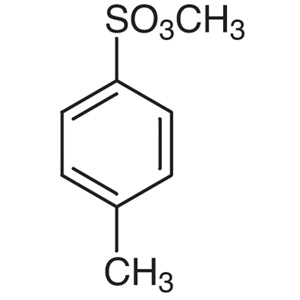
Methylp-Toluenesulfonate TCI T0269
Regular price From Rp 505.050,00Regular priceRp 352.800,00Sale price From Rp 505.050,00 -
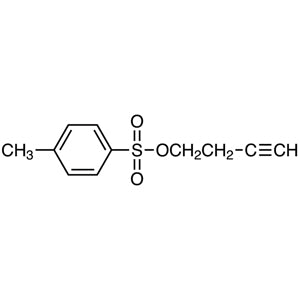
3-Butynylp-Toluenesulfonate TCI T2046
Regular price Rp 2.068.500,00Regular priceRp 1.445.850,00Sale price Rp 2.068.500,00 -
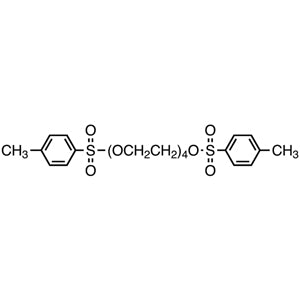
TetraethyleneGlycolBis(p-toluenesulfonate) TCI T1493
Regular price Rp 4.001.550,00Regular priceRp 2.814.000,00Sale price Rp 4.001.550,00 -
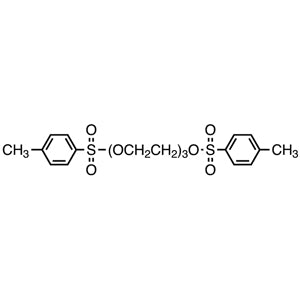
TriethyleneGlycolBis(p-toluenesulfonate) TCI T1488
Regular price From Rp 1.220.100,00Regular priceRp 868.350,00Sale price From Rp 1.220.100,00