Hexyl p-Toluenesulfonate is a chemical compound widely used as a building block in the synthesis of complex organic compounds. It plays a crucial role in laboratory settings where researchers aim to develop new substances with specific properties. This compound is particularly valuable in reactions that require the formation of long-chain molecules, making it an essential tool for synthetic chemists. Its versatility allows it to be incorporated into various synthetic pathways, contributing to the advancement of pharmaceutical, material science, and chemical industries.
Hexyl p-Toluenesulfonate is known for its stable molecular structure and reactivity under controlled conditions. These characteristics make it a preferred choice for substitution reactions and other chemical transformations. Its solubility in organic solvents further enhances its usability, simplifying the processing and application in laboratory settings. The compound's ability to participate in a wide range of reactions makes it a reliable and efficient reagent for chemical synthesis.
In Indonesian laboratories, Hexyl p-Toluenesulfonate is commonly used by chemists, pharmacists, and students for research and development purposes. It is particularly relevant in educational and research environments focused on organic synthesis. Its availability and chemical properties make it a valuable resource for both academic and industrial applications. The compound supports the creation of new compounds with tailored functionalities, contributing to scientific innovation and discovery.
TCI brochures (PDF)
- Alkylation Reagents for Ester Synthesis 2026-04-06 · p. 5
- Organic synthesis is a key application where Hexyl p-Toluenesulfonate is used to build complex molecules with specific functional groups.
- Pharmaceutical research benefits from this compound as it aids in the development of new drug candidates with desired biological activities.
- Material science applications rely on Hexyl p-Toluenesulfonate for creating polymers and other advanced materials with unique properties.
- Educational institutions use it to teach fundamental concepts of organic chemistry and synthetic methodologies.
- Industrial chemical processes incorporate this compound to produce specialty chemicals and intermediates for various applications.
| Brand | TCI |
|---|---|
| CAS number | 3839-35-8 |
| Molecular formula | — |
| Purity | — |
| Category | Chemistry > Building Blocks > Non-Heterocyclic Building Blocks |
| Pack sizes | Available in various quantities as per standard laboratory requirements |
| Physical form | Solid or liquid, depending on the specific product variant |
| Storage | Store in a cool, dry place away from direct sunlight and moisture |
Hexyl p-Toluenesulfonate should be stored in a cool, dry environment to maintain its chemical integrity. It is recommended to keep it in airtight containers to prevent exposure to moisture and air, which can affect its stability. Suitable storage conditions include a controlled room temperature, typically between 15°C and 25°C. When handling this compound, it is important to use appropriate personal protective equipment such as gloves and safety goggles to ensure laboratory safety. Proper labeling of containers is also essential to prevent accidental misuse. General laboratory precautions include avoiding contact with skin and eyes, and ensuring adequate ventilation when working with the compound.
—
Produk Terkait
-
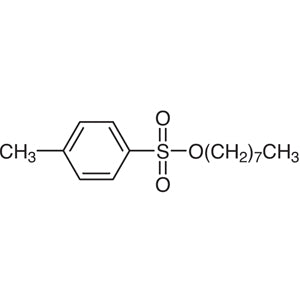
n-Octylp-Toluenesulfonate TCI T0885
Regular price Rp 2.625.000,00Regular priceRp 1.835.400,00Sale price Rp 2.625.000,00 -
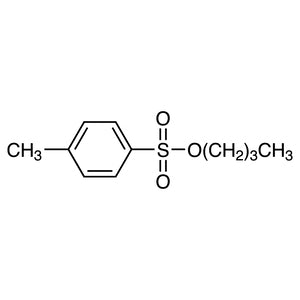
Butylp-Toluenesulfonate TCI T0727
Regular price From Rp 1.115.100,00Regular priceRp 779.100,00Sale price From Rp 1.115.100,00 -
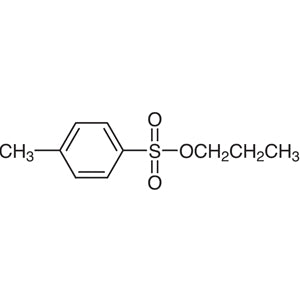
Propylp-Toluenesulfonate TCI T0726
Regular price From Rp 1.538.250,00Regular priceRp 1.075.200,00Sale price From Rp 1.538.250,00 -
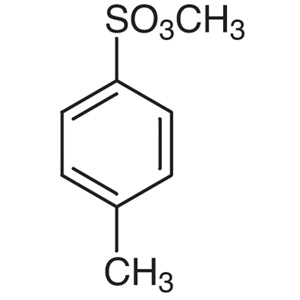
Methylp-Toluenesulfonate TCI T0269
Regular price From Rp 505.050,00Regular priceRp 352.800,00Sale price From Rp 505.050,00 -
Ethylp-Toluenesulfonate TCI T0268
Regular price From Rp 557.550,00Regular priceRp 389.550,00Sale price From Rp 557.550,00 -
HexylMethanesulfonate TCI H1282
Regular price From Rp 3.525.900,00Regular priceRp 2.465.400,00Sale price From Rp 3.525.900,00 -
1-Methyl-3-[6-(methylthio)hexyl]imidazoliump-Toluenesulfonate TCI M2321
Regular price From Rp 2.597.700,00Regular priceRp 1.832.250,00Sale price From Rp 2.597.700,00 -
3-Butynylp-Toluenesulfonate TCI T2046
Regular price Rp 2.068.500,00Regular priceRp 1.445.850,00Sale price Rp 2.068.500,00